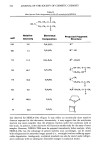
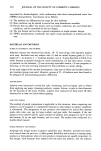
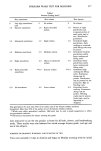
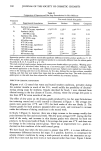
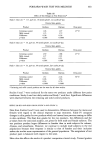
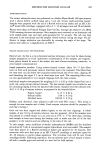
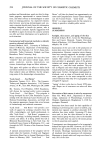
364 JOURNAL OF THE SOCIETY OF COSMETIC CHEMISTS Table IV Effect of Sex on Clinical Test Sensitivity (Clinical Skin Grades Average Change in Two Weeks Studies 8 and 9) Class Base Product size Smoothness Redness Dryness Females Males Irritating control 68 1.26 2.64 2.64 Mild control 46 .73 1.65 1.77 Difference .53 ß 99 .87 p-value .008 .0001 .0001 Irritating control 71 1.06 2.52 2.27 Mild control 52 .67 1.92 1.60 Difference .39 .60 .67 p-value .019 .005 .0014 have noted that it is more difficult to judge redness on forearms of black subjects, and the data (not shown) support this observation, i.e., larger differences in redness are observed between control products tested on white subjects than on black subjects. There was no difference attributable to skin color in the evaluation of dryness or smoothness. CORRELATION OF SKIN CONDITION WITH TEWL AND SUBJECT SELF EVALUATIONS Transepidermal water loss (TEWL) measurements were obtained for the ten products in Study ! (Table I). Correlations were found with redness (r = 0.80) and dryness (r = 0.80) grades. Subsequent studies have shown even stronger correlations (r = 0.89-0.97) with skin condition. The milder products produced lower TEWL values, indicating a better stratum corneum barrier function. Differences in skin condition detectable by expert skin graders have also been observed by the subjects themselves. A two-week clinical test was conducted in which several products were compared to a common control in a pair test design. Linear regression analyses demonstrate that the subjects' perceptions of their skin condition correlates well with the expert grades, i.e., soft skin with smoothness (r = 0.89), mildness with redness (r = 0.92), and skin flakiness with dryness (r = 0.90). COMPARISON WITH OTHER METHODS The mildness to the skin of two products has been assessed with both the forearm wash method and the chamber test. A comparison of the two methods, for a mild control and an irritating control (Table V), indicates that the forearm wash test demonstrates signif- Table V Comparison of Forearm Wash Test and Chamber Test Forearm wash test Chamber test Product total score Redness Dryness Irritating control 4.60•ns 1.61 • 1.82• Mild control 4.90-/ 1.28 J s 1.51 / s Difference - 0.30 0.33 0.30

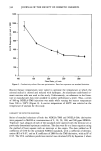
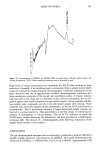
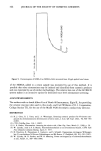
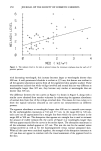
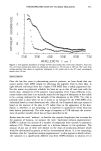
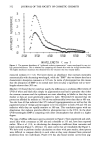
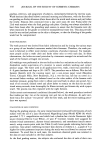
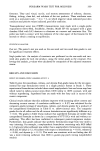
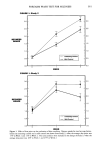
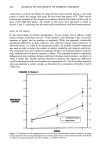
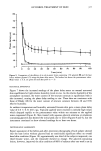
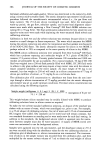
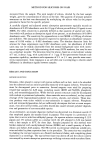
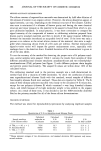
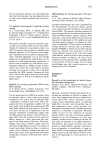
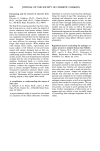
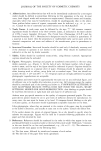
FOREARM WASH TEST FOR MILDNESS 365 icant product differences where the chamber test does not. We believe the forearm wash method to be more reflective of typical washing habits and less stressful than the chamber test in which soap solutions remain in contact with the skin under occlusion for 6-24 hours for five days. DISCUSSION A forearm wash clinical test has been developed to differentiate the mildness of personal skin cleansing products. Since the method was based on typical washing procedures, it is more representative of consumers' actual experience with these products in compar- ison with the typical methods of mildness evaluation, such as the chamber test or patch tests (1). The forearm wash method discriminates differences between products more readily than does the chamber test. This test method has allowed us to identify and determine the magnitude of the for- mula variables which impact skin condition. Bar soap mildness increases with in- creasing levels of tallow soap and decreases with high levels of coconut soap, which is nearly 50% sodium laurate. This result is consistent with the finding that sodium laurate is the most irritating of the common fatty acid salts (3). The addition of superfat increases the mildness of a soap-based product. This is due, at least in part, to the neutralization of any excess caustic left from the saponification process. Synthetic surfactants are known to differ in their ability to irritate skin. Therefore, it is not surprising that large variations in clinical mildness have been observed for products formulated with these materials. We have observed that the dew point is a key indicator of the responsiveness of the skin to the effects of soap treatment. This is not surprising since dew point is a measure of absolute moisture content in the air and studies have shown that mositure uptake by the stratum corneum is dependent on the moisture content of the air contacting the skin (5). As shown by our results (Figure 1), a high dew point can prevent or even reverse the changes in skin condition caused by exposure to bar soaps. The critical dew point appears to be about 40øF., i.e., when the average daily dew point is higher than 40øF., it is difficult to show significant differences between test products. When the average daily dew point is expected to exceed 40øF., the number of washings (six-second lather, ten-second wash, ninety-second exposure, fifteen-second rinse) is increased from twice to four times a day. A single product design (both products ap- plied to each forearm) can be used and is especially appropriate when multiple products must be evaluated. We have found that sex and skin color affect the magnitude of the differences between products and should be considered in designing these clinical studies. Hence, we rec- ommend that treatment groups be balanced for these factors as well as for initial skin dryness grade in order to ensure discrimination between products. In addition to the evaluation of skin condition, i.e., smoothness, redness, and dryness, we have found a good correlation between TEWL and skin redness and dryness. This indicates that the redness and dryness derived from this test are a measure of skin barrier function.
Purchased for the exclusive use of nofirst nolast (unknown)
From: SCC Media Library & Resource Center (library.scconline.org)