366 JOURNAL OF THE SOCIETY OF COSMETIC CHEMISTS SUMMARY We have demonstrated that the forearm wash test can reveal differences in the clinical mildness of bar soaps. We also have developed a test design variation that can detect differences in mildness even under conditions of high dew point (i. e., warm and humid conditions). Test groups should be balanced for skin color, sex, and initial skin condi- tion. ACKNOWLEDGEMENT The authors would like to acknowledge Ms. Sharon A. Seaman for her contributions to this work. REFERENCES (1) P. J. Frosch and A.M. Kligman, The soap chamber test: A new method for assessing the irritancy of soaps,J. Am. Acad. Dermatol., 1, 35-41 (1979). (2) A.M. Kligman, XLIII Annual Meeting of the American Academy of Dermatologists (1984), and personal communication. (3) G. Sauermann, A. Doerschner, U. Hoppe, and P. Wittern, Comparative study of skin care efficacy and in-use properties of soap and surfactant bars, J. Soc. Cosmet. Chem., 37, 309-327 (1986). (4) E. Epstein, Common Skin Disorders, 2nd ed. (Medical Economics Books, Oradell, New Jersey, 1983), p. 88. (5) E. P. Pittz, Non-destructive methods for evaluation of cutaneous irritancy, Cosmetics & Toiletries, 98, 51-65 (1983). (6) C. Prottey, D. Oliver, and A. C. Coxon, Prediction and measurement of surfactant action upon human skin under realistic conditions, Intl. J. of Cosmetic Science, 6, 263-273 (1984).

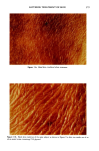
j. Soc. Cosmet. Chem., 39, 367-381 (November/December 1988) Changes in the physical properties of the stratum corneum following treatment with glycerol M. D. BATT, W. B. DAVIS, E. FAIRHURST, W. A. GERRARD and B. D. RIDGE, Beecham Products Research Department, St. George's Avenue, Weybridge, Surrey, England KTI 3 ODE. Received May I, 1987. Synopsis Preparations containing the humectant glycerol were applied topically to the skin of young adults, and the physical effects of glycerol on the stratum comeurn were examined using instrumental techniques. Reductions in transepidermal water loss and electrical impedance, smoothing of the skin surface profile, and an increase in the coefficient of friction were found to accompany an improvement in the expertly assessed condition of the skin. Such changes, found to last for periods in excess of eight hours, were similar to those observed transiently after the topical application of distilled water. INTRODUCTION Water is well known to play an important part in maintaining stratum corneum flexi- bility. In vitro, separated corneum is hard and brittle and the classic experiments of Blank (1) have shown that water is an effective plasticiser. In vivo, dry skin is more apparent on exposed body sites than on protected areas (2). A dry, cold environment is highly conducive to dry skin formation (3), and low relative humidity with increased evaporative loss of water is a major factor (4). Topical treatment, using oil-in-water or water-in-oil emulsions, presents a ready means of supplying water to the outer surface of the skin. However, rapid evaporation of this product water results in only a transient, although measurable, benefit. A logical ap- proach to retaining water in the stratum corneum is the use of topically applied humec- tants (5,6) either in solutions or emulsions. It would be expected that humectants on, or immediately below, the surface of the stratum corneum would both retain applied water and reduce transepidermal water loss (TEWL). In this work, the effects of glycerol on TEWL have been examined under normal am- bient conditions and compared with its effects on three parameters associated with stratum corneum hydration. These were smoothing of the skin surface profile, skin friction, and electrical impedance. A photographic evaluation of skin condition after glycerol treatment was also carried out. 367
Purchased for the exclusive use of nofirst nolast (unknown)
From: SCC Media Library & Resource Center (library.scconline.org)