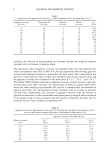
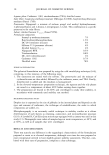
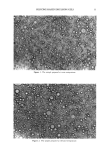
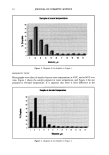
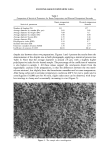
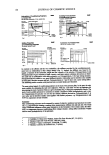
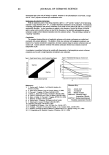
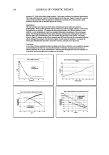
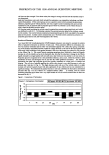
[3CD-STABILIZED EMULSIONS 17 min. The Helipath viscosity is measured with a Rotovisco Haake-RV100 System m500 fitted out with a Helipath system. RESULTS AND DISCUSSION EFFECT OF [3CD AND OF THE COMPONENTS ADDITION MODE Emulsions containing paraffin oil/water/•CD [47.5/50/2.5 (weight basis)] were prepared following five modes for the addition of components: ß [•CD and the paraffin oil mixture are stirred for 5 hours at 25øC before water addition. ß •3CD and water are stirred for 5 hours at 25øC before paraffin oil addition. ß [•CD and water are stirred for 15 rain at 25øC before paraffin oil addition. ß [•CD and water are stirred for 12 hours at 60øC and then 3 hours at 25øC before paraffin oil addition. ß [•CD is added to water at 25øC immediately before paraffin oil addition. In all cases, the continuous phase of the emulsions was the aqueous phase, oil separation was never observed, and the aqueous phase separated after seven days of storage at 25 øC was about 30% of the total emulsion weight. Therefore, we concluded that under these conditions and with the [•CD sample that we had used, emulsifying activity does not depend on the sequence for mixing the three components, water, oil, and [•CD. EFFECT OF TEMPERATURE ON EMULSION FORMATION In the literature, emulsions are usually prepared at high temperature for reducing oil viscosity. These experiments show that a paraffin oil/water/lBCD system cannot be emulsified if the temperature exceeds 53øC for a 70/29.5/0.5 w/w/w composition, and 83øC for a 70/26/4 one. Thus, the border temperature is linked to the cyclodextrin concentration. As the emul- sifter is supposed to be the [3CD complex and not the [3CD itself, these results may be linked to the decrease of the association constants between [3CD and its guests while the temperature is increased. EFFECT OF [•-CYCLODEXTRIN CONCENTRATION ON EMULSION FORMATION AND STABILITY Formulations containing 0.005% to 8% w/w of [3CD and 10% to 90% v/v of paraffin oil were emulsified at 20øC. The emulsions were always of the oil-in-water type, even when the phase addition sequence was inverted. The minimum [3CD ratio for paraffin oil emulsification was about 0.025% w/w. However, there is a major risk of emulsion breakdown during storage under various conditions when the [3CD concentration is below 0.5% w/w, as shown in Table I. This stability for such a low level of [3CD content, in comparison to the claims found in the patent literature, is a major characteristic of these three-component emulsions. The stability may be enhanced by the use of a fourth component (for example, a thickening agent) for limiting the creaming tendency of these emulsions (7,8). The granulometric profiles of the emulsions were obtained with the Malvern Mastersizer (see Figure 1). As expected, increasing emulsifier concentration enables us to increase the

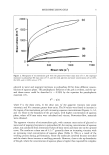
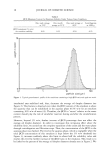
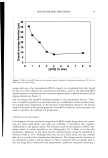
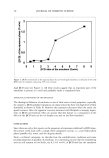
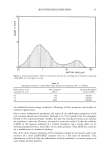
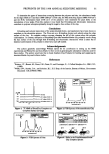
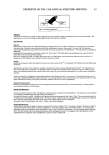
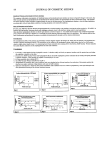
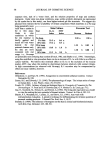
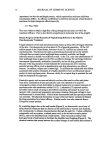
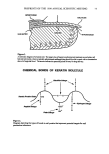
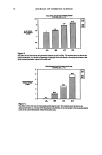
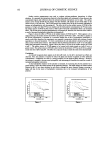
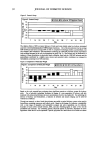
18 JOURNAL OF COSMETIC SCIENCE Table I [3CD Minimum Content for Emulsion Stability Under Various Stress Conditions One week storage One month One week storage at Centrifugation at 25øC storage at 25øC 60øC at 4200 g •CD minimum (% w/w) for emulsion stability 0.05 0.25 0.50 0.25 ]0 0 0,1 1 lO lOO pc•rficte size ( •m } Figure 1. Typical granulometric profile of the emulsions containing a high •CD ratio and aged one week. interfactial area stabilized and, thus, decreases the average oil droplet diameter (see Figure 2). This feature is observed even when the [3CD content of the emulsion is above the quantity that can be solubilized in the aqueous phase (0.5% w/w for an emulsion containing 30% w/w of water) (9). Therefore, the [3CD in "excess" relative to the water content should play the role of emulsifier reservoir during and after the emulsification process. However, beyond 3% w/w, further increase of •CD percentage does not affect the average oil droplet diameter. In order to investigate this intriguing effect above the solubility limit, we carried out the complete separation of the cream and the water phase through centrifugation and filtration steps. Then, the concentration of the [3CD in the aqueous phase was checked. The level in the aqueous phase, which is negligible when the total [3CD concentration of this emulsion is kept below the 3% w/w threshold (see Figure 3), increases suddenly above this limit to about half the solubility value and reaches this level by further increase of the [3CD ratio in the emulsion. This result is to be linked to the pattern of the average oil droplet diameter already seen in Figure 2. We
Purchased for the exclusive use of nofirst nolast (unknown)
From: SCC Media Library & Resource Center (library.scconline.org)