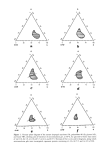
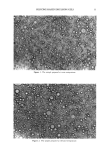
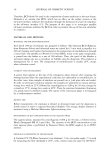
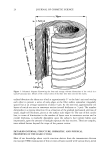
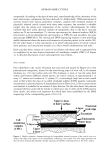
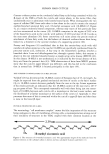
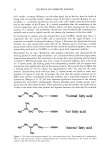
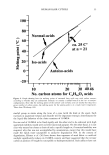
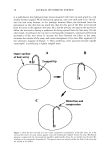
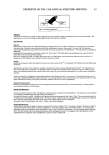
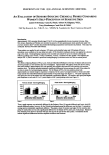
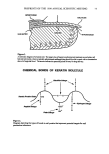
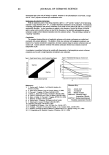
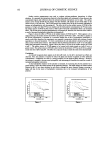
52 JOURNAL OF COSMETIC SCIENCE OIL EMULSIFICATION BY [}-CASEIN, POLY(L-ASPARTIC ACID), MANDUCA SEXTA APOLIPOPHORIN III, AND A SOYBEAN VACUOLAR PROTEIN Robert Y. Lochhead, Monica Tisack-Kathman i, Gordon Cannon and Charles L. McCormick University of Southern Mississippi, Department of Polymer Science, Hattiesburg, MS 39406 Introduction: Polymeric emulsifiers based upon hydrophobically-modified, cross-linked polyacrylic acid were introduced to the cosmetic industry a decade ago • 23 n. These emulsifiers have found utility in the delivery of emollients, barrier oils and sunscreens to the skin surface from emulsion formula- tions. The most stable emulsions are formed at polymer concentrations in excess of the critical overlap concentration and these emulsifiers appear to function by a mechanism in which the oil is trapped within hydrophobic •holcsf in a hydrophilic matrix 567 8 9. However, the design of synthetic polymeric emulsifiers is far from being understood, and many hydrophobically-modified hydrophilic polymers have been screened with little suc- cess as emulsifiers. It appears that a polymcric emulsifier must be capable of being adsorbed with sufficient rapidity at the oil/water interface. Moreover, the adsorbed polymer must be adsorbed in a preferred conformation and must interact throughout the continuous phase to confer a yield stress sufficient to prevent creaming of the emulsion. In Nature, proteins are commonly used to stabilize oil and fat droplets in the blood of animals. the lymph of insects and the sap of plants. The emulsion droplets found in plants are oil bodies. The proteins that stabilize these oil bodies are oleosins. In insects the stabilizing proteins are termed apolipophorins. This study was aimed at gaining an understanding of natural emulsification in order to guide the syntheses of future poly- meric emulsifiers. Soybean Oleosins: Plant oil bodies are termed oleosornes and the proteins which stabilize these oleosomes are termed oleosins. The oleosomes consist of three struc- tural constituents: triglycerides in the center, surrounded by a phospholipid layer and an external sheath of oleosins.(Figure I ). Figure 1. The structure of an oleosome Oleosins are alkaline proteins having molecular weights in the range 15,000 to 26,000 •ø. All oleosins possess three characteristic regions: a 40-60 amino acid N-terminal region, a 68-74 amino acid middle region which is hydrophobic, and a 33-40 amino acid C-terminus moiety. The N-termi- nal moiety is amphipathic. Its conformation is believed to be helical and it is suspected that this region interacts with the surface of the oil body. Tzen n determined that the central hydrophobic segment was arranged in an anti-parallel O-strand conformation which is suspected of penetrating the triglyceride core. This conformation is not certain •2 t3. Soy Vacuolar Protein A 34,000 g/mole protein, (Soy 34), is one of 4 major proteins found during the isolation of oil bodies from mature seeds an. This vacuolar protein is located in the storage vacuoles and immunocytochemical evidence indicates that Soy 34 associates with oil bodies only after disruption of seed cells •5. This protein consists of 257 amino acid residues and it does not possess the conserved hydrophobic portion which is typical of oleosins. Soy 34 does possess a periodic distrubution of hydrophobes. Avoliooohorins In insects, the proteins which stabilize the oil particles are known as Apolipophorins. Apolipophorin III is found in adult insects 'free' in the hemolympht6 •7. Insect Apolipophorin III was chosen for this study because of the apparent reversible association with hemolymph and lipophorins. The Apolipophorin III from Manduca Sexta (tobacco horn worm) has been studied fairly extensively, and, for that reason, this protein from this species was chosen for this study. Apolipophorin III is a 18,494g/mole water-soluble polypeptide which consists of 161 amino acid residues as. The protein conformation is believed to exist as a globular five-helix bundle. Each helix is amphipathic and the hydrophobic portions of each helix orient to the interior. ' This study con.ducted as partial requirement for the degree of Ph.D. Monica Tisack-Kathman, 1998, University of Southern Mississippi

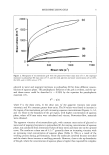
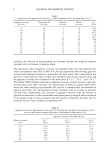
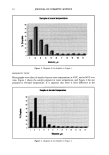
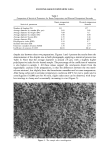
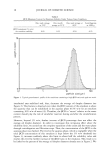
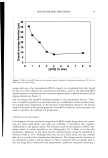
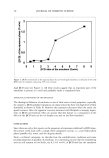
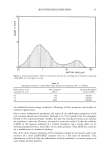
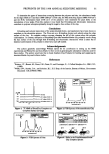
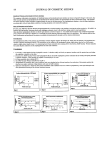
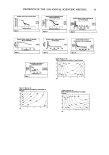
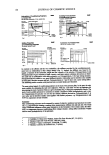
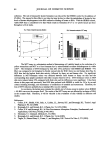
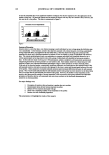
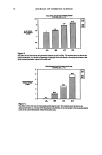
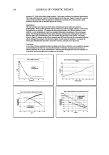
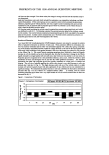
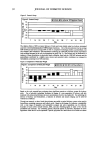
PREPRINTS OF THE 1998 ANNUAL SCIENTIFIC MEETING Ob•iective The goal of this research is to evaluate and gain insight into the structure-interfacial property relationships that exist in natural emulsifiers. The long term goal is to use this knowledge to design highly efficient smart polymeric emulsifiers. Experimental Materials Oleosins and vacuolar protein were isolated and purified by grinding soybean seeds in a buffer, centrifugation, and extraction of the supernatant with diethyl ether, followed by ethanol chloroform and further centrifugation to obtain an oleosin pellet. Isolation of the 34kD protein was achieved chromatographically using a DE52 urea column and varying salt concentration of the mobile phase. The 34kD protein was identified by SDS-PAGE. Apolipophorin III was obtained by recombitant synthesis in E. Coli lysogens •9. The cDNA library from the Manduca Sexta was a gift from Dr. Robert Ryan of the University of Alberta, Canada. Poly Na+ (L-Aspartic Acid), MW =15-50kD, and O-Casein, 90%, mw 23982 g/mole, were purchased from Sigma and used as received. Cis- Patinatic acid, MW 276g/mole, was purchased from Pierce and used as received. Methods Equilibrium and dynamic surface and interfacial tensions were measures using a Kruss TM k12 Tensiometer with Wilhelmy Plate and DeNouy Ring attachments. Emulsification experiments were conducted in accordance with regression analysis using an orthogonal factorial design TM. The independent vari- ables wet part and protein concentration. The dependent variable was moles of oil emulsified per mole of protein in solution. Emulsion experi- ments were conducted by placing 0.6ml of protein solution into a small vial and evaluating the molar quantity of otl which could be emulsified at saturation. Surface Hydrophobicio' of the proteins was determined using the surface fluorescence probe, cis-parinaric acid. Fluorescence intensity was mea- sured using an Edinburg FS900CDT T-geometry fiuorimeter. The excitation frequency was 325nm and emission was monitored at 420 nm. Initial slopes of fluorescence intensity versus protein concentration yielded the effective (or surface) hydrophobicity. Equilibrium Phase Diaeratns Emulsions of cyclohexane or tetradecane in water were prepared using the polymeric emulsifiers at various concentrations. The phase behavior was continually assessed over several months. Results and Discussion O-Casein was chosen as positive control. This protein is commonly used as an emulsifier in the food industry2L This protein exists as a disordered coil containing no disulfide bridges and approximately 10% •t-helices Lysozyme was chosen as a control. Lysozyme is an ellipsoidal molecule having dimensions 3nm x 3nm x 4.5nm. The protein contains many heli- cal segments and a three-stranded antiparallel O-sheet. The tertiary structure is locked in place by four disulfide bridges, Lysozyme is a rigid mole- cule in which the nonpolar groups are orientes to the interior of the molecule and the exterior is hydrophilic. The negative control was poly(aspartic acid) which is a highly water-soluble polypeptide. Surface Hvdroohobocities The fluorescence intensities of samples containing cis-parinaric acid are shown in figures 3 thro' 7 for aqueous solutions of the proteins studied. As expected, the lysozyme control showed no surface hydrophobicity, as did the poly(aspartic acid) control at pH's 8 and 12. It is interesting that poly(aspartic acid) showed significant surface hydrophobicity at pH 4, when it is relatively undissociated. B-casein displayed moderate hydropho- bicity. The 34kD Vacuolar Soy Protein displayed pronounced surface hydrophobicity at pH 12, but negligible surface hydrophobicity at pH Apolipophorin shows significant surface hydrophobicity at all pH's, with pH 12pH8~ pH4.
Purchased for the exclusive use of nofirst nolast (unknown)
From: SCC Media Library & Resource Center (library.scconline.org)