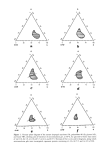
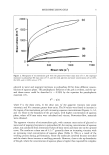
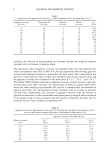
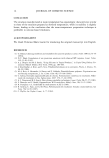
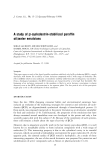
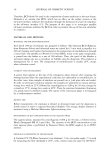
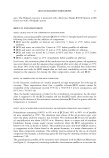
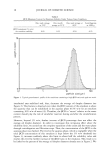
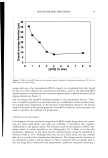
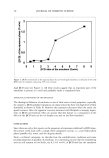
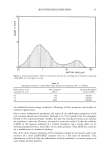
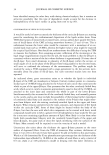
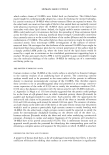
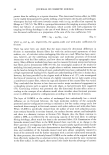
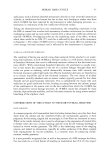
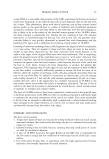
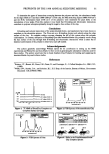
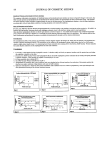
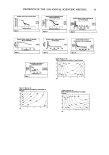
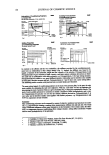
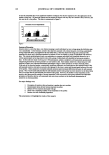
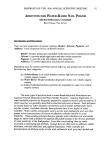
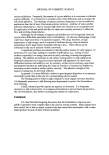
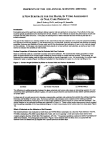
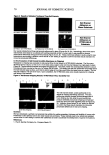
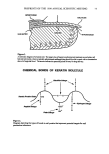
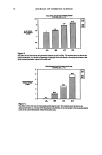
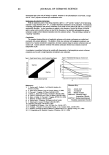
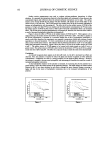
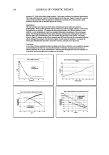
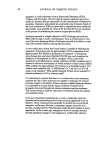
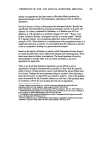
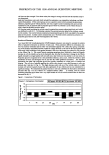
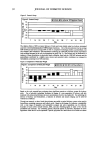
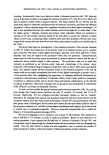
54 JOURNAL OF COSMETIC SCIENCE Interfacial Tensions at the Tetradecane/water interface The variation, with protein concentration, of interfacial tension at the tetradecane/water interface are shown in figures 8 through 12. [•-Casein, Soy 34kD vacuolar protein and Apolipophorin III all adsorbed at the oil/water interface in approximately the same concentration range. The equilibri- um surface tension at surface saturation is approximately the same for all three proteins, but Apolipophorin displays a relatively large dependence on solution pH, with acid and alkaline conditions favoring adsorption over neutral pH conditions. Rates ooeAdsorDtion at the Surface: [5-Casein, Soy 34kD Soy Vacuolar Protein and Apolipophorin III, all adsorb rapidly at the interface, lowering the surface tension by -20 mN/M. As expected, the rigid protein, lysozyme adsorbs and rearranges extremely slowly at the interface, taking weeks to reach equilibrium. Once adsorbed, Apolipophorin III does not desorb upon dilution as shown in figure 15. It is notable that the dilution was conducted sequentially over a period of one week and, therefore, it is reasonable to assume that the protein had ample time to re-equilibrate. This indicates that the inter- facial conformation and packing of this protein is probably thermodynamically favored over the solution conformation. Emulsification: The emulsification ability of the proteins are presented as contour diagrams (figures 16 through 18), which show the amount of oil emulsified as a function of protein concentration and pH. The emulsifiers can be ranked as the Apolipophorin being slightly better than the Soy 34kD protein which is slightly better than [5-Casein. It is interesting that [•-Casein emulsifies best at about pH 8.5, but the Soy 34kD Vacuolar Protein emulsifies best under alkaline conditions and the Apolipophorin III under acid conditions. Conclusions: 1. Lysozyme is a rigid protein having a hydrophilic exterior. It adsorbs weakly and slowly at aqueous interfaces and this protein does not display the capability to emulsify oil in water. 2. f/--Casein, Soy 34kD Vacuolar Protein and Apolipophorin III are all flexible amphipathic protein molecules that are readily and rapidly adsorbed at aqueous interfaces. These proteins are capable of emulsifying oil in water. 3. [•-Casein emulsifies best at about pH 8.5 4. Soy 34kD Vacuolar Protein emulsifies best at pH 12. 5. Apolipophorin III emulsifies best in acid conditions and, once adsorbed at the oil/water interface, the molecules of this protein reside at the interface even under conditions of high dilution with water or buffer solution. 6. Optimum emulsification is found for these protein emulsifiers under conditions that favor surface hydrophobicity, more rapid adsorption and more pronounced lowering of the oil/water interfacial tension. Surface Hydrophobiclty of B-C•sein 3 Protein concn, Surface Hydrophobicity of Lysozyme a= o --- , '- t• pill2 I S 10 15 Prokin coach, •/I Fi•ar• 4 Surface hydrophoblclty of 34kD Vicuoler Soy Protein 1500 o '":g ,, , , o 0.5 1 1 protein conch. 9/!- Figure 7

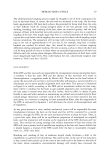
PREPRINTS OF THE 1998 ANNUAL SCIENTIFIC MEETING 55 Figure 16. [g/L] vs, pH Moles Tetradec, arm Emulsified by Cesein Solutions : • , MM Figure 17. [g/L] vs, pH Moles Tetradecarm Emulsified by Apolipophodn III Solutions , o • o o i o FigurelB. [g/L] vs. pH Moles Tetradecane Emulsified by Soy Isolete Solutions o o' o - -( o ivl/vl
Purchased for the exclusive use of nofirst nolast (unknown)
From: SCC Media Library & Resource Center (library.scconline.org)