56 JOURNAL OF COSMETIC SCIENCE References • Lochhead, R. Y. J. A. Davidson G. M. Thomas Polymers in Aqueous Media: Performance Through Association, Advances in Chemistry Series #223, p. 113, J. E. Glass, Editor, American Chemical Society: Washington, DC, (1989). 2 Lochhead, R. Y. J. Y. Castaneda Cosmetics and Toiletdes, (1990). 3 Lochhead, R. Y. Polymers as Rheology Modifiers, ACS Symposium Series #462 D. N. Schulz and J. E. Glass, Editors American Chemical Society, p. 101, Washington, 13(2, (1991). 4 Lochhead, R. Y. "Novel Emulsions," Cosmetics and Toiletdes, 109, (5), 93, 1994. s Lochhead, R. Y. C.J. Rulison Polymer Materials Science and Engineering, 69, (1993). 6 Lochhead, R. Y. C. J. Rulison H. S. Bui T. D. Pierce Polymer Preprints of the American Chemical Society 34 (i), 863, (1993). ? Lochhead, R. Y. R. Dodwell W. Hemker Cosmetics and Toiletries Manufacture Worldwide, p. 77, (1993). 8 Lochhead, R. Y. Rulison, C.J. Colloids and Surfaces, A88, 27, (1994). 9 Rulison, C. J. R. Y. Lochhead, Surfactant Adsorption and Surface Solubilization, Ed. Ravi Sharma, ACS Symposium Series 615, pp. 280-315, (1995). •O Huang, A.H.C. Annual Review of Plant Physiology and Plant Molecular Biology, 43, 177,(1992) n Tzen, J.T.C. G.C. Lie and Huang. A.H. The Journal of Biological Chemistry, 267, 15626, (1992) •2 Li, M. Smith, L.J. Clark, D.C. Wilson, R. Murphy, D.J. The Journal of Biological Chemistry, 267, 8245, (1992) •3 Loer, D.S. Herman, E.M. Plant Physiology, 101, 993, (1993) •4 Kalinski, A. Weisemann, J.M. Mathews, B.F. Herman, E.M. Jouranl of Biological Chemistry, 265, 13843, (1990) •s Kalinski, E.M. Melroy, D.L. Dwivedi, R.S. Herman, E.M. Jouranl of Biological Chemistry, 267, 12068, (1992) •6 Weers, P.M. Van der Horst, D. Marrewjik, W. Eijden, D. Van Doom, J. Beenakkers, A. J. Lipid Research, 33, 485, (1992) t? Kawooya, LK. Keim, R. Ryan, R. Shapiro, J.: Samaraweera, P. Law, L J. Biological Chemistry, 259, 10733, (1984) •8 Kanost, M. Boguski, M. Freeman, M. Gordon, J. Wyatt, G. Wells, M. J. Biological Chemistry, 263, 10568, (1988) •9 Kahalley, J. Ph.D. Thesis, 1998, University of Southern Mississippi, Department of Polymer Science. 20 Oyarzun, J. Journal of European Coatings, 1-2, 44, (1994) • Closs, B. Courthandon, J-L. Lorient, D. Journal of Food Science, 55, 437, (1990). 22 Dumas, B.R. Brignon, G. Grosclaude, F. Merelet, J-C. European Journal of Biochemistry, 25, 505, (1972) •3 Courthaudon, J-L. Dickinson, E. Dalgleish, D. J. Colloid Interface Science, 145, 390, (1991)

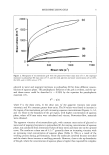
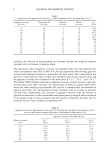
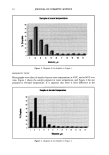
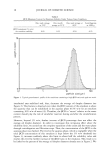
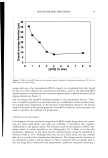
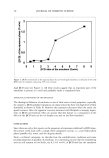
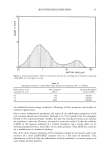
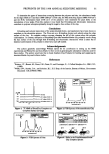
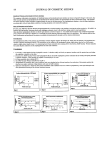
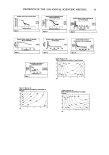
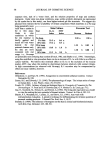
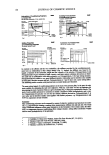
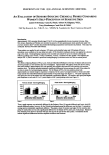
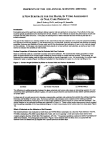
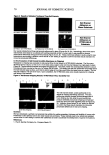
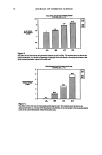
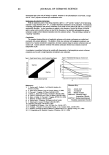
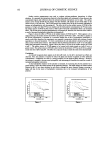
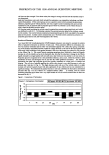
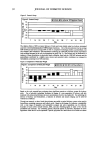
PREPRINTS OF THE 1998 ANNUAL SCIENTIFIC MEETING 57 BEHAVIORAL PROPERTIES OF SOAPS AND SURFACTANTS USING IN VITRO HUMAN SKIN EQUIVALENT CULTURES R. Warren, L.M. Sanders, S.L. Curtis, C. Zhu, F.R. Tollens, and T.E. Otte Sharon Woods Technical Center, The Procter and Gamble Company, Cincinnati, OH Evaluation of irritant properties of commercial surfactants is related to the type of exposure model used. Indeed, results from different in vivo exposure models may not be in agreement with one another (Smeenk, 1969, and Frosch, 1982). These inconsistencies may be related to how the methods differ from the actual use of the test material. For example, outcome may be affected by mode of application (patch occlusive or non-occlusive, or rinse off), frequency of application, or implement used to apply the test material (i.e., mechanical shear force). Outcome can also be affected by the chemical composition of the test material (and related physical properties of solubility, melt point, salt, etc.) or whether the material being tested is pure or part of a mixture (Emery_ and Edwards, 1940, and Dillarstone and Paye, 1993). Given the complexity associated with in vivo test methods, developing a useful in vitro test model can be ambitious and test methodology must be carefully considered. Skin equivalent cultures have been used to predict the irdtancy potential of surfactants (Gay et al., 1992). The general methodology utilizes the application and static exposure (approximately 16-24 hours) of the test material to the stratum comeum surface of the culture. The endpoints measured generally include irritation markers, such as IL-ltx, or the toxic endpoint, MTT. For personal cleansers and related mild surfactants, this methodology can be viewed as exaggerated as it does not reflect typical use of material, e.g., skin corrosion or toxicity is not typically observed, exposure times are brief, shear force application of test material, etc. Consequently, the data must be interpreted cautiously. Indeed, the data presented here for typical commercial soap bars show that relatively long static exposure (measured in hours) to skin equivalent cultures can generate results that are inconsistent with in vivo test behavior. We believe this relates t6 the in vitro model's IL-• (pg/ml Sldn Equivalent Cultme Forearm Controlled Application Test Dryness Na Soap 230 a Syndet 1.38 b 1.58 a 0.8• b 0.88 b 100 150 • •1• F. xposure Tinm (mln)
Purchased for the exclusive use of nofirst nolast (unknown)
From: SCC Media Library & Resource Center (library.scconline.org)