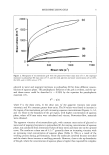
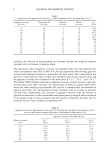
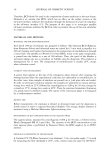
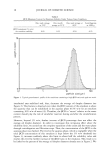
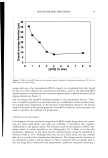
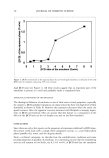
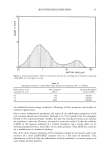
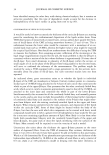
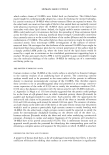
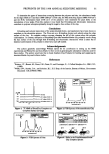
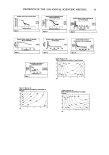
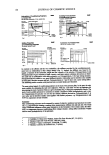
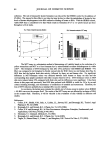
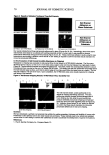
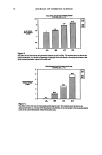
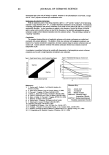
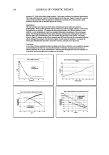
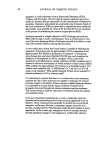
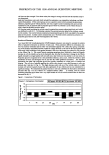
64 JOURNAL OF COSMETIC SCIENCE collection. The rate of measurable lactate formation was reduced for the HHBSS control by the addition of 4% BSA. The reason for this effect is not clear but may be due to either the metabolism of lactate by low levels of lactate dehydrogenase in the BSA utilized or binding of lactate to BSA. With the HHBSS control, viable HGP skin is considered to be that which results in formation of 0.7 to 1.0 [tmole lactate per hour throughout a 24-hr study. 1.0 6 12 18 34 •g z Ir•npa:• arabs • Mrr as? • zm The MTr assay is a colorimetric method of determining cell viability based on the reduction of a yellow tetrazolium salt MTr to a blue formazan dye by mitochondrial succinate dehydrogenase in viable cells n'6. The formation of MTr-formazan by skin after 24-hr perfusion with HHBSS and HHBSS + 4% BSA was compared to its formation by freshly excised skin for HGP, fuzzy rat, and human skin (Fig. 2). HGP skin had the highest fresh skin activity, followed by fuzzy rat and human skin. No significant difference in MTr-formazan values was obtained between fresh human or fuzzy rat skin and the corresponding skin samples perfused with either receptor fluid for 24 hr. MTr-formazan values in HGP skin were reduced about 25% compared with fresh skin and the differences were significant. It has been shown in this paper and previously • that HGP skin perfused with HHBSS is viable for 24 hr by several criteria including histology, and maintenance of metabolism of estradiol and testosterone. Therefore, the loss of MTr reduction probably has a minimal effect on skin viability. In conclusion, the lactate assay remains the viability test of choice except in studies where HHBSS + 4% BSA serves as the receptor fluid. The results of the MTr assay are not affected by inclusion of BSA in the receptor fluid. Therefore, it will be valuable in the evaluation of skin viability in diffusion cell studies. References: 1. Collier, S.W., Sheikh, N.M., Sakr, A., Lichtin, J.L., Stewart, R.F., and Bronaugh, R.L. Toxicol. Appl. Pharmacol. 99, 522 (1989) 2. Bronaugh, R.L. and Stewart, R.F.J. Pharm. Sci. 73, 1255 (1984) 3. Collier, S.W. and Bronaugh, R.L. In Vitro Percutaneous Absorption: Principles, Fundamentals, and Applications, CRC Press, Florida,31-49 (1991) 4. Mosmann• T. J. Immunol. Methods 65, 55 (1983) 5. Bronaugh, R.L. and Stewart, R.F.J. Pharm. Sci. 74, 64 (1985) 6. Triglia, D., Sherard Bma, S., Yonan, C., and Naughton, G.K. Toxicol. In Vitro 5, 573 (1991)

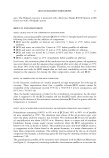
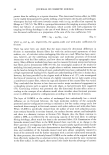
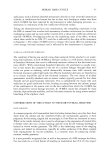
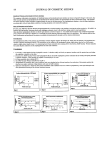
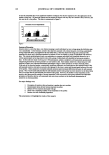
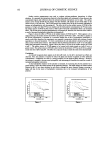
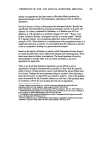
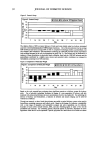
PREPRINTS OF THE 1998 ANNUAL SCIENTIFIC MEETING 65 AN EVALUATION OF SENSORY-INDUCING CHEMICAL PROBES COMPARING WOMEN'S SELF-PERCEPTION OF SENSITIVE SKIN James P. Bowman, 1 Anna K. Floyd, 1 Albert M. Kligman, 2 M.D., Tracy Stoudemayer2 and Otto H. Mills 3 /Hill Top Research, Inc., 2S.K.I.N., Inc., SUMDNJ & Foundation for Basic Cutaneous Research latroduction Approximately 1000 caucasian females (aged 18 to 65) in five geographically diverse locations (Arizona, Ohio, New Jersey, Manitoba and Florida) were recruited to answer a 20 item questionnaire which specifically asked "Do you have sensitive skin?" and also documented dermatological parameters and reactions to products. This study was conducted between November and February. Three probes were applied to each volunteer, 10% lactic acid in distilled water and 10% balsam of Peru in petrolatom were swabbed on the naso labial area and a 10:90 chloroform methanol solution was applied in a silicone ring to the cheek. Burning/stinging responses were recorded each minute for up to ten minutes utilizing the following grading scale: 0=none, l=mild, 2=moderate, 3=severe. Erythema was also graded. The endpoints for analysis are: a) time in minutes to perceived burning/stinging, b) maximum score over the ten minute period. Results The effects of placing Balsam of Peru, Lactic Acid and Chloroform/Methanol on the face of subjects self perceived as having sensitive or non-sensitive skin were investigated. Approximately 200 subjects from each of five testing sites were enrolled (approximately 40% who said they have sensitive skin and 60% who said they did not have sensitive skin). The results indicated statistically significant differences between groups for each of the probes for the time to onset of a burning/stinging response. For the Balsam of Peru, the non-sensitive group took approximately one minute longer to experience a response, for the Lactic Acid approximately a minute and a haft longer and for the Chloroform/methanol approximately 30 seconds longer (see Figure 1.). The peak responses for each group for each of the probes were also slatistically significantly different. The sensitive skin group had higher peak responses in each case (0.2 to 0.3 points higher on the 3 point grading scale) (see Figure 2.). Time to Onset - Burning/Stinging 6P LA Chlor ims-,., .Non-SensWve ] Peak Grade - Burning/Stinging BP LA Chlor llSensitive INon-Sensltlve I Figure I Figure 2 Time to peak response was statistically different for the Balsam of Peru (30 seconds different) and Lactic Acid (90 seconds different) probes, however, for the Chloroform/methanol group the difference was less than 15 seconds on average and not statistically significantly different. The grade at onset of reaction was higher for the sensitive skin group for each probe, but was only significantly different for the Balsam of Peru and Lactic Acid groups. Balsam of Peru reactions were shown to decrease with age, this was not the case for the other probes. Evaluations did not indicate significant differences between responses at different test locations.
Purchased for the exclusive use of nofirst nolast (unknown)
From: SCC Media Library & Resource Center (library.scconline.org)