j. Cosmet. Sci., 50, 9-14 (January/February 1999) The effect of preparation technique on droplet size in silicone emulsions V. GALLARDO, A. HERN.•NDEZ, A. PARERA, and M. A. RUIZ, Pharmacy and Pharmaceutical Technology Department, School of Pharmacy, University of Granada, E- 18071 Granada, Spain. Accepted for publication December 15, 1998. Presented at the 9th National Congress of Dermopharmacy, Granada, Spain, April 1998. Synopsis A sunscreen formulation, a gel emulsion based on silicones, has been prepared through the use of these polymers to manufacture emulsions at room temperature. Changes in droplet size are studied in a formu- lation prepared by two methods (at room and at elevated temperature) using the microscopy technique. The influences of time, temperature, and centrifugation are examined. We have concluded that the room- temperature manufacturing process provides emulsions with a homogeneous droplet size that are slightly more stable than those obtained at elevated temperature. INTRODUCTION Recent advances in the preparation of topical formulations have demonstrated the im- portance of the vehicle in obtaining maximum effectiveness (1,2). The enormous devel- opment of silicone chemistry in recent years has given rise to numerous compounds with ever better properties for use in pharmaceutics and particularly in dermocosmetics (3,4). Formulations with these compounds can therefore be found in shampoos, hydrating gels, anti-aging creams, non-fat emulsions, deodorants, antiperspirants, make-up, and espe- cially sunscreen preparations (5). In the many types of cosmetics, the use of emulsions has grown the most in the last few years, thanks to state-of-the-art techniques and particularly to the great advances in research into raw materials. We have carried out a detailed study of the variation in the preparation of emulsion gels based on silicones, taking advantage of the fact that these polymers can be used to prepare emulsions at room temperature. Variations in droplet size are studied in a formulation prepared with the microscopy technique in two ways: at room or at elevated temperature. The influences of time, temperature, and centrifugation are also examined. EXPERIMENTAL Silicone phase: DC-244 (tetramer silicone) Silbione V-5 (pentamer silicone) DC-1401 (dimethiconol).

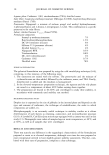
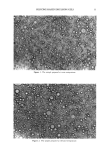
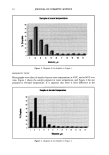
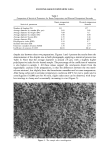
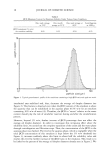
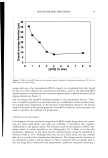
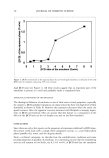
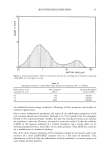
10 JOURNAL OF COSMETIC SCIENCE Aqueous phase: Carbomer 1382 triethanolamine (TEA) distilled water. So/at filters: Isoamyl-p-methoxycinnamate (Heliopan E- 1000), butylmethoxydibenzoyl- methane (Parsol 1789). Preservative: Nipaguard: a mixture of sodium propyl and methyl hydroxybenzoate, 2-phenoxyethanol, and 2-bromo-2-nitropropane-l,3-diol. This combination is a specific preservative for solar filters. So/vent: Alcohol benzoic C12_15 (Finsol VTN). Formulation composition: Isoamyl-p-methoxycinnamate 7 % B utylmethoxydibenzoylmethane 1.5 % DC-244 (tetramer silicone) 4% Silbione V-5 (pentamer silicone) 4% Alcohol benzoic C12_15 4% Nipaguard BPX 0.5 % Triethanolamine 0.8 % DC- 1401 (dimethiconol) 3 % Carhomer 1382 0.7% Distilled water 78% FORMULA PREPARATION The galenical formulation was prepared by using the cold emulsifying technique (6-8), consisting, in this instance, of the following steps: 1. The sunscreens are mixed with the solvent. The preservative and the mixture of cyclomethicones are then added, followed by the carbomer, water, and TEA. Finally, dimethiconol is added and the emulsion is homogenized. 2. In the elevated-temperature preparation technique, the aqueous and the oily phases are raised to a temperature of about 60øC before mixing them together. 3. The preparations are heated to 40-60øC and centrifuged to study their stability, in accordance with commonly used stability test method. MICROPHOTOGRAPHIC STUDY Droplet size is expressed as the size of globules in the internal phase and depends on the type and amount of surfactant, the technique of emulsification, the order in which components are added, etc. Microphotography is an extremely useful technique in stability studies as it allows determination of such factors as creaming, coalescence, and recrystallization processes (9,10). A Lavobal H, Carl Zeiss Jena microscope equipped with a camera was used in this study (11). Photographs were taken of samples kept at room temperature, at 40øC, and at 60øC, as well as of samples that were centrifuged. RESULTS AND DISCUSSION There was scarcely any difference in the organoleptic characteristics of the formulations prepared at room or at elevated temperature, although over time the ones prepared at room temperature seemed to have slightly greater stability parameters. This fact, com- bined with their ease of preparation, comprises a clear advantage.
Purchased for the exclusive use of nofirst nolast (unknown)
From: SCC Media Library & Resource Center (library.scconline.org)