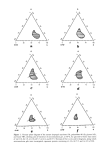
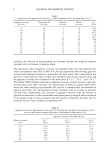
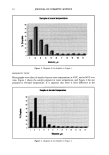
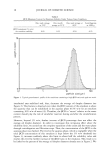
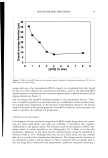
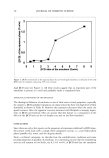
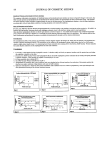
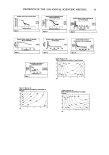
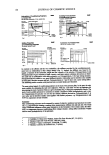
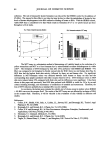
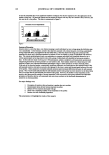
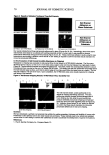
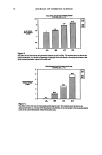
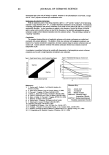
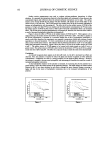
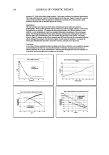
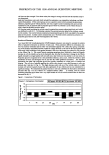
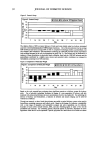
82 JOURNAL OF COSMETIC SCIENCE Surface tension measurements were used to evaluate polymer-surfactant interactions in dilute solutions. It is assumed that interactions observed in the dilute region will correspond to those shown in the concentrated regions and inferences about the polymer-surfactant interactions can be made. The surface tension curves for the DTAB did not change with pH therefore, pH appears to have little effect on the surface activity of DTAB alone. The PVAm became more surface active as the pH increased, indicating an increase in hydrophobicity with increasing pH. The effect of pH on the surface tension of DTAB in the presence of 2.Sg/L and 10g/L PVAm was studied, and for both polymer concentrations the PVAm lowers the surface tension of DTAB at pH's 5 and 7, while at pH 10 for both concentrations there is an increased effect. The PVAm shows increased hydrophobicity at increased pH, therefore, the observed effect could be a result of increased hydrophobic interactions at increased pH. Figure 3 shows the effect of PVAm on the surface tension of DTAB at pH 5. There appears to be a slight lowering in the surface tension of DTAB in the presence of PVAm at pH 5. The effect is greater as the PVAm concentration is increased. It is uncertain whether this is due to hydrophobic interactions or merely a salt effect therefore, the experiments were repeated in ammonium chloride salt solutions of molar equivalence to the polyvinylamine. For both concentrations the salt and polymer solutions had the same effect on the DTAB surface tension. This indicates that the observed interactions at pH 5 are salt effects rather than hydrophobic interactions. Figure 4 shows the effect of PVAm on the surface tension of DTAB at pH 7. The surface tension of DTAB appears to be lowered with similar trends as at pH5, but to a greater extent. The surface tension of DTAB is also lowered in the presence of PVAm at pH 10 to a greater extent than that of pH5 and pH7. The effect of 2.5 g/L and 10 g/L is nearly the same at this increased pH. Conclusions An induced hexagonal phase appears at all three pH levels. As the pH is increased two effects are observed. First, less polymer is required to induce the phase and second it appears at lower surfactant concentrations. Competition for water is a strong possibility for the observed phase behavior. However, the polymer is assumed to become more hydrophobic with increasing pH, therefore this could be a result of 'increased hydrophobic interactions. As the hydrophobic character of the polymer is increased, by increasing the pH, the polymer has a greater ability to lower the surface tension of the surfactant solutions. The small changes in surface tension detected at pH 5 have been attributed to salt effects, although the more dramatic changes occuning at higher pH may be the result of hydrophobic interactions due to the increased hydrophobicity of the polymer. Figure 3 Figure 4

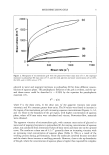
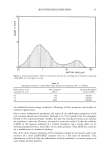
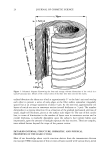
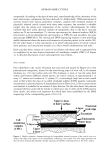
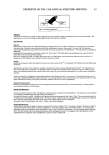
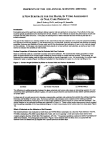
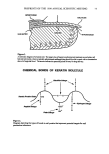
PREPRINTS OF THE 1998 ANNUAL SCIENTIFIC MEETING 83 NOVEL SILICONE THICKENING TECHNOLOGY: A REVIEW OF DEVELOPMENTAL APPROACH AND PRACTICAL APPLICATIONS Michael S. Starch and Carol A. Hoag Dow Corning Corporation, Midland, Michigan 48686 Introduction The widespread use of low molecular weight silicones such as cyclomethicone in a variety of personal care products has led to the need for efficient and cost-effective means to thicken these silicones. The ability to thicken cyclomethicone has obvious benefits in formulations such as anhydrous antiperspirants where cyclomethicone is the primary vehicle. In these systems, control over formula viscosity is important for proper dispensing and reducing stability problems such as syneresis. In other types of formulas, the aesthetics of the formula can be altered by the use of thickened silicones. Several methods of thickening cyclomethicone are already known and practiced in the industry. These include the use of silicone gum (high molecular weight dimethicones or dimethiconols) blends or inorganic materials such as fumed silica. The silicone gum blends are relatively inefficient and the concentrations required to achieve significant thickening can produce a greasy feel. Also, silicone gums do not produce a yield value when blended with cyclomethicone, so they are not effective in preventing settling. On the other hand, fumed silica is an efficient thickening agent for cyclomethicone and will produce a yield value su?.,.cicn! to i.mprove fo..,•..u!a stabi!i•, but *.he ½s*•e!ics of si!ico-•cyc!o..'n. et•icone mixtures are not always suitable for the intended application. A Better Solution: Silicone Elastomers (Three-Dimensional Silicone Polymers) A new class of materials has recently been developed to address the problem of thickening cyclomethicone. These are three-dimensional, or loosely crosslinked, silicone polymers which provide efficient thickening and improved aesthetics relative to other thickening additives. The presence of a small amount of crosslinking between silicone polymer chains produces a qualitative change in the properties in the material. These are no longer simple fluids, but are properly categorized as elastomers which have an extended three-dimensional structure. When cyclomethicone is blended with these materials, a swollen network is formed which can accommodate very large amounts of cyclomethicone without showing any sign of syneresis. Given the intimate nature of this blend, we expected that some of the cyclomethicone would be strongly bound. To confirm this, we followed the weight loss at 40 ø C of samples of elastomer blend and cyclomethicone. Figure I shows the results, which were somewhat surprising. The weight loss curves indicate the volatility of the cyclomethicone was essentially unaffected by the elastomer. Routes to Silicone Elastomer / Fluid Blends Several methods for preparing silicone ela,stomer/fiuid blends have been explored in our laboratories. One method involves the preparation of a cured silicone elastomer that is blended with silicone fluid to produce the swollen network. The process of blending cured elastomer with silicone fluid requires very high shear mixing and the viscosity of the blend tends to increase over time due to residual curing activity of the elastomer. This approach is also expensive because it requires two separate manufacturing steps. Another approach, the "in-situ method", involves curing the elastomer in the presence ofcyclomethicone. With careful control of processing conditions, this method is capable of producing consistent blends with stable viscosities. Given the advantages of the in-situ method, that was the route that we pursued. However, competitive patents prevented us from using conventional silicone elastomer chemistry, so an elastomer based on an organic crosslinker was developed. This work led to a material which has been assigned the INCI name of cyclomethicone and dimethicone crosspolymer. Rheological Properties As stated earlier, this new class of silicon•.thickeners are elastomers, and therefore demonstrate elastomeric behavior when examined using dynamic theological measurement techniques. To illustrate this, Figure 1 shows the results from a frequency sweep experiment. As the frequency increases, we see a steady
Purchased for the exclusive use of nofirst nolast (unknown)
From: SCC Media Library & Resource Center (library.scconline.org)