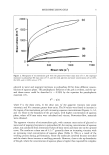
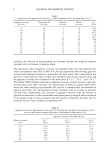
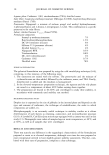
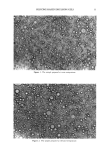
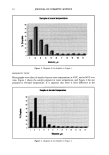
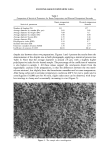
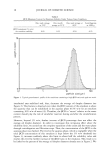
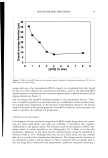
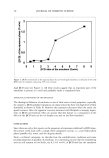
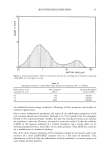
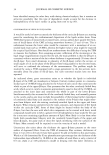
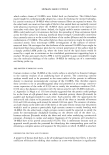
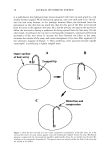
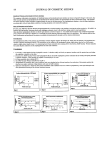
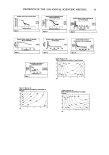
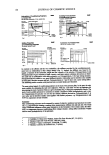
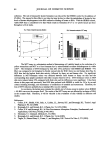
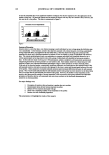
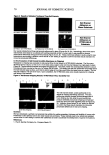
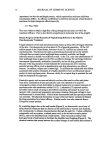
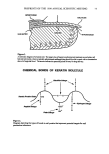
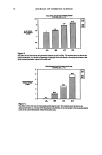
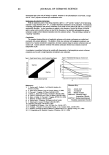
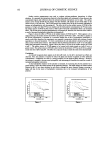
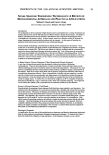
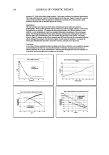
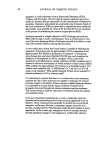
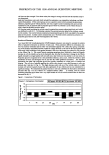
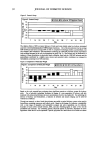
84 JOURNAL OF COSMETIC SCIENCE increase in G', which is the elastic storage modulus. Under other conditions, the elastomer blend behaves like a high solids dispersion where the viscosity depends on the shear rate. Figure 2 shows the a results of a stress sweep experiment where the sample was subjected to increasing stress which caused a steady increase in shear rate with the attendant decrease in viscosity. Applications The most common type of products which utilize cyclomethicone as the vehicle are anhydrous antiperspirants. These products generally require a thickener to achieve adequate stability, so this was the first application we explored. To compare the thickening performance of a silicone elastomer to other additives, several antiperspirant creams were prepared using equal concentrations of three thickening agents. The rheological properties of these simple formulas containing only antiperspirant salt (25%), thickener (4%), and cyclomethicone (71%) were studied using the stress sweep method. The results, shown in Figure 3, indicate that the silicone elastomer and the fumed silica provide comparable thickening effects, although the prototype with silica had a higher viscosity under all conditions. In contrast, the silicone gum (dimethiconol) provides a much lower viscosity, especially at low shear rates. Conclusion A new class of silicone materials has been developed which offers an effective way to modify the theology ofcyclomethicone and other low viscosity silicone fluids. Preliminary work has shown that they are effective thickeners in two types of formulations. Other benefits and applications for these materials will no doubt be found as they gain wider acceptance in the industry. Figure 1: Weight Lo• 84 40 C Figure 2: Dynamic Frequeficy Sweep fo•SHtcono E•tom• I , , Figure 3: St•ss Sweep foc Silicone Eli&tm.er Blend Figure 4: Stress Swe4tm foc 111nm Antlpempl•lnt Crlmm• • ,,

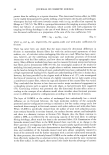
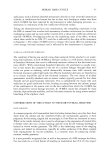
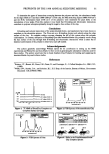
PREPRINTS OF THE 1998 ANNUAL SCIENTIFIC MEETING 85 NOVEL DELIVERY OF HYDROXY ACIDS TO THE SKIN: TRIMETHYLSILYL DERIVATIVES Gary E. LeGrow, 1 Ph.D., W. Leonard Terry, Jr., • Ph.D., Anna K. Floyd z and Rebecca A. Henger z •PCR, Inc. (a subsidiary of BTP plc), Gainesville, FL 2Hill Top Research, Inc. St. Petersburg, FL Introduction Alpha-hydroxy carboxylic acids, most commonly glycolic and lactic acids, are widely known in the cosmetic industry for their "anti-aging" benefits [1]. Alpha-hydroxy carboxylic acids, which are protic and water soluble, work by pene•xating the outermost layers of the epidermis, the s•xatum cometun. Therein, they initiate an increase in the rate of sloughing of dead surface cells, forcing an increase in the rate of replacement by new cells [2]. Associated with the use of alpha-hydroxy carboxylic acids are undesirable side effects, namely stinging, burning and itching sensations. These forms of skin irritation are the major drawbacks associated with the "anti-aging" benefits of these acids. Various methods have been used to reduce the initmacy of alpha-hydroxy acids, including partial neutralization [3], partial or complete esterification [4], or the use of additives [5]. None of these approaches change the real interaction of the alpha-hydroxy carboxylic acid with the outer layers of the epidermis. Rather, they provide the appearance of reduction of irritation often with reduced efficacy. For efficacious [3]. Recent research by Kligman [6] suggests that beta-hydroxy carboxylic acids, such as salicylic acid, are better for anti-aging and for cell exfoliation than alpha-hydroxy carboxylic acids, and they do not have the irritancy factors associated with the alpha-hydroxy carboxylic acids. Large scale conlxolled studies, such as those conducted by Stiller [1], have not yet been carried out on beta-hydroxy carboxylic acids. It is hypothesized that beta-hydroxy carboxylic acids, with their greater hydrocarbon content than that in glycolic or lactic acids, have the ability to penetrate into lower layers of the epidermis more effectively than do alpha-hydroxy carboxylic acids. Once there, the beta-hydroxy carboxylic acids have a greater aff'mity for the lipid domains of the epidermis [7]. To date, no attempt has been made to modify hydroxy carboxylic acids to simultaneously more effectively target the lipid domains of the lower layers of the epidermis, deliver free hydroxy carboxylic acids to those sites, and eliminate the irritation factors usually associated with topical application of hydroxy carboxylic acids. The purpose of this paper is to address all of these issues and to demons•xate the efficacy of a new product type on human subjects. Materials Lactic, glycolic and salicylic acids were each trimethylsilylated with hexamethyldisilazane to form Bis(Trimethylsilyl)-lactate, -glycolate and -salicylate respectively. Via this conversion, these hydrophilic hydroxy acids were converted into their corresponding lipophilic trimethylsilyl derivatives. These aprotic liquid materials, which range from 50-60% silicone were found to possess spreadability, smoothness, tatkiness and residue sensory characteristics similar to volatile dimethylsilicones. Trimethylsilyl ether (Me3SiOC) and more particularly trimethylsilyl ester (Me3SiOC=O) containing compounds are well known to be hydrolyrically unstable, regenerating their parent alcohols and carboxylic acids on exposure to water. Human Sensitivity Testing Facial sensitivity studies, using double-blinded paired comparison designs, in humaas were carried out using 10% lactic acid in water, 25% Bis(Trimethylsilyl)lactate in 5 cp Phenyl Trimethicone, 25% Bis(Trimethylsilyl)glycolate in 5 cp Phenyl Trimethicone, 20% Bis(Trimethylsilyl)salicylate in 5 cp Phenyl Trimethicone, distilled water and 5 cp Phenyl Trimethicone. Of the 30 female subjects who participated in these studies, all of whom were pre-qualified as "stingers" to 10% lactic acid in water, only 3 demonstrated a mild sting response to the trimethylsilyl substituted hydroxy acids. There were no adverse events associated with the use of these new substances.
Purchased for the exclusive use of nofirst nolast (unknown)
From: SCC Media Library & Resource Center (library.scconline.org)