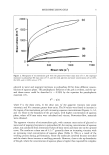
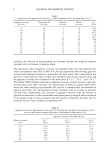
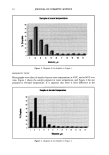
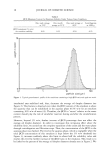
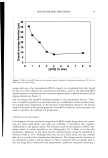
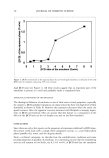
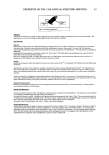
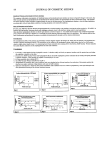
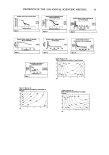
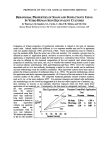
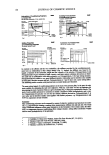
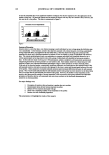
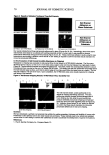
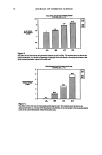
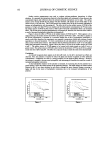
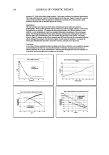
92 JOURNAL OF COSMETIC SCIENCE Figure 2. Control Group Figure 2. Control Group _-- 15 i 5 o -5 o -lO *• -15 I BVehicle B No polymer O Propylene Glycol I 7 14 21 28 7 14 21 28 7 14 21 28 Day The relative effects of MW on topical delivery of lactic acid were studied using two hydroxy terminated polyesters with trimethylpentandiol (TMPD)/adipate backbones. One of the test polyesters had an average MW of 800 and one had an average MW of 1500. A competitive technology product, a polyurethane, was also utilized in this comparison. Test formulations containing the 1500 MW polyester and the polyurethane both exhibited increases in the cell size throughout the study (Fig. 3). The increase may be attributed to a tendency of these formulations to physically retard exfoliation, since both the 1500 MW polyester and the polyurethane contributed to a slightly more viscous and somewhat sticky consistency as compared to formulations containing lower MW polyesters. Figure 3. Comparison of Molecular Weight Figure 3. Comparison of Molecular Weight _-- 15 6 -10 • -15 B 800 MW B 1500 MW O Polyurethane I 7 14 21 28 7 14 21 28 7 14 21 28 Day Based on the work reported here, polyesters have significant promise as a delivery system for hydroxy acids. Use of polyester technology facilitates the design of a new generation of hydroxy acid skin treatment with enhanced performance at lower concentrations of acid or at a higher pH. By optimizing the delivery of hydroxy acid formulations, a reduction in irritation and sensory stinging can be achieved without loss of efficacy Through our research, we have found that polyesters are useful as topical delivery systems when used in formulations containing sunscreens and hydroxy acids. Based on the design of a polyester, compatibility with a wide range of lipophilic and hydrophilic excipient and active ingredients can be achieved. Examples of such actives include tretinoin, DHA, and skin whitening agents to name a few, but the possibilities are numerous. By controlling specific structural aspects of polyesters, deposition of active ingredients within the SC can be optimized. Specific polyesters have been shown to be useful as a means

PREPRINTS OF THE 1998 ANNUAL SCIENTIFIC MEETING 93 to focus organic sunscreen actives in the outer layers of the SC. By focusing sunscreens in the outer SC, risks of irritation can be minimized and efficiency and effectiveness of sunscreens can be enhanced. Other polyesters have been shown to be effective in distributing and sustaining hydroxy acids throughout the SC. By sustaining hydroxy acids in the SC, increases in the rate of skin renewal attributed to hydroxy acids can be enhanced while irritating side effects can be minimized. References 1. Carpenter, T., Howe, A., O'Connor, A., Orfanelli, $., Siegfried, R. Protection From Sun Protectors, Drug & Cosmetic Industry, March 1996. 2. Vaughn, C. Solubility Effects in Product, Package, Penetration, and Preservation. Cosmetics & Toiletties, Vol. 103, 48, 1988. 3. Vaughn, C. Solubility Parameters for Characterizing New Raw Materials. Cosmetics & Toiletties, Vol. 108, 58-62, 1993. 4. Grove, G..•. Investigative Dermatology, 73 (1), 6?-69, 1979. 5. Baker, H. and Blair, C. Br. •. Investigative Dermatolog•, 80, 36?-3?2, 1968. 6. Piewig, G..•. Investigative Dermatolog•, 54 (1), 19-23, 1970.
Purchased for the exclusive use of nofirst nolast (unknown)
From: SCC Media Library & Resource Center (library.scconline.org)