90 JOURNAL OF COSMETIC SCIENCE OPTIMIZING EFFICIENCY OF SKIN TREATMENT ACTIVE INGRED•IENTS VIA SPECIALIZED POLYMERIC TECHNOLOGY Diana L. Smith and Andrew P. O'Connor lnolex Chemical Company, Philadelphia, PA 19148 lntroductiou Several different types of technologies exist for controlling the delivery of active ingredients in topical cosmetic and pharmaceuticals. The discovery of the ability of polyesters to mitigate the skin penetration of sunscreen active ingredients led to the evaluation of polyesters as delivery systems for hydrophilic actives [1]. In our present study, solubility parameters were employed to design polyesters compatible with hydrophilic active ingredients. The effects of applying formulations containing the alpha hydroxy acid (AHA) lactic acid and the polyesters to human skin in-vivo were examined. We utilized a comparative cytology method that determined the change in stratum corneum (SC) cell size at weekly intervals for 28 days. The results indicated that certain polyesters of sufficiently low molecular weight could enhance the effects attributed to the lactic acid application. The proposed mechanism of action is that the polyesters are able to carry the lactic acid to the target site of action in the skin and release the lactic acid at a sustained rate. Initial experiments were conducted also on the polyesters' abilities to enhance the effects attributed to dihydroxyacetone (DHA) which is the active used in sunless tanning preparations. Our preliminary experiments indicate that the initial color intensity and persistence attribmed to DHA application may be enhanced with formulations containing polyesters. Based on the results of the AlIA and DHA experiments, we have found that polyesters have the potential to act as controlled delivery systems for AHAs and DHA, as well as other hydrophilic and lipophilic actives ingredients. Using the polyesters as controlled, topical delivery systems may afford benefits such as enhanced potency or efficacy, reduced irritation, and sustained activity of active ingredients. Materials and Methods Structural characteristics significantly influence a polyester's behavior and properties, such as solubility. To describe the solubility behavior of a polyester and select active and inactive moieties, solubility parameter theory was employed. The method we used in polyester design and the method most commonly used by cosmetic formulators is the Hildebrand Solubility Method [2,3]. Using this approach, we were able to design polyesters which delivered hydrophilic actives to the SC and which were compatible with common oil-phase excipients. Active ingredients of interest were able to partition into specially designed polyesters. Specific structural features designed into the polyesters, provided for a maximized and sustained distribution of the active(s) throughout the SC. To measure the performance of AHA with polyesters, as well as the irritation potential associated with hydroxy acids, we utilized an in-vivo human panel testing. While there are other known methods used to determine desquamation rates, we were interested in specifically evaluating delivery of the actives in terms of exfoliation rate with a measurement method which would be sensitive enough to reflect slight performance differences. For our studies we utilized a comparative cytology method. This method was based on published research which correlated decreases in squamous cell size to increased rates of exfoliation [4,5,6]. Our test also utilized a dosage curve which resulted in much higher concentration of AHA being applied during the first half of the study. The dosage curve allowed us to study potential residual delivery or potential enhanced exfoliation as the dosage was decreased. The comparative cytology method we employed involved the following steps: 1. Test products were applied to the volar forearms of eighteen panelists twice per day for 15 days. The application was reduced to one application at day 16 to the avoid the possibility of too much irritation to panelists, and to determine the ability of the polyesters to sustain the effect of the AHA even at reduced levels. 2. Surface biopsies were removed from the sites via D-Squame discs five times during the study at seven day intervals days 0, 7, 14, 21, and 28. The cells are then stained and photomicrographed at 132X magnification. The negatives are projected onto a white surface and the cells are sized in each frame. The

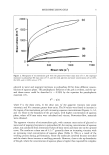
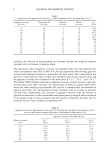
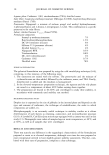
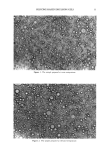
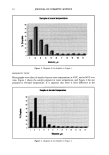
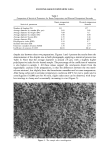
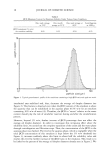
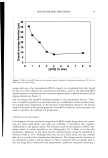
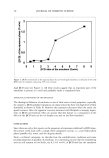
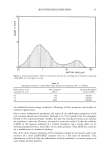
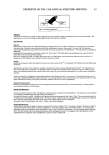
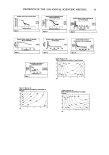
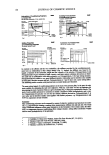
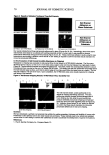
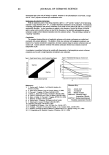
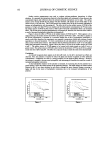
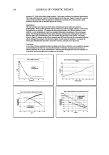
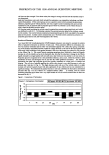
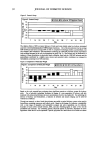
PREPRINTS OF THE 1998 ANNUAL SCIENTIFIC MEETING 91 cell sizes are then averaged. From these values, the change in average cell size from the baseline at day 0 was determined. Eight test formulations were used which included four polyesters, one competitive technology, and three control formulations. Of the control group, one was a positive control which contained the penetration enhancer, propylene glycol without polyester one was a negative control containing only acid and one contained no acid, no polyester and no propylene glycol which was referred to as the vehicle because it solely related to the basic emulsion carrier. All formulas tested (excluding the vehicle control) contained ten percent undissociated lactic acid which was buffered to a pH of 3.5. All formulas contained five percent polyester added to the oil phase, except for the controls. One control formula contained acid and propylene glycol which was added to the aqueous phase at five percent. Another control contained only acid. The third control contained no polyester, no propylene glycol and no acid, and was designated as the vehicle. Results and Discussion Two linear 800 MW trimethylpentanediol (TMPD)/adipate polyesters were tested to evaluate the relative effect of polyester termination on delivery of lactic acid. These polyesters differed in termination only. One was hydroxy terminated and the other was terminated (capped) with a fatty alkyl group, isonanoate. Use of the hydroxy terminated polyester resulted in a larger decrease in cell size for the first fourteen days of the study while exhibiting a more gradual increase in cell size as the dosage was reduced by fifty percent on day fifteen (Fig. 1). The control formula containing propylene glycol exhibited a sharp and dramatic decrease in cell size initially and up to the fourteenth day, but after the reduction in dosage at day fifteen, rapidly returned to average baseline cell size (cell size at day twenty-one was similar to cell size at day 0). Propylene glycol is recognized to be a skin penetration enhancer, and as such, tended to promote a rapid distribution of lactic acid throughout the SC and into the viable epidermis and dermis. The increased penetration rate noted with propylene glycol also typically contributes to a high level of irritation and stinging. The cell size of panelists applying the vehicle only showed a very small decrease in cells size between day 0 and day 14 (Fig. 2). The slight decrease noted with use of the vehicle relates to a slight increase cell turnover typically found with daily application of any vehicle and was not considered as a significant change. We interpreted the gradual increase in cell size contributed by the hydroxy terminated polyester after day 14 to be evidence of a sustained delivery effect. In contrast, with the control containing propylene glycol there was a very rapid increase in cell size which occurred after the dose was decreased on day ! 5. Figure 1. Comparison of Termination Figure 1. Comparison of termination ] ß Capped, 800 MW El-OH terminated, 800 MW 15 8 lO ß '•-•ø • • -5 o -lO -15 7 14 21 28 7 14 21 28 Day
Purchased for the exclusive use of nofirst nolast (unknown)
From: SCC Media Library & Resource Center (library.scconline.org)