j. Cosmet. Sd., 52, 1-1't (January/February 2001) An in vivo method to assess the photostability of UV filters in a sunscreen M. CAMBON, N. ISSACHAR, D. CASTELLI, and C. ROBERT, Johnson •ndJohnson Consumer, 1 Avenue C•mille Demoulins, 92187 Issy les Moulineaux, France. Accepted for publication February 8, 2001. Synopsis An in vivo method was developed in order to study the photostability of UV filters in a sunscreen. This method assesses sunscreen photostability in the emulsion after direct interaction with the skin. For this purpose UV filters were recovered from volunteers' forearms by using the stripping technique, then ex- tracted from tapes and quantified by high-performance liquid chromatography (HPLC). The photostability of the filters tested was evaluated by comparing the amount of filters recovered from the strippings of UV-irradiated skin (40 minimal erythema dose, or MED) versus non-irradiated skin. Sequential analysis of several successive tapes reflected the distribution profile of the filters in the stratum comeurn. Photochemi- cal change was observed for one filter: it was shown to undergo a photochemical modification with the appearance of an additional HPLC peak. Moreover, UV filters tested displayed a high affinity for the stratum corneum but presented different distribution profiles. This in vivo method takes into account the interaction of the sunscreen agents with the stratum corneum. Furthermore, unlike spectrometric methods usually used for photostability assessment, it gives quantitative data fbr each individual filter of a finished product by using an HPLC technique. INTRODUCTION Sunlight has both beneficial and harmful effects on human skin. While necessary for the initial steps in vitamin D synthesis, it may also cause various damage such as photo- aging, photoimmunosuppression, and photocarcinogenesis. In order to help prevent such damage, the use of suncare products is recommended. These products contain UV organic filters and mineral pigments that prevent the transmission of deleterious UV radiation into the skin. In the recent years, the trend has been to develop very high sun-protection-factor (SPF) sunscreens. In order to guarantee constant efficacy of the product throughout the ex- Address all correspondence to N. Issachar.

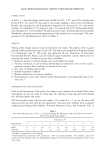
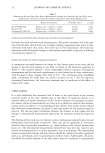
2 JOURNAL OF COSMETIC SCIENCE posure period, the UV filters used should not be altered by UV sunlight. Thus, the determination of photostability is an important part of the product efficacy evaluation (1). Various i, vitro methodologies, based on photometric or spectroradiometric measure- ments, are commonly used for the evaluation of the photochemical stability of organic UV filters. But these methods usually give global data on the sunscreen and not on each UV filter contained in the product, and, as they are i, vitro methods, they do not reflect what really happens in the skin. Therefore we used an i, vivo method to assess the photostability of UV filters. This method is based on a tape-stripping technique com- bined with HPLC analysis (2-4). Moreover, the application of several successive adhe- sives allows the determination of the distribution profile of these filters in the upper layers of the skin and of their possible degradation after 40-MED UV exposure. MATERIALS AND METHODS MATERIALS S/•bjects. Six healthy volunteers participated to the test after having signed a written informed consent. Inclusion criteria: ß Caucasian with skin types II, III (Fitzpatrick classification) ß Female ß Considered as healthy after a clinical examination ß 20-40 years old ß Registered with Social Security in agreement with French law (Huriet law no. 88- 1138, 20.12.88). Exclusion criteria: ß Naevi or freckles on tested areas ß Dermatological problems ß History of hypersensitivity to at least one drug or one cosmetic ß Pregnant or lactating women ß Pre-existing intense skin tanning Sunscreen. The sunscreen studied contained five different UV filters (four UVB, one broad-spectrum UVB + UVA see Table I). The SPF of this sunscreen, determined on 16 volunteers in our laboratories, according to the Colipa method, was 62.8 + 13.29. Table I UV Filters Contained in the Sunscreen Tested UV filters Octocrylene (Uvinul 539T) 4-methylbenzilidene camphor (Uvinul MBC 95) Octyl methoxycinnamate (Uvinul MC 80) Dioctylbutamido triazone (Uvasorb HEB) Methylen bis benzotriazoyl tetramethylbutylphenol (Tinosorb M)
Purchased for the exclusive use of nofirst nolast (unknown)
From: SCC Media Library & Resource Center (library.scconline.org)