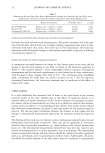
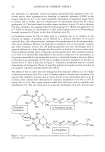
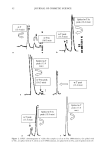
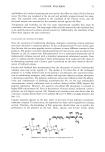
78 JOURNAL OF COSMETIC SCIENCE The HPLC chromatograms of samples exposed either to heat or light showed different chromatographic profiles and as retinol degraded, additional peaks appeared. These peaks had different UV spectra but, could not be positively identified by HPLC. By using LC-MS, we were able to determine and identify these peaks and confirmed retinol's degradation pathways. ß The MS data indicates that all trans Retinol by itself seems to degrade in one of two ways: either by degradation through oxidation or by conversion to cis stereoisomers. ß Exposure to UV light causes the isomerization of all trans retinol into cis forms. Mass and UV spectra obtained for these peaks were identical to retinol's. indicating that they can only be stereoisomers of retinol. ß When Retinol is exposed to heat it degrades to form oxidation products and epoxides. The Mass spectra of the major peaks have a large 287 fragment and a molecular mass of 302. These peaks were identified as epoxides of retinol and most probably form across the double bond within the nng structure (5,6 epoxy retinol). Since the 5,6 epoxy retinol and other degradation compounds are reactive, they may rearrange, combine with other molecules, isomerize or fnrther degrade. These degradation products may include epoxides at the other double bonds, epoxides of the cis isomers, esters and dimers. ß Further analysis of other peaks revealed that they contained a molecular mass of 268 and are most probably anhydroretinol. This anhydroretinol is found in the literature (5) and is believed to occur when retinol is dehydrated. In order to study retinol's degradation in products, this approach was applied to different types of cosmetic formulations. ß We were able to observe that certain cosmetic formulations prevent retinol from degradation. We did not detect the decomposition products •n these stable formulations even at elevated temperatures (37øC and 45øC) and we found retinol to be intact during elevated temperature stability. ß In all the retinol solutions and costaeric formulations tested, neither Retinoic Acid nor Retinal (aidehyde) was found. ß Finally, we observed a correlation bet•veen retinol's degradation and a decline in biological activity. This indicates that the by-products of retinol's decomposition are not bioactive and the desired effects can only be obtained when retinol is present. Conclusions: We confirmed that retinol degrades more rapidly under UV light exposure than under heat exposure. Additionally, light-exposed retinol is no longer detected in a matter of weeks. Analytical experiments via LC/MS successfully confirmed that retinol degrades by two different pathways: exposure to UV light which leads to cis isomers and exposure to elevated temperatures which leads to various oxidation products. Retinol also does not readily degrade to retinoic acid or retinaldehyde in any of the samples studied. The stability of Retinol and its rate of degradation depends on the concentration of retinol used, the cosmetic matrix, and the storage conditions. 1. Tsunoda, T. et al ,.L Soc. Cosmetic Chemtsts, 46, 191-198, 1995. 2 Manan, F. et. al..d. MtcronutrtentAnal)st& 7, 349-155, 1990. 3. Yosh•da, K., et. al., d. A. O. C S., 76, 195-200, 1999. 4. Su, Q. et al., d. of Chromatography B, 729, 191-198, 1999. 5. Tsukida, K. et. al., Internat. d. Vit. Nutr Res., 41, 158-170, 1971.

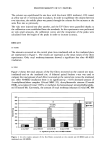
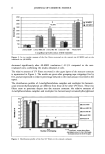
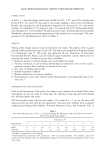
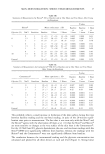
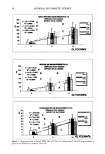
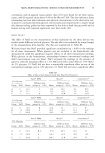
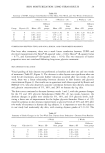
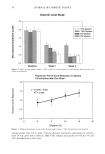
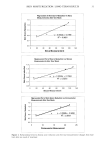
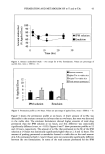
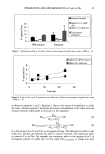
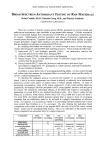
2000 ANNUAL SCIENTIFIC MEETING 79 INFLUENCE OF FORMULATIONS CONTAINING SALT AND GLYCERIN ON ELECTRICAL PROPERTIES OF SKIN: CORRELATION BETWEEN SINGLE TREATMENTS AND LONG -TERM RESULTS Randy Wickett, Ph.D., F. Li, E. Conroy and M. Visscher, Ph.D. University of Cincinnati College of Pharmacy and Children • Hospital Medical Center, Cincinnati, Ohio INTRODUCTION While electrical measurements on skin correlate to the extent of skin hydration in many circumstances(l~ 6) there is still some controversy about what they actually measure. For example, there is concern about the possible confounding effect of salts, either in the formulation or on the skin Salt may increase the conductance of the skin and may lead to changes in electrical properties that are not related to increased water content. We have performed a systematic study of the effects of salt and glycerin on the electrical properties of skin as measured by three •nstruments, the NOVA© DPM 9003, the Corneometer•) CM 825 and the Skicon© 200. The objectives of the study were two-fold. The influence of salt in the presence of glycerin was investigated in a single application study and the ability of a single application study to predict the results of a longer-term product application was tested. MATERIALS AND METHODS In the first single application a full 3 by 3 factorial design was employed using NaCI from 0 to 3% and glycerin from 0 to 10% in a simple vehicle as shown •n table 1. Table 1. Nine formulations from a full 3*3 factorial design by alternating NaCI and Glycerin levels for first single application study Formula No. Phase Ingredients* I 2 3 4 5 6 7 8 9 Mineral Oil 3.0 3.0 3.0 3.0 3.0 3.0 3.0 3.0 3.0 CSA** 1.0 1.0 1.0 1.0 1.0 1.0 1.0 1.0 1.0 Oil Brij©72 1.5 1.5 1.5 1.5 1.5 1.5 1.5 1.5 1.5 Brij©78 2.5 2.5 2.5 2.5 2.5 2.5 2.5 2.5 2.5 NaCI 0 1.5 3.0 0 1.5 3_0 0 1.5 3.0 Glycerin 0 0 0 5.0 5.0 5.0 15.0 15.0 15.0 Natrosol 0.5 0.5 0.5 0.5 0.5 0.5 0.5 0.5 0.5 Water Germaben II 0.1 0.1 0.1 0.1 0.1 0.1 0.1 0.1 0.1 Deionized Water 91.4 89.9 88.4 86.4 84.9 83.4 76.4 74.9 73.4 * W/VV% of ingredients in the formula ** Cetyl Stearyl Alcohol In the second single application study and the long-term test formulations contained 0, 5, 10 or 15% glycerin with 1.5% NaCI in the same vehicle. All test subjects were healthy females between the ages of 18 and 65 who signed informed consent. There were 23 subjects in the first single application study and 10 in the second. Twenty subject completed the long-term test. The following instruments were used to measure electrical properties, the Corneometer CM 825© (7)(Courage-Khazaka Electronic, Koln, Germany), the NOVA© Dermal Phase Meter 9003 (8)(NOVA Technology Corporation, Portsmouth, NH, USA) and the Skicon-200© (9)(lBS Company, Hamamatsu, Japan). In the single application studies instrumental measurements were made before product application (baseline) and again one hour after lotion treatment. In the long-term studies measurements were made before handing out the products and at one and two weeks at least 16 hours after the last treatment. Products were applied by the investigator in the single application study and twice daily by the panelists during the two week study. Application sites were on the outer aspect of the lower legs. All measurements
Purchased for the exclusive use of nofirst nolast (unknown)
From: SCC Media Library & Resource Center (library.scconline.org)