14 JOURNAL OF COSMETIC SCIENCE correlate to the extent of skin hydration (5-10) however, there is still controversy about what they actually measure. For example, there is concern about the possible confound- ing effect of salts (9), either in the formulation or on the skin. Salt may increase the conductance of electricity by the skin and may lead to changes in electrical properties that are not related to increased water content. This may be an especially important consideration with alpha hydroxy acid products since they will necessarily contain significant quantities of salts. While there have been several studies comparing the ability of the various commercial instruments to measure the moisturizing effect of lotions (10,11), no systematic study on the possible interference of salts, such as NaC1, has been published. In this study, simple lotions containing NaC1 and glycerin in combination were formulated to investigate whether there is interference by salt. The NaC1 levels of 0-3 % were selected based upon the anticipated range of ionic species that might be present in commonly used topical formulations, e.g., alpha hydroxy acid moisturizers with partially ionized species. MATERIALS AND METHODS APPARATUS Corneometer CM 825. The Corneometer © CM 825 (Courage-Khazaka Electronic, Co- logne, Germany) measures skin hydration by determination of skin capacitance. The measuring probe (surface 0.65 cm 2) consists of an interdigitated grid of gold-covered electrodes. There is no direct galvanic contact between the electrode and the skin surface. The whole system (interdigitated electrode and upper part of the epidermis) works as a variable capacitor. The probe of the CM 825 is electrically isolated from the measuring electronics to limit the influence of ground capacitance and salty skin surface (Courage, 1994). The CM 825 operates at a mean frequency of 1 MHz (1.15 MHz, very dry medium 0.95 MHz, very hydrated medium). The measurements are given in arbitrary units (AU) ranging from 0 to 120 AU (10-12). Skicon 200. The Skicon © 200 (IBS Company, Hamamatsu, Japan) measures conductance at a fixed current of 3.5 MHz. The measuring probe (surface 0.28 cm 2) consists of two concentric gold-covered electrodes (with respective external diameters of 2 mm and 5 mm). The distance between the inner and the outer electrode is 1 mm. A high frequency current of a few pA flows when the probe is placed on the measurement area. The measurement values are given in micro-siemens units (ps), ranging from 0 to 1999 ps (10,11,13). Nova DPM 9003. The Nova © Dermal Phase Meter 9003 (NOVA Technology Corpo- ration, Portsmouth, NH) is a capacitance instrument. Measurement values are obtained by integrating measurements at different frequencies of the applied alternating current at preselected variable frequencies up to 1 MHZ. Capacitance values are calculated from the phase delay of the signal. The standard probe has two concentric brass ring electrodes separated by an isolator (with respective inner and outer diameters of 4.34 mm and 8.76 mm). The distance between the inner and outer electrodes is 1 mm. There is direct galvanic contact between the electrodes and the skin. Measurement modes can be selected in this instrument: CON : continuous readings d15 : reading after a 5-s measurement interval d10 = instantaneous reading. The final readout is given in arbi- trary DPM units (AU), ranging from 90-999 (10,11,14).

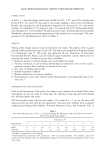
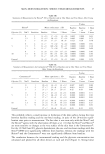
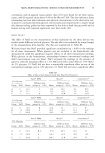
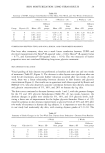
SKIN MOISTURIZATION: SHORT-TERM MEASUREMENTS 15 FORMULATIONS A full 3 x 3 factorial design with levels of NaC1 of 0%, 1.5%, and 3.0% and glycerin levels of 0%, 5%, and 10% was used in this study, making a total of nine formations. Besides salt and glycerin, all formulations contained 3% mineral oil, 1% cetyl-stearyl alcohol, 4% surfactant (1.5 % stereth-2 and 2.5 % stereth-20), 0.5 % hydroxyethylcellu- lose (thickener), 0.1% Germaben © II, and deionized water. All formulations had suitable flowability, allowing convenient application of the products by a micropipet. The com- ponents of the formulations are listed in Table I. SUBJECTS Twenty-three female subjects were recruited for the study. All subjects were in good general health and between ages 18 and 65. The skin types ranged from Fitzpatrick type I to Fitzpatrick type V. The study was approved by the University of Cincinnati Institutional Review Board, and all subjects signed informed consent forms prior to entering the study. Exclusion criteria were as follows: 1. Systemic steroid or topical therapy one week before the study 2. Tattoos, erythema, or pre-existing dermatological conditions such as skin cancer, psoriasis, eczema, skin cracking, or lesions at test sites 3. Any type of weight-control diet 4. Insulin-dependent diabetes 5. Known sensitivity to cosmetic products 6. Participation in any other clinical study (dermal patch, investigational drug or de- vices, etc.) PREPARATION OF THE TESTING SITES Prior to the beginning of the study, the subjects were instructed to refrain from using moisturizers on the test sites for seven days. No shaving of legs was permitted during the 48 hours before the study. All nine products were used on each subject. Five areas of 3 x 5 cm on the outer calf region of each leg were used for the treatments. The areas were marked with a surgical marking pen (Surgical Skin Marker, Precision Dynamics Corp., San Fernando, CA). A Table I Nine Formulations From a Full 3 x 3 Factorial Design by Alternating NaCl and Glycerin Levels for Short-Term Study (water phase) Formula no.** Ingredients* 1 2 3 4 5 6 7 8 9 NaC1 0 1.5 3.0 0 1.5 3.0 0 1.5 3.0 Glycerin 0 0 0 5.0 5.0 5.0 10.0 10.0 10.0 * W/W% of ingredients in the formula. ** All formulations contained 3.0% mineral oil, 1.0% cetyl stearyl alcohol, 1.5% stereth-2, and 2.5% stereth-20 in the oil phase and 0.5 % hydroxyethyl cellulose, 0.1% Germaben II, and deionized water in the water phase.
Purchased for the exclusive use of nofirst nolast (unknown)
From: SCC Media Library & Resource Center (library.scconline.org)