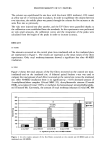
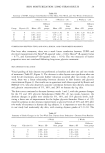
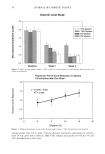
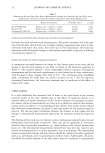
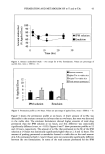
84 JOURNAL OF COSMETIC SCIENCE LOOKING BEYOND THE MECHANISMS OF SKIN IRRITANCY• SKIN PENETRATION ENHANCEMENT AND PRESERVATION Johann W. Wiechers, Ph.D. Uniqema, Gouda, The Netherlands Personal care ingredients were subjected to three different types of cosmetic testing in three unrelated studies. These included: (i) a three-application patch test to measure their potential skin irritancy (ii) a microbial challenge test to assess their potential to enhance the self-preservation of formulations (iii) an in-vitro skin penetration assay to assess their capability to e•xhance skin penetration The three-application patch test: This test was performed on 30 healthy subjects of either sex aged 18 to 65 years. Most products were applied as 25% solutions in isopropyl myristate that was also included in the test series as the neat ingredient. Some ingredients that are typically used at lower concentrations in cosmetic formulations, were tested at those concentrations. Products (400[tl) were tested on the upper left arm by applying them under occlusion on l cm x lcm Webril © squares that were fixed to strips of occlusive Blenderm © tape. They were left in place for 24 hours after which the patches were removed. At two days after the initial product application, the degree of irritancy was assessed using the well-known 4-point scale. Following this evaluation, patches were re-applied in such a way that exactly the same product was re-applied onto the same site of skin. In this way, patches were applied for three periods of 24 hours at day 1,3 and 5, whereas irritancy assessments took place on days 3, 5 and 8. Each test run contained two control samples: distilled water as the negative control to check for irritancy against the patch system and 0.3% sodium lauryl sulphate (SLS) to check for the elicitation of an erythematous reaction. The self-preservation assay: The microbial challenge test was performed using Escherichia coli, Staphylococcus aureus, Pseudomonas aeruginosa, Candida albicans, and Aspergillus niger based on the methods of the USPXXIII, BP 1995 and EP 1994. Of each ingredient, an 'adequately' and an 'inadequately' preserved cream were prepared containing an inert oil at a level of 35%. As the same emulsifier was used throughout the whole study, the experimental samples differed only from the 'inadequate' control samples only in the composition of the 35% oil phase. Twenty millilitres aliquots were challenged with approximately 107 colony forming units/ml (cfu/ml) and thoroughly mixed. They were stored at 25 øC in the dark and the viable count of surviving micro-organisms determined at 24 hours and 2 weeks after inoculation for the bacteria and after 1 and 4 weeks for the fungi and yeast using the microtitre plate Minimum Probable Number (MPN) method. Results were expressed as the log reductions obtained for each strain at the first and second sampling points. The 'adequate' and inadequate' samples were run to check the methodology. The first time-point yielded more discriminative results and was therefore used for further analysis. The in-vitro skin penetration assay: This assay used human abdominal skin that was dermatomed to a thickness of 300-500[tm. The diffusion system consisted of Teflon © flow-through cells. As these are very laborious experiments, only eleven personal care ingredients were tested, based on their performance in the previous two tests. In short, the flux of 5-fluorouracil at steady state was determined t¾om a 40-hour skin penetration experiment. After removal of non-penetrated material, each cell was treated with 250gl of the personal care product under investigation for 6 hours, during which time the completion of the wash-out was monitored by collecting the receptor solution every 2 hours. Thereafter, the ingredient was removed and the 5-fluorouracil solution re-applied for another 40 hours. The enhancement ratio (ER) was expressed as the permeability coefficient of 5-fluorouracil penetration after treatment divided by that before treatment. Water was run as a control ingredient to compensate for the increase in skin permeability due to gradual deterioration of the skin, whereas the skin penetration enhancer Azone, 10% in propylene glycol, was run as a positive control to check for the occurrence of skin penetration enhancement. Data calculation: The activity of the personal care ingredients towards the various activities was expressed as follows: In the three-application patch test, the mean skin irritation score (SIS) on day 8 was taken. The microbial activity was expressed as the Sigma Log Reduction (SLR), which is the combined log reduction in cfu at the first measuring point of all strains. In the in-vitro skin penetration test, the Skin Penetration Enhancement Ratio (SPER) was calculated by subtracting the ER of the control from that of the measured ER for the personal care ingredient. Results of chemicals tested for all activities are shown in Figure 1. Results: By far the majority of the tested ingredients had no efficacy whatsoever in any of the three mentioned activities and those showing some activity had only minor activity. Glyceryl monocaprylate/ caprate, tested at 25% w/w demonstrated, was not only the relatively most irritating product, but also the

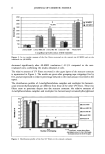
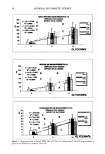
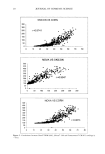
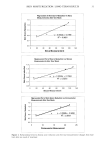
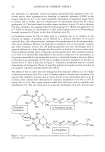
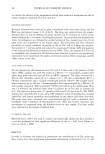
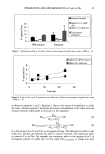
2000 ANNUAL SCIENTIFIC MEETING 85 one showing the highest degree of self-preservation, in particular at the earlier time-point as well as skin penetration enhancement (approx. 8-fold). When sorting the activities from high to low for all three activities, the resemblance between the three sequences was remarkable. -9 6 3 -3 Microbial Challenge Test 10 20 SLR u• [ ß Penetratior • Irritancy Figure I: Skin Penetration Enhancement Ratio's (SPER) and Skin Irritation Scores (SI$• as a function of the Self Preservation capacity of a personal care ingredient, expressed as the Sigma log cfu reduction (SLR). Eleven personal care ingredients were tested for all three activities. This suggests that one mechanism of action may be the basis for all three effects. Increased fluidisation of the skin lipids surrounding the comeocytes is known to cause skin penetration enhancement. But as a consequence, the irritancy of such a chemical will also increase. Anti-microbial activity can be achieved in a variety of ways, one of which is that the preservative penetrates and disturbs the cell membrane of the micro-organism that- apart from its phospholipids - is made up of many of the same components that make up the material surrounding the human comeocyte. If perturbation of biological membranes is the common factor in all three effects, this poses the question whether it is at all possible to achieve non-irritating skin penetration enhancers or preservatives. For practical reasons, many more ingredients were investigated for skin irritancy and self-preservation than for skin penetration enhancement. Figure 2 illustrates the relationship between skin irritation and self- preservation of the other tested ingredients. It clearly shows that ingredients do exist that are scoring well on their self preservation properties but are devoid of inducing skin irritancy. 10 20 30 SLR -tO * ,( One can only conclude that these personal care ingredients must be working by another general mechanism of action of preservatives: denaturing cellular proteins. This includes interactions with receptors on the micro- organism's cell membrane (resulting in secondary messengers release), interaction with enzymes expressed on the outer cell membrane or interruption ofphagocytosis. It can therefore be concluded that despite the similarities between the various mechanisms, the existence of non-irritating skin penetration enhancers and preservatives is made possible by a multitude of mechanisms of actions. Figure 2: Skin irritancy expressed as SIS' as a function of the self preservation capability of personal care ingredients, expressed as the SLR. Cosmetic scientists should be aware of these different mechanisms to avoid undesired activities of their materials. In particular experiments that investigate the effect of putative preservatives on the phase transition temperature of (bio)membranes should be useful in this respect. For skin penetration enhancement, the situation is more difficult as one also enhances the penetration of other formulation components that would otherwise be considered to be obnoxious.
Purchased for the exclusive use of nofirst nolast (unknown)
From: SCC Media Library & Resource Center (library.scconline.org)