Cosmet. Sd., 52, 35-50 (January/February 2001) Kinetics of permeation and metabolism of -tocopherol and -tocopheryl acetate in micro-Yucatan pig sin MEERA RANGARAJAN and JOEL L. ZATZ, Rutgers-The State University of New Jersey, Department of Pharmaceutics, College of Pharmacy, 160 Frdinghuysen Road, Piscataway, NJ 08854-8020. Accepted for publication January 15, 2001 Synopsis The objective of this research was to investigate the permeation and metabolism of o•-tocopheryl acetate (tx-TAc) and tx-tocopherol (ix-T) from solution and emulsion formulations and to delineate the kinetics of such metabolism. Simple formulations containing tx-TAc and tx-T were applied to fresh, viable micro-Yucatan skin derma- tomed to a thickness of 250-300 pro, as a finite dose in a flow-through diffusion system. The experiments were stopped at time intervals of 2, 6, 12, and 24 hours. At the end of each time interval, the amounts removed by washing, retained in the stratum corneum (SC), and penetrated into the viable skin and receptor were determined by a validated HPLC method. Receptor concentrations were below the limit of detection. tx-TAc underwent metabolism in pig skin to the active antioxidant tx-T. The metabolite appeared as early as two hours after application. The extent of metabolism was highest at 6-12 hours after application. No metabolism was detected in the stratum corneum. Delivery of tx-T from isopropyl myristate (IPM) solution was more efficient than utilization of tx-TAc from the same solution. Approximately 1.5% of tx-T yielded the same viable skin concentration as 5% tx-TAc. Topical application of tx-tocopherol or its prodrug acetate was capable of enhancing the overall antioxidant capacity of pig skin. The hydrolyric pathway of tx-TAc leading to the active antioxidant tx-T could possibly be saturable. INTRODUCTION Most skin cancers and other symptoms of cutaneous aging are the result of exposure to solar radiation. Evidence for free radical formation in UV-radiated skin (1) provided the basis for implication of reactive oxygen species in UV-mediated cutaneous damage including skin cancer, autoimmune diseases, phototoxicity, photosensitivity, and skin aging. A number of antioxidants that possess oxygen radical scavenging properties have been tested as potentially beneficial photoprotective agents (2,3). o•-Tocopherol (o•-T) Address all correspondence to Meera Rangarajan. Telephone: 732-342-9884 email: meerarc@hotmail.com fax: 732-445-3134. 35

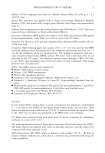
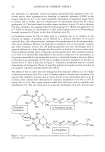
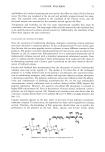
36 JOURNAL OF COSMETIC SCIENCE acts primarily as a lipophilic radical-scavenging antioxidant and suppresses chain ini- tiation and/or chain propagation by donating its phenolic hydrogen (6-OH) to the oxygen radicals (4). ot-T is the major lipophilic antioxidant of exogenous origin found in tissues and is widely used for enhancement of antioxidant protection by topical application. ot-T has been found to reduce tumor incidence in mice (5) and to decrease fine lines, wrinkles, and sagging induced by photoaging (6,7). While oral application of ot-T failed to increase its concentration in skin, topical application of ot-T homologues strongly increased ot-T levels in the skin of hairless mice (8). ot-Tocopheryl acetate (ot-TAc) is often used as a prodrug due to its stability in the presence of oxygen. A prodrug can be defined as a chemical derivative of an active molecule that, after administration, undergoes biotransformation to the pharmacologi- cally active substance. Because the epidermis is relatively rich in non-specific esterases and other enzymatic activity (9), the prodrug approach has been increasingly used to improve delivery of a drug through the skin and/or to localize its action within skin. Various dermal prodrug esters of naproxen and ketoprofen have been studied by Rautio et al, (10). It is theoretically impossible for the acetate to function as an antioxidant, as the group responsible for the antioxidant activity is chemically bound as the ester. Hence to function as an antioxidant, ot-TAc has to undergo enzymatic hydrolysis in the skin to release free ot-T. This is depicted in Figure 1. Cutaneous metabolism may be a critical determinant of therapeutic efficacy of topically applied ot-tocopheryl esters and thus of carcinogenic responses and photoprotective effects. The ability of skin to cleave this ester linkage has been disputed. Alberts et al. (11) failed to show bioconversion of ot-TAc to ot-T in human subjects. Gensler and co-workers (12) reported the inability of mouse skin to cleave ot-TAc to the antioxidant form, ot-T. In contrast, other authors have demonstrated cutaneous metabolism of ot-TAc to ot-T in mouse skin (13,14). Skin organ culture models have also been used to establish such metabolism (15). The use of pig skin to study the metabolism of ot-TAc has not been 6/.kq.. '3 "/ • '3 H CH3 7/J• • &l,/• H3C .....
CH3CO.. :/•H•3C"',,•H• • H3C 8 CH3 Enzymatic CH3 3 l tx-Tocopheryl acetate Hydrolysis C, H3 HO•••..• C. H3 -- M• II I,, H3C ..... •H HBC,,,,•/H l •_ 1 CH3 , [ -Tocopheo I Figure 1. Structure of a-tocophe•l acetate and a-tocopherol. The encircled 6-OH group is essential for its antioxidant effect.
Purchased for the exclusive use of nofirst nolast (unknown)
From: SCC Media Library & Resource Center (library.scconline.org)