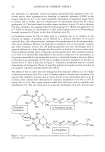
74 JOURNAL OF COSMETIC SCIENCE monolayer states, whereas it is dissociated from the monolayer upon its photoisomerization to the protonated dinitrospiropyran configuration. Different potential applications of photoswitchable biomaterials include the development of light-targeted therapeutic materials, the design of information storage and processing systems, the assembly of biological computers and the design of reversible sensor devices. The rapid advances in the area of bioelectronics and optobioelectronics reveal a variety of potential practical applications. An interdisciplinary effort of chemists, material scientists, biologists and electronic engineers is anticipated to pave the ground for the commercialization of the scientific accomplishments in these fields in the near future. References 1. I. Willnet and E. Katz, Angew. Chem., lnt. Ed. 39, 1180-1218 (2000). 2. (a) A. Riklin, E. Katz, I. Willnet, A. Stocker and A.F. Backmann, Nature, 376, 672-675 (1995). (b) I. Willner, V. Heleg-Shabtai, R. Blonder, E. Katz, G. Tao, A.F. Backmann and A. Heller, d. Am. Chem. Soc., 118, 10321-10322 (1996). 3. A. Bardea, E. Katz and I. Willner, Electroanalysis, in press. 4. F. Patolsky, E. Katz, A. Bardea and I. Willnet. Langmuir, 15, 3703-3706 (1999). 5. F. Patolsky, A. Lichtenstein and I. Willner, d. ,4m. Chem. Soc., 122, 418-419 (2000). 6. F. Patolsky, K.T. Ranjit, A. Lichtenstein and I. Willner, Chem. Commun., 1025-1026 (2000). 7. F. Patolsky, A. Lichtenstein and I. Willner, in preparation. 8. I. Willner, F. Patolsky and A. Lichtenstein, in preparation. 9. I. Willner, Acc. Chem. Res., 30, 347-356 (1997). 10. I. Willner and S. Rubin, Angew. Chem., lnr Ed. Engl., 35, 367-385 (1996). 11. I. Willner, S. Rubin and A. Riklin, d. Am. Chem. Soc., 113, 3321-3325 (1991). 12. (a) I. Willnet, S. Rubin, J. Wonner, F. Effenberger and P. B•iuerle, •. Am. Chem. Soc., 114, 3150-3151 (1992). (b) I. Willner, S. Rubin and Y. Cohen, d. Am. Chem. Soc., 115, 4937-4938 (1993). 13. H. Asanum, T. Ito, T. Yoshida, X. Liang and M. Komiyama, Angew. Chem. Int. Ed. 38, 2392-2395 (1999). 14. M. Lion-Dagan, E. Katz and I. Willner, •. Am. Chem. Soc., 116, 7913-7914 (1994). 15. I. Willner, R. Blonder, E. Katz, A. Stocker and A.F. Backmann. d. Am. Chem. Soc., 118, 5310-5311 (1996). 16. M. Lion-Dagan, E. Katz and I. Willner, d. Chem. Soc., Chem. Commun., 2741-2742 (1994). 17. R. Blonder, S. Levi, G. Tao, I. Ben-Dov and I. Willner, d. Am. Chem. Soc., 119, 10467-10478 (1997).

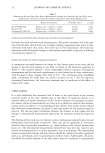
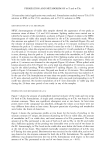
2000 ANNUAL SCIENTIFIC MEETING 75 BROAD SPECTRUM ANTIOXIDANT TESTING OF RAW MATERIALS Brian Costello, Ph.D., Huanshu Yang, M.D., and Patricia Gambino Collaborative Laboratories There are a variety of reactive oxygen species (ROS), generated via several normal and pathological mechanisms, that contribute to age-related skin damage. Cellular respiration leads to substantial leakage from mitochondria of ROS that are incompletely reduced forms of oxygen. Inflammation involves generation and release of precursor superoxide and several potent derivatives. Exposure of skin to ultraviolet radiation leads directly to singlet oxygen generation, triggers lipid oxidation, and also initiates destructive cellular responses that are mediated via elevation in intracellular ROS levels. In validating antioxidant raw materials, we screen through a series of tests that target critical, physiologically relevant ROS and oxidizing processes. These include the following: 1) Superoxide (02'-) and hydrogen peroxide (H202): not particularly reactive but necessary precursors for other more damaging ROS 2) Hydroxyl radical ('OH): extremely reactive and damaging 3) Singlet oxygen (•O2): excited electronic states of molecular oxygen that are far more reactive than the ground state 4) Peroxyl radical (RO2'): especially destructive and relevant to skin since lipid peroxidation is triggered by UV, propagated as a chain reaction, and leads to generation of toxic breakdown products In addition to these direct tests of scavenging/quenching ability, we also screen through cell culture tests that measure the integrated effect on overall redox status and the ability to survive oxidant-mediated stress. To illustrate the validation process we present the example of an antioxidant (AO) blend. Each of its active components was chosen to directly or indirectly (as a biochemical precursor) counter some aspect of oxidant stress or bolster cellular defenses. In order of decreasing concentration, some of the major components of this water-soluble blend are glutathione, aminopropyl ascorbyl phosphate (AAP), propyl gallate, ascorbic acid and green tea extract. We titrated the antioxidant efficacy of the blend with respect to scavenging or quenching of several ROS in our standard biochemical tests. EC50 (VoW/v) values for the blend are as follows: 0.006 (H202), 0.004 ('OH), 0.01 (102), 0.006 (O2'-) and 0.01 (RO2ø). For some ROS, this blend exhibits potencies greater than or equal to those of scavenging standards that are sufficiently stable to be included in cosmetic formulations at effective levels. For instance, it is as potent as vitamin E in preventing lipid peroxidation and 3 times more potent than histidine as a 102 scavenger. By also titrating the individual blend components with respect to each of our targeted ROS, the ratio of its EC50 values (within blend / alone) can be calculated (table below). This is an indication of the benefit of the blend compared to an equivalent level of a single component. Component H202 'OH •O2 O:'- RO:' scavenging scavenging scavenging/ scavenging scavenging quenching glutathione 5.5 aminopropyl 75 component component component ascorbyl phosphate inactive up inactive up inactive up (APAP) tol% tol% tol% propyl gallate 0.2 1 1 ascorbic acid 6.7 10 1.9 16 green tea extract 6.7 50 40
Purchased for the exclusive use of nofirst nolast (unknown)
From: SCC Media Library & Resource Center (library.scconline.org)