70 JOURNAL OF COSMETIC SCIENCE (5) Swift J. Fundamental Of Human Hair Science, Cosmetics Science Monograph No. 1,pp.48-49 (6) Robbins C. Chemical and Physical Behavious of Human Hair, 3 rd Ed. P.80 (7) Wertz P., Downing D. Polar Lipid Composition of Mammalian Hair, Comp. Biochem. Physiol. Vol.86B, No.4,pp 671-673, 1987 (8) Wertz P.,Downing D. Integral Lipids of Mammalian Hair, Comp. Biochem. Physiol. Vol.92B No.4, pp 759-761, 1989 (9) Petersen R. Ceramides-Key components for Skin Protection, Cosmetics and Toiletries, Vol. 107, pp45-49, Feb 1992 (10) Wertz P. Lipids and Barrier Function of the Skin, Acta Derm Venereo12000 Supp 208, p.7-11 (11) Braida D., Dubief C., Lang G. Ceramide -A New Approach To Hair Protection and Conditioning,' Costa. And Toil. Vol 109, pp.49-57, Dec. 1994

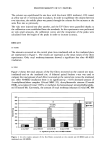
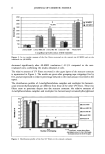
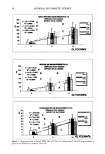
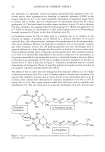
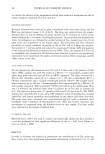
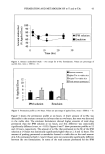
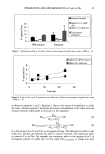
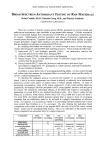
2000 ANNUAL SCIENTIFIC MEETING 71 POLYCATION SUBSTANTIVITY TO HAIR DUmNG SHAMPOO APPLICATION• FOAMING• AND RINSING Manual Gamez-Garcia, Ph.D. Amerchol INTRODUCTION The conditioning of hair with quaternary polymers from anionic shampoos involves the adsorption of cationic polymers with some appended surfactant molecules. The detergency character of the anionic surfactant is known, however, to interfere with the adsorption of the cationic complex. A mechanism circumventing the detergency process and frequently used to deliver polycation complexes to the hair surface is phase separation upon shampoo rinsing (1) the mechanism involves precipitation or coacervation during shampoo rinsing. This paper explores the substantivity of Polyquaternium-10 during shampoo dilution at the rinsing step and also during the application and foaming steps of the shampooing process. METHODOLOGY Polycation substantivity to hair was analyzed by the dye adsorption technique (2) and by ESCA (3). The hair used was virgin brown from International Hair Importers. The analyzed shampoos consisted of 15 % active surfactants in combination with an 0.5 % active level of a medium molecular weight Polyquaternium-10 with 1.2 % of nitrogen. The following surfactants were used in the study: ALS, SLS, SLES, ALES, C11-C15 Pareth-9, and Alkylpolyglucosides. The application step consisted of immersing the hair tresses in shampoo dilutions at a 1 .'8 ratio in water. Treatment of hair during the foaming step was carried out by immersing the tresses in foam previously prepared from a 1 to 8 shampoo dilution. The shampoo to hair ratio was 1 to 8. After the application and foaming steps the hair samples were rinsed with a rapid rinsing process. Finally, the shampoo-rinsing step consisted of immersing the hair in a higher shampoo water dilution of 1:800. Hair treatment periods with each one of the different shampooing stages ranged between 1 or 2 minutes. RESULTS AND DISCUSSION Typical patterns of Polyquaternium-10 substantivity to hair, expressed in lag of dye per g of hair, at each different stage of the shampooing process for the set of surfactants SLS and SLES-2 are shown in Fig 1. In this Figure it can be seen that the amount of polymer deposited from SLS is extremely low during the application and foaming stages and relatively high during the rinsing step. The reverse of this trend was observed for SLES-2 (see Fig. 1) and all the other ethoxylated surfactants. These results show that with shampoos containing ethoxylated surfactants enhanced polymer adsorption onto the hair surface occurs already at the application step while with strong anionic surfactants enhanced adsorption occurs rather at the rinsing step. A possible explanation to this may be that the lameliar or miceIlar structure of the strong anionic surfactants screens the electrostatic interaction between polycation and hair. As one may expect with the ethoxylated surfactants this screening effect will be weaker (1). Fig. 2 shows a typical substantivity profile of Polyquaternium-10 when the hair is allowed to be in contact with each separate phase of the shampoo for longer periods of time. In this Figure it can be seen that when the treatment period at each separate phase is extended, the adsorption of polymer gradually increases with time. These observations show that the levels of polymer adsorption during shampoo application, foaming and rinsing represent only a small portion of the characteristic long time-adsorption curves for each phase. Furthermore, the long-term substantivity of Polyquaternium-10 at each stage for different surfactants appears to have different polymer adsorption rates and reach a limit. It was also observed that polycation adsorption from strong anionic surfactants could be substantially increased if phase separation is forced to occur at the application instead of the rinsing step. This could be done by adding salts or other chemicals which cause either segregation or aggregation of polymer molecules in the surfactant system. Polymer substantivity during the foaming stage was, on the other hand, seen to be strongly dependent on the number and intensity of foaming strokes applied to the hair at this step
Purchased for the exclusive use of nofirst nolast (unknown)
From: SCC Media Library & Resource Center (library.scconline.org)