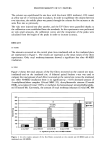
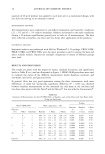
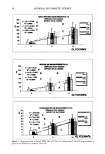
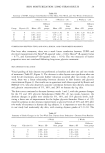
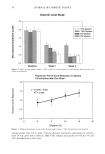
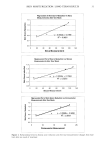
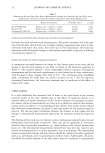
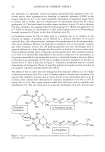
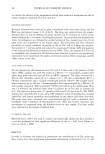
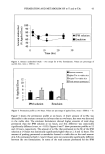
76 JOURNAL OF COSMETIC SCIENCE These results show that the blend outperforms most of its components in the battery of direct antioxidant tests. However, some components are not intended to function exclusively as direct antioxidants, but rather to bolster cellular redox status. APAP is a good example of this. As a stabilized form of vitamin C, it is capable of providing benefits in cellular systems that are not apparent in simple biochemical tests. For example, APAP treatment of derreal fibroblasts stimulates collagen production and, as shown in the figure below, protects against UV- induced apoptosis as effectively as equimolar concentrations of vitamin C. 1.2 1 O. 6 0.4 0.2 Mortality Following UVB Irradiation untreated 3ram vitamin C 3ram APAP The benefits of such components arise in part from increasing the cell's antioxidant capacity, which can be measured using various "total antioxidant status" tests. A modified version of the FRAP (ferric reducing ability of plasma) assay has been used to measure cellular redox status following treatment with the AO blend and individual components. The figure below shows an 80% increase in reducing capacity of whole cell lysates following treatment with the blend. These kinds of cell-based tests are necessary to demonstrate the benefits of some latent antioxidant materials and validate the broad-spectrum approach on a more physiological level than is possible using the simpler biochemical assays. Effect of AO Blend Treatment on Fibroblast Redox Status 1.4 1.0 0.8 0.6 0.4 o. 2 o.o no treatment A 0 blend

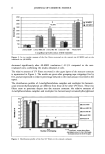
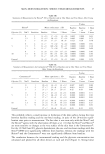
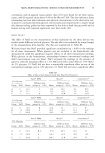
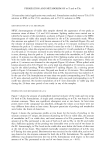
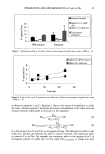
2000 ANNUAL SCIENTIFIC MEETING 77 DOES RETINOL DECOMPOSE IN COSMETIC PRODUCTS? Retinol's Stability and Decomposition Pathways Asira Ostrovskaya, Peter A. Landa, Anthony D. Rosalia, MaryAnn McKeever, Tom Mammone and Daniel Maes Estee Lauder Inc., Research and Development, 125 Pinelawn Road, Melville, NY 11747 Introduction: Retinol is well known to support cell growth promotion, maintenance and differentiation of epithelial tissues. To deliver these and other benefits to the skin, retinol is currently used in cosmetic formulations and products. However, Retinol is also known to be unstable and, therefore, remains of great concern to the cosmetic industry. The decomposition pathways of the retinoids in general have been previously postulated and investigated mostly by HPLC with UV/Vis Spectroscopy (1-4). In our studies, we examined specific conditions at which retinol degrades, and subsequently identified and confirmed the products of retinol's decomposition by LC-MS. In order to stabilize retinol in cosmetic products, we also investigated the kinetics and decomposition pathways of retinol 'as is' and in various cosmetic formulations. We then correlated the conditions of retinol's degradation to the decomposition pathways and by-products. This allowed us to attain an overall model for retinol's degradation and to help develop conditions to improve its stability. Methods: The stability of retinol and kinetics of its degradation in solutions and in products were investigated using High Performance Liquid Chromatography (HPLC). Retinol raw materials and formulations were stored at temperatures of 0øC, 37øC, 45øC, and under UV light. The inethod employs a Whatman ODS-2 column with a mobile phase of 0.5% ammonium acetate in methanol / water (85/15). The flow rate used was 1 mL/min with UV/VIS detection at 325nm. The decomposition products of retinol were determined, identified and substantiated using Liquid Chromatography - Mass Spectroscopy (LC-MS). The method conditions were similar to the above, but flow was reduced to 0.SmL/min with an additional post-column methanol flow of 0.1mL/min. A mobile phase gradient, to 100% methanol, was also employed between 50 and 120minutes. The MS collected masses 50-650 AMU and data were subsequently analyzed and interpreted. Results and Discussions: The kinetics of retinol's degradation were studied in solutions exposed to elevated temperatures and UV light. ß When stored at 0øC, solutions of Retinol raw material were found to be stable for two months. Samples stored at 37øC and 45øC were stable up to 1 month's time but showed increased degradation between 1 and 2 months. ß However, samples that were stored under light, showed a rapid degradation in 1 day and degraded completely by I month. Therefore, the rate of retinol's decomposition pathway hy exposure to light is much more rapid than exposure to elevated temperatures (refer to graph below). 120 100 •o 60 i "0øC • 1•]37øC 40 j iZ]45oC 20 J I 3 U V Light 0 1 7 ß Degradation of Retinol Raw Material Exposed to Various Conditions In addition, retinol's rate of degradation in solutions varied as a function of concentration: higher concentrations of retinol degraded more rapidly.
Purchased for the exclusive use of nofirst nolast (unknown)
From: SCC Media Library & Resource Center (library.scconline.org)