24 JOURNAL OF COSMETIC SCIENCE In this work, we studied the moisturizing effect of glycerin on healthy female dry leg skin in a two-week study by using both non-invasive measurements and clinical grading. Measured parameters include electrical conductance and capacitance, transepidermal water loss (TEWL), and expert skin dryness grades. The primary objective of this study was to determine whether short-term electrical measurements can be predictive of long-term skin moisturization. A constant amount of sodium chloride was added to each formulation to incorporate the effects of salt on instrumental readings and/or skin effects. We also investigated the correlation between instrumental measurements and skin grades. MATERIALS AND METHODS ELECTRICAL MEASUREMENTS The Corneometer © CM 825 (Courage-Khazaka Electronic, Cologne, Germany) measures skin hydration by determination of skin capacitance and operates at a mean frequency of 1 MHz (1.15 MHz, very dry medium 0.95 MHz, very hydrated medium). The mea- surements are provided in arbitrary units (AU) ranging from 0 to 120 AU (5-7). The Skicon © 200 (lBS Company, Hamamatsu, Japan) measures conductance at a fixed cur- rent of 3.5 MHz. The measurement values are provided in micro-siemens (ps) units, ranging from 0 to 1999 ps (5,6,8). The Nova © Dermal Phase Meter 9003 (NOVA Technology Corporation, Portsmouth, NH) is a capacitance instrument. Measurement values are obtained by integrating measurements at different frequencies of the applied alternating current at preselected variable frequencies up to 1 MHz. The final readout is given in arbitrary DPM units (AU), ranging from 90-999 (5,6,9). TRANSEPIDERMAL WATER LOSS The single-probe DermaLab © evaporimeter (Cortex Technology, Hadsund, Denmark) with cyberDERM software (Media, PA) measures transepidermal water loss (10,11). This device is connected to a computer and automatically reports the average of the readings after the probe is in contact with the skin for 30 seconds. The principle of this device has been described in detail (12,13). FORMULATIONS Four formulations were used in the study, with glycerin concentrations of 0%, 5%, 10%, and 15%, respectively. The components of the oil phase were mineral oil (3.0%), cetyl stearyl alcohol (1.5%), stereth-2 (1.5%) and stereth-20 (2.5%). The water phase con- tained hydroxyethylcellulose (thickener, 0.5%), Germaben II (preservative, 0.1%), and sodium chloride (1.5%). SUBJECTS A group of twenty healthy female subjects between 18 and 57 years of age participated in a two-week treatment phase. A second and separate group of ten subjects were

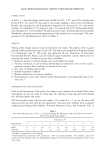
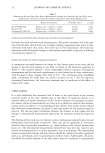
SKIN MOISTURIZATION: LONG-TERM RESULTS 25 enrolled in the one-hour test. All subjects had dry skin on their lower legs, i.e., a grade of at least 1 on a 0-4 scale (Table I). Exclusion criteria are reported in the previous paper. The study was approved by the Institutional Review Board of the University of Cin- cinnati, and all subjects signed an informed consent form. TREATMENT PROTOCOL The treatment sites were on the outer aspect of the calf. Subjects were instructed to refrain from any use of lotion on the lower leg for seven days before entering the study. Shaving the legs was only allowed twice a week, at least 48 hours prior to evaluations. Two sites of 9 x 10 cm on each calf were marked with a surgical marking pen (Surgical Skin Marker, Precision Dynamics Corp., San Fernando, CA). Each site was treated with the assigned lotion for a period of two weeks (14 days). Lotion placement was random- ized using a balanced design. An amount of 0.25 ml was applied to the test sites, thereby providing approximately 2.7 mg/cm 2 of product. The lotions were rubbed in to cover the site evenly. The first treatment was applied by the investigator, and the subjects were trained to apply the remaining treatments at home. The subjects in the two-week study applied the lotions twice a day, once in the morning and once at night. For measurement days, subjects refrained from applying the treatment in the morning. They did apply a treatment the evening prior to the measurements. They resumed lotion application after the measure- ments were taken. For the one-hour study, the 0.25-ml quantities of lotion were applied evenly only one time. MEASUREMENTS: ONE-HOUR TEST Instrumental measurements were made before product application (baseline) and again one hour after lotion treatment. Measurements of electrical properties and TEWL were made with the Nova © DPM 9003, the Skicon © 200, the Corneometer © CM 825, and the DermaLab © evaporimeter. MEASUREMENTS: TWO-WEEK TEST Measurements were made before product application (baseline), after one week (7 days), Table I Grading Scale for Dry Skin Condition Grade Description 0 1.0 2.0 3.0 4.0 No scaling Patches of slight powderiness and occasional patches of small scales distribution generalized Small scales in combination with a few larger scales, slight roughness, whitish appearance Small and large scales uniformly distributed, definite roughness, possibly slight redness and possibly a few superficial cracks Dominated by large scales, advanced roughness, redness present, eczematous changes and cracks
Purchased for the exclusive use of nofirst nolast (unknown)
From: SCC Media Library & Resource Center (library.scconline.org)