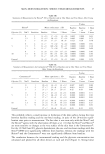
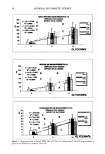
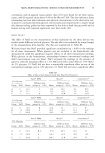
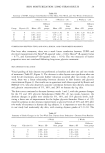
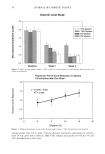
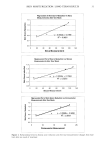
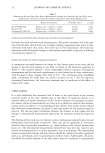
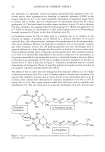
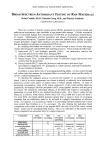
86 JOURNAL OF COSMETIC SCIENCE ABILITY OF CREAMS TO REDUCE ERYTHEMA, STRATUM CORNEUM BARRIER DAMAGE• AND SUBJECTIVE ITCHING Eric Abrutyn, Anthony Sireion, Ph.D. and Zoe Draclos, Ph.D. The Andrew Jergens Company, Cincinnath Ohio 45214 ABSTRACT Hand eczema, especially due to exposure to detergents and water, has a prevalence that exceeds 5% in the general population. Frequently, signs include erythema, scaling, and subjective itching. The integrity of the stratum corneum barrier may also be compromised. A systematic approach in developing creams to address these problems, is to use clinical models to assess the ability of creams to: ß Alleviate pre-existing dryness and irritation ß Prevent the return of dryness and irritation then validate using a clinical home-use study. The In Vivo model systems used to assess the efficacy of the lotions were: In Vivo Model Systems Measurable Benefit Regression test Alleviate dryness Pre-irritate the skin, then patch non occlusively with test product Hand wash and Reqression tests Pretreatment with lotion then occlusive patching with surfactant Reduced redness and TEWL rate Prevent induction of dryness Prevent induction of irritation In vivo laboratory results show that moisturizers containing high levels of glycerin are effective at alleviating dryness and irritation, as well as preventing their occurrence. The predictiveness of the clinical laboratory models was validated through a 14-day home usage clinical evaluation. Three (3) experimental approaches were used to develop effective skincare treatment products: 1. Alleviate irritation and dryness once it has occured. 2. Prevent irritation and dryness from reappearing by building strong skin barrier. 3. Develop products that have consumer pleasing aesthetics to ensure compliance.

2000 ANNUAL SCIENTIFIC MEETING 87
Purchased for the exclusive use of nofirst nolast (unknown)
From: SCC Media Library & Resource Center (library.scconline.org)