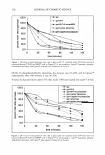
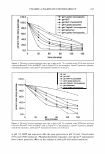
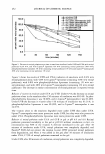
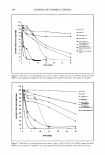
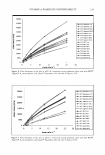
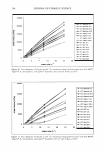
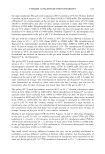
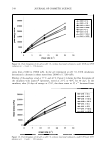
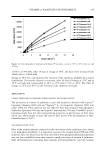
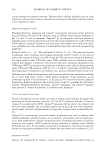
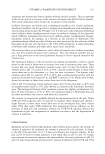
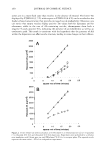
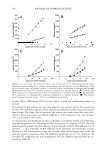
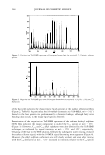
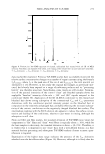
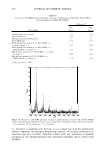
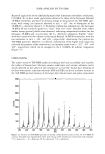
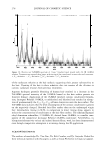
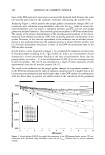
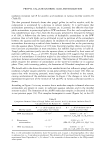
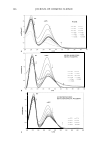
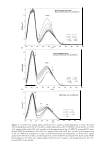
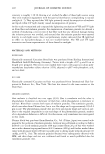
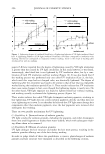
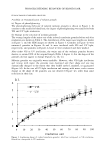
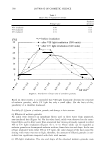
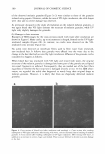
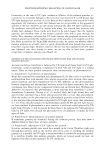
VITAMIN A PALMITATE PHOTOSTABILITY 243 and also after addition of Eusolex® 6300 in the gel, the degradation of the vitamin A ester was complete in an hour. BHT also protected retinyl palmitate from degradation under UVB, and after 30 minutes of irradiation, the 19.6% retinyl palmitate remained in the gel. At pH 4.0, retinyl palmitate degraded in a way similar to that at pH 8.0, but slightly more slowly. As in the gel at pH 8.0, the degradation of the vitamin A derivative started before irradiation in fact, its concentration without irradiation was 40% of the amount introduced in the gel. After 60 minutes of irradiation under UVA and UVB, 1.6% and 6.0%, respectively, of retinyl palmitate remained in the gel. In the presence of BHT, after 60 minutes of irradiation under UV A and UVB, 11 % and 22% of retinyl palmitate remained in the gel. Eusolex® 9020 and Eusolex® 6300 did not protect the vitamin A derivative. At pH 8.0 and 4.0, retinyl palmitate degraded very much under UV A and UVB. Its degradation was faster under UVA than under UVB. For both pHs, the sunscreens did not protect the vitamin A derivative, but instead BHT protected the vitamin A ester under UVA and UVB. Retinyl palmitate is much more unstable in gels at pH 8.0 and 4.0 than in gels at pH 5 .6 and 7 .0, probably for a hydrolysis reaction, but it must be considered that skin care formulations at pH 8.0 and 4.0 are not usually used in cosmetic preparations. STUDY OF ST ABILITY OVER TIME Figures 6 and 7 show the retinyl palmitate decrease over time of gels at pH 5.6 and 7 .0 (at 25°C and 40°C) containing retinyl palmitate alone and with BHT®, and containing Tagravit® A 1 microcapsules and Lipotec® liposomes. At pH 5.6, retinyl palmitate in the gel degraded quickly, both at 25°C and at 40°C, as no more detectable amounts of vitamin were found after five days' storage a similar behavior was noted when retinyl palmitate was vehiculed in Lipotec® liposomes at 40°C, while a certain protective effect was noted at 25°C, with 9.5% of the vitamin still remaining after 15 days. Obviously the presence of BHT markedly stabilized vitamin A palmitate at both temperatures, with 35.6% and 44.8% of retinyl palmitate after 15 days at 40°C and 25°C, respectively. The best result was obtained when retinyl palmitate was introduced in Tagravit® A 1 microcapsules, as after 30 days the undegraded vitamin was at about 73% and 82% at 40°C and 25°C, respectively. A similar behavior was also noted at pH 7 .0. In this case Tagravit® A 1 microcapsules at 25°C provided complete protection, with almost 98% of undegraded vitamin after 30 days. RHEOLOGY STUDIES Rheology studies on gels stored at 25 ° C and 40 ° C. Figures 8 and 9 show the flux rheograms of hydroxy ethyl cellulose gels at pH 5.6 stored for one and 30 days at 25°C and 40°C, containing retinyl palmitate alone and with BHT®, and containing Tagravit® A 1 mi crocapsules and phosphatidylcholine liposomes. Figures 10 and 11 show the flux rheo grams of the gels at pH 7 .0, containing retinyl palmitate alone and with BHT®, and containing Tagravit® A 1 microcapsules and phosphatidylcholine liposomes stored under

244 llO 100 90 CD !i 80 ·e 70 D. 60 � 15 40 30 CD D. 20 10 0 JOURNAL OF COSMETIC SCIENCE 0 5 10 15 20 25 30 time (days) ----6--gel 25°C .....,_gel 40"C --0-gel+BHT 2s•c ---gel+BIIT 40°C --+-gel+TAGRA Al microcapsules 40°C ---gel+TAGRA Al microcapsulcs 25°C -e-gel+Lipotec Iiposomes 2s•c -gel+Lipotec liposomes 40°c Figure 6. Decrease in recinyl palmitate over time in gels at pH 5.6 (at 25°C or 40°C), alone and with BHT®, and contained in Tagravit® A1 miccocapsules and Lipotec® liposomes vehiculated in the gels. 110 100 I 90 E 80 , 70 60 50 15 c 30 & 20 10 0 0 5 10 15 20 time (days) 25 30 ---6-FI 2s"C -Fl40"C -0-fldiBIIT2.5"C -p+TAGRAAI � -+-p+TAGRA Al mir;rocaplulcs40"C -Fl+Lipob,clis-,mes2S°C -�tiplomlm40"C Figure 7. Decrease in retinyl palmitate over time in gels at pH 7.0 (at 25 ° C or 40°C), alone and with BHT®, and contained in Tagravit® A1 miccocapsules and Lipotec® liposomes vehiculated in the gels.
Purchased for the exclusive use of nofirst nolast (unknown)
From: SCC Media Library & Resource Center (library.scconline.org)