VITAMIN A PALMITATE PHOTOSTABILITY 237 PHOSPHA TIDYLCHOLINE LIPOSOME · PREP ARA TI ON Two grams of Epikuron® 200, 0.02 g of retinyl palmitate, 5 ml of methanol, and 5 ml of dichloromethane were placed in a test tube and shaken under vortex. The solution was placed in a 250-ml flask and the solvents were evaporated at 25°C under vacuum (2.3 mmHg). The liposomes obtained were dispersed in 20 ml of water. The dispersion was subjected to ultrasound (50 Hz) for an hour at 25°C. METHODS Characterization of liposomes1 microcapsules, and nanocapsules. Water dispersions with Lipo tec® nanocapsules, Tagravit® microcapsules, Lipotec® liposomes, or phosphatidylcholine liposomes were analyzed with a laser submicron particle analyzer to determine particle diameters. Each determination was the mean of three runs. Skin penetration study. Three Franz cells with gel at pH 5.6 (with 10% w/w of retinyl palmitate) and three Franz cells with liposomes (with 1 % w/w of retinyl palmitate) in water dispersion were used to determine the passage of vitamin A through and into pig skin. The receiving phase (60% w/w water, 15% w/w absolute ethanol, 20% w/w glycerol, and 55% w/w Tween® 40) was analyzed after six and 24 hours. After elimination of the receiving phase, the skin was dissected and washed with 1 % w/w sodium lauryl sulfate aqueous solution and the vitamin was extracted with metha nol for 24 hours. Methanol was separated from the skin, centrifuged at 3000 rpm for ten minutes, and analyzed with the HPLC technique. Study of radiation stability. To compare solar radiation with that emitted by UVB and UV A lamps, the MED values (minimum dose that produces sunburn) of solar UVB and UVA were compared with the maximum dose of radiation per unit surface (DR) emitted by the UVB and UVA lamps. UVB solar MED has been reported in the literature (9) to be about 0.020-0.050 J/cm2 and the UVA solar MED at about 20-50 J/cm2. The following equations were used to calculate DR and PR : P R = P L /S = W/cm2 D R = P R t = J/cm2 (1) (2) Equation 2 was used to calculate DR, where PR is the power of the radiation per unit surface (W/cm2) and t is the maximum time of radiation. PR was obtained from equation 1, where PL is the power of the lamp declared by the manufacturer and S is the lateral surface of the emission cylinder, whose length is that of the lamp and whose height is the distance of the container from the light source. The PL for the UVB lamp was 4.5 W, and for the UVA lamp it was 40 W. The length of the UVB lamp was 120 cm, and that of the UVA lamp was 60 ·cm. The distance of the container from the lamp was in both cases 10 cm, and the maximum time of irradiation was 9000 seconds. For the UVB lamp, P R was calculated to be 5.97 x 10⁻⁴ W/cm2, and DR was calculated to be 7.165 J/cm2. For the UVA lamp, PR was calculated to be 1,066 x 10- 2 W/cm2, and DR was calculated to be 127.39 J/cm2. The MED value was below the radiation dose per unit of surface caused by both lamps. Comparing the power of radiation per unit surface of both lamps with that of solar

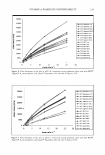
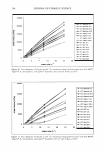
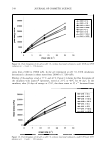
238 JOURNAL OF COSMETIC SCIENCE radiation (1.3 x 10⁻⁴ W/cm2 for UVB and 1.08 x 10- 3 W/cm2 for UV A), it was clear that the lamps were stronger than solar radiation. Five grams of gels at pH 5 .6 and 7 .0 and of each emulsion (whose ingredients are listed in the formulations section), with retinyl palmitate, additives, and their encapsulated products, were irradiated under UVB and UVA for two and a half hours, and were stirred with a magnetic stirrer, in closed pyrex containers, at a distance from the lamps of 10 cm. The samples, after dilution, were analyzed with the HPLC technique at predeter mined times (0, 30, 60, 90, 120, 150, and 180 minutes) to detect changes in molar concentrations. Study of stability over time. One hundred grams of gels at pH 5 .6 and 7 .0 with 0.2% w/w retinyl palmitate alone and with 0.01 % w/w BHT®, and of gels (at pH 5.6 and 7 .0) with 4% Lipotec® liposomes and with Tagravit® A 1 microcapsules, were stored in closed containers at 25°C and 40°C for one month. HPLC analysis of the diluted samples and rheology tests of the gels, whose composition was reported, and of the emulsions with Lipotec® liposomes was done after 0, 3, 7, 15, and 30 days of storage at 25°C and at 40°C. (a) HPLC analysis method Samples were prepared as follows: Two hundredths of a gram of gels (pH 5 .6 and 7 .0) with retinyl palmitate 0.2% w/w (3.35 x 10- 3 M) alone [and with 0.01 % w/w BHT®, 0.032% w/w (1.2 x 10- 3 M) Eusolex® 9020, and 0.038% w/w (1.2 x 10- 3 M) Eusolex® 6300} were diluted with 4 ml of methanol, stirred under vortex, and centrifuged at 13000 rpm for two minutes before HPLC analysis. Two hundredths of a gram of gels (at pH 5 .6 and 7 .0) and emulsions with 4% w/w Lipotec® liposomes, 0.02 g of gels (at pH 5 .6 and 7 .0), emulsions with 20% w/w Lipotec® nanocapsules, and emulsions with 0.2% w/w retinyl palmitate were prepared in the same way for HPLC analysis. One tenth of a gram of gels (at pH 5 .6 and 7 .0) and emulsions with 6% w/w phosphatidylcholine liposomes were diluted with 5 ml of methanol, shaken under vortex, and centrifuged at 13000 rpm for two minutes before HPLC analysis. Five hundredths of a gram of gels (at pH 5 .6 and 7 .0) and of emulsions with 1 % w/w Tagravit® A 1 microcapsules were diluted with 2.2 ml of methanol and 0.3 ml of dichloromethane, shaken under vortex, centrifuged at 13000 rpm for two minutes, and then analyzed with the HPLC technique. (b) HPLC conditions Preparations contained retinyl palmitate alone or with the addition of BHT®, Eusolex® 9020, Eusolex® 6300, or retinyl palmitate in encapsulated systems: Mobile phase: methanol Flow rate: 1.0 ml/min Column: Cl8 RP, 50 x 4.6 mm (Alltech) diameter of packing material: 5 µm A.: 328 nm Retention time: 9 minutes Methanol was chosen as a solvent, being the best solvent for retinyl palmitate and giving vitamin ester solutions stability over time. Rheology studies. Flux rheograms of hydroxy ethyl cellulose gels and 0/W emulsions were determined using a rotational viscometer at 25.0° ± 0.5°C. The rheology studies were done on gels and emulsions stored at 2 5 ° C or at 40°C for 1, 3, 7, 15, and 30 days after preparation, and after 0, 30, 60, 90, 120, and 150 minutes of UVB or UV A irradiation
Purchased for the exclusive use of nofirst nolast (unknown)
From: SCC Media Library & Resource Center (library.scconline.org)