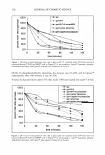
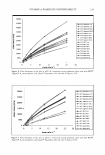
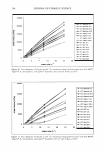
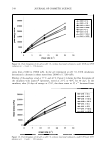
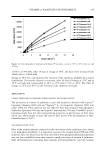
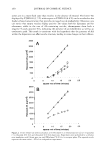
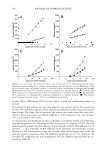
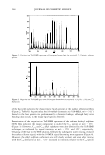
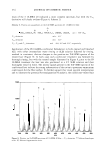
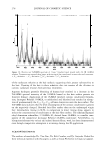
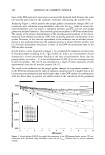
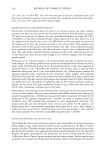
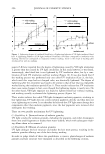
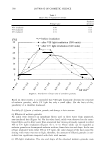
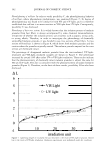
VITAMIN A PALMITATE PHOTOSTABILITY 249 30000 25000 20000 UJ UJ 15000 1n 10000 5000 0 0 5 15 20 25 �25°C Hposomes 1d U. ---o-2s·c liposomes 1d e. -2s·c llposomes 30d u. ----2s·c liposomes 30d B. -40•c liposomes 1d u. -+-◄o·c liposomes 1 d B. �4o•c liposomes 30d u. --40"C liposomes 30d B. 30 Figure 14. Flux rheograms of emulsions with Lipotec® liposomes, stored at 25 ° C or 40°C, after one and 30 days. 23380 to 11900 mPa. After 30 days of storage at 40°C, the shear stress decreased from 30000 mPa to 20000 mPa. Storage at 40°C for a day increased the viscosity of the emulsion, probably for a partial dehydration. The relative decrease in viscosity, after 30 days of storage at 25°C and at 40°C was high and corresponded to 49% at 25°C and to 35% at 40°C. The effect of storage at 25°C and 40°C on the viscosity of the emulsion was high. DISCUSSION CHARACTERIZATION OF LIPOSOMES, MICROCAPSULES, AND NANOCAPSULES The protection of vitamin A palmitate in gels and emulsions obtained with Lipotec® liposomes (diameter 8000 nm) and Tagravit® A 1 microcapsules (diameter 9000 nm) under UVB and UVA radiation was less efficient than that obtained with phosphati dylcholine liposomes (600 nm) and Lipotec® nanocapsules (700 nm). Probably Lipotec® liposomes might have lost their encapsulating properties in part because of their large initial size, which might increase the exterior layer fusion with the formation of mul tilamellar layers (10, 11). SKIN PENETRATION STUDY Most of the retinyl palmitate remained on the outer layers of the epidermis thus, owing to its high photo-instability, it is important to protect the vitamin from UVB and UVA radiation. Also, the release into the skin outer layers from phosphatidylcholine liposomes was very low, probably because they contain a small percentage of vitamin A palmitate. Only the formulations containing large amounts of retinyl palmitate cause the vitamin

250 JOURNAL OF COSMETIC SCIENCE to pass through the stratum corneum. Hydroxy ethyl cellulose hydrogels are not good vehicles for release of the vitamin, probably because they are hydrophilic and the vitamin is not dissolved in them. RADIATION STABILITY STUDY Phosphatidylcholine liposomes and Lipotec® nanocapsules protected retinyl palmitate very well from UV A and UVB radiation, both in hydroxy ethyl cellulose hydrogels at pH 5 .6 and 7 .0 and in emulsions. Tagravit® A 1 microcapsules were less protective, probably owing to their polyacrylate structure that might depolymerize under UVB and UV A radiation. Lipotec® liposomes did not protect the vitamin very much from radia tion, probably due to the formation of multilamellar layers that lose their encapsulating properties. Eusolex® 9020 (1.2 x 10- 3 M) and Eusolex® 6300 (1.2 x 10- 3 M) protected vitamin A palmitate well in hydroxy ethyl cellulose hydrogels at pH 5 .6 and 7 .0, but did not protect the vitamin A derivative at pH 4.0 and 8.0. The decrease in vitamin A palmitate was more marked under UVA than under UVB, probably since the absorbance maxi mum of the substance is located at 325 nm and it has only a minimum absorption in the UVB range. BHT® protected retinyl palmitate in hydroxy ethyl cellulose hydrogels both under UVA and UVB radiation at pH 4.0, 5.6, 7 .0 and 8.0, which may confirm that the photodegradation mechanism is an oxidative one, giving retinaldeide and retinoic acid. Hydroxy ethyl cellulose hydrogels were less protective vehicles than emulsions, probably due to their high water content, which might destabilize retinyl palmitate, as was previously reported in the literature (12). In gels at pH 4.0 and 8.0, retinyl palmitate underwent a higher degradation than in gels at pH 5 .6 and 7 .0, probably for a hydrolysis reaction. Phosphatidylcholine liposomes, Lipotec® liposomes, and Lipotec® nanocap sules protected vitamin A palmitate in emulsions and hydrogels. STUDY OF STABILITY OVER TIME Vitamin A palmitate was not stable over time in hydroxy ethyl cellulose hydrogels. The percentage of retinyl palmitate, stored at 25°C or 40°C, decreased, and after 15 days no vitamin A was detected by HPLC. Lipotec® liposomes did not protect the vitamin very well over time, probably due to its high content and to the large size of the liposomes, which might accelerate transformation of encapsulated systems into multilamellar lay ers. Tagravit® A 1 microcapsules protected vitamin A palmitate very well in hydroxy ethyl cellulose hydrogels, probably because, in our opinion, polyacrylates did not depolymer ize at high temperatures, thereby maintaining their encapsulating properties and thus protecting the vitamin. BHT® protected retinyl palmitate in hydroxy ethyl cellulose hydrogels over time. An antioxidant is essential for preparations containing retinyl ester because the degradation pathway of the vitamin has been shown to be oxidative (12,13). RHEOLOGY STUDIES Among the components of cosmetic creams and gels, rheological modifiers have an
Purchased for the exclusive use of nofirst nolast (unknown)
From: SCC Media Library & Resource Center (library.scconline.org)