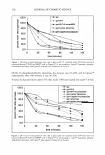
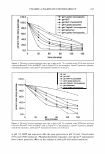
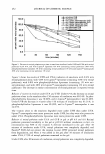
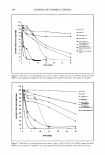
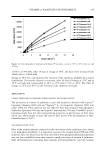
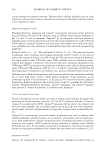
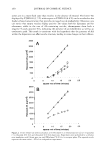
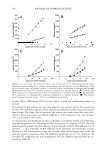
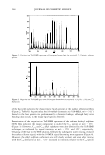
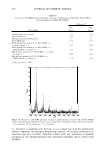
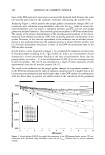
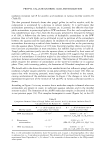
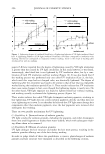
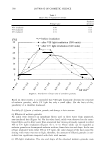
VITAMIN A PALMITATE PHOTOSTABILITY 247 the same conditions. The gel with vitamin at pH 5.6, stored at 25°C for 30 days, showed a decrease in shear stress at 25 s- 1 of 21 % (from 19100 to 15000 mPa). The introduction of Tagravit® A 1 microcapsules in the gel gave an increase in shear stress of 5 7% (from 19100 to 30100 mPa), and after 30 days' storage increased it more than 58% (from 30100 to 47800 mPa). Phosphatidylcholine liposomes also increased the shear stress of the gel 55% (from 19100 to 29700 mPa), but after 30 days of storage the shear rate decreased 35% (from 29700 to 19000 mPa). Probably Tagravit® A 1 microcapsules and liposomes aggregated in the gel at pH 5.6, determining an increased viscosity. The gel with the vitamin at pH 5.6, stored at 40°C for 30 days, showed a decrease in shear stress at 25 s- 1 of 51.92% (from 20800 to 10000 mPa). The introduction of Tagravit® A 1 microcapsules increased the shear stress from 20800 to 30800 mPa, but after 30 days of storage the shear stress decreased 32%. The introduction of liposomes in the same gel increased the shear stress from 20800 to 23 7 50 mPa, and after 30 days of storage at 40°C, the shear stress decreased 51 % . Storage at 40°C of the gel at pH 5 .6 determined the decrease in viscosity in the gel with vitamin A and also in those with Tagravit® A1 and liposomes. The gel at pH 7 .0 with vitamin A, stored at 25°C for 30 days, showed a decrease in shear stress at 25 s- 1 of 33% (from 12500 to 8300 mPa). The introduction of Tagravit® A 1 microcapsules increased the shear stress from 12500 to 20000 mPa after one day's storage, but the shear stress decreased to 15 800 mPa after 30 days (21 % ). The intro duction of liposomes increased the shear stress from 12500 to 16600 mPa after a day's storage. After 30 days of storage, the shear stress decreased to 12500 mPa (29%). The behavior of the gels at pH 7.0 at 25°C was more regular than that at pH 5.6 under the same conditions of storage. The introduction of liposomes and Tagravit® A 1 microcap sules determined an increase in shear stress after one day's storage, but the loss of consistency after 30 days of storage was lower than that of the gel at pH 5 .6. The gel at pH 7.0 with the vitamin, stored at 40°C, at 25 s- 1 showed a decrease in shear stress of 62% (from 10600 to 4000 mPa). After introduction of Tagravit® A1 micro capsules, shear stress increased from 10600 to 16000 mPa, but after 30 days of storage it decreased to 6600 mPa (58% ). After introduction of liposomes, shear stress increased from 10600 to 14200 mPa, but after 30 days of storage it decreased to 7300 mPa. In a gel at pH 7 .0 with the vitamin, storage at 40°C determined a high decrease in consistency also, in this case, the introduction of microcapsules and liposomes increased the consistency of the gels and there was a high decrease in viscosity after 30 days of storage. Storage of the gels at 40°C was a drastic condition. Rheology of gels irradiated under UVB and UVA. Figures 12 and 13 show flux rheograms of the gels at pH 5 .6 and 7 .0, without functional substances, under UV A and UVB radiation at t = 0 and t = 150 minutes. In the gel at pH 5.6, irradiation under UVB for 150 minutes determined at 25 s- 1 a decrease in shear stress from 27500 to 23400 mPa. In the gel reprepared at pH 5.6, UVA irradiation for 150 minutes determined a decrease in shear stress from 21800 to 16400 mPa. The small initial viscosity difference between the gels can be probably attributed to normally occurring, different, swelling of hydroxy ethyl cellulose, but the rheograms of the gel without irradiation and after 150 minutes of irradiation were registered on the same gel. In the gel at pH 7 .0, UVB irradiation determined at 25 s- 1 a decrease in shear

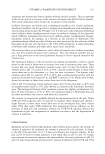
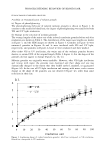
248 JOURNAL OF COSMETIC SCIENCE 30000 --+-UVB t = O' U. -0-UVB t = O' B. 25000 ---UVB t = 150' U. ---6-UVB t = 150' B. -UVA t=O'U. 20000 -UVA t = O' B. "' -+-UVA t = 150' U. 15000 --UVA t= 150'8. 10000 "' 5000 0 0 5 10 15 20 25 30 shear rate (s- 1 ) Figure 12. Flux rheograms of the gels at pH 5.6, without functional substances, under UVA and UVB radiation at t = 0 and t = 150 minutes. stress from 23200 to 18800 mPa. In the gel reprepared at pH 7 .0, UVA irradiation determined a decrease in shear stress from 20000 to 17200 mPa. Rheology of the emulsions stored at 25 ° C and 40 ° C. Figure 14 shows the flux rheograms of the emulsion with Lipotec® liposomes, stored at 25 ° C or 40°C for 30 days. In the emulsion, after 30 days of storage at 25 ° C, the shear stress at 25 s- 1 decreased from 30000 ci 25000 20000 rn 15000 10000 rn 5000 0 0 5 10 15 20 25 shear rate (s- 1 ) 30 -+-UVB t = 0' U. �UVB t = 0' B. -UVB t = 150' U. ----tr-UVB t= 150' B. -UVA t=O'U. .....-uvA t = O' B. -+-UVA t = 150' U. --UVA t=150'B. Figure 13. Flux rheograms of the gels at pH 7.0, without functional substances, under UVA and UVB radiation at t = 0 and t = 150 minutes.
Purchased for the exclusive use of nofirst nolast (unknown)
From: SCC Media Library & Resource Center (library.scconline.org)