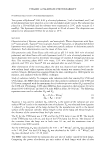
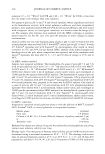
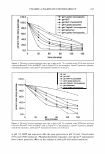
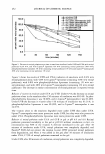
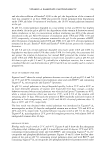
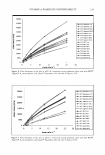
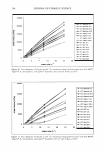
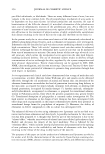
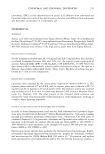
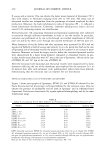
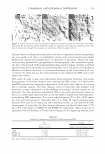
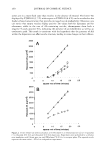
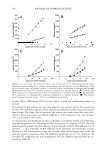
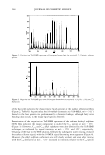
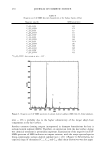
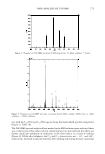
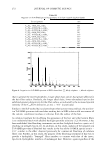
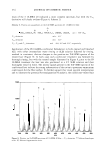
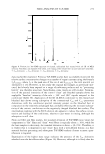
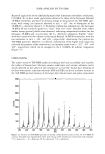
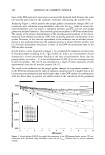
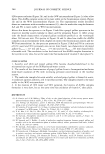
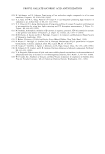
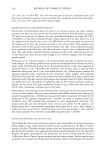
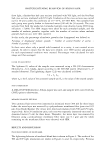
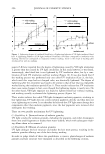
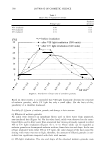
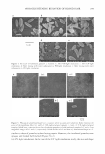
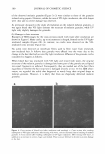
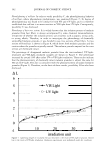
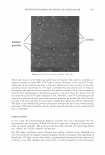
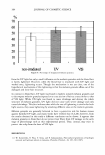
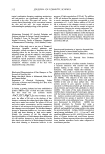
HAIR ANALYSIS BY ToF-SIMS 271 10000 9000 □ 8000 7000 6000 g 5000 □ 4000 3000 2000 1000 m � � � � m � � � � m/z Figure 4. Negative-ion ToF-SIMS spectrum of SDS-cleaned hair. D, Alkyl sulphates. *, Lipids. 7 104 □ 8 5 4 3 + 2 □ + □ + � • � • • m • � • a Figure 5. Negative-ion ToF-SIMS spectrum of sodium laureth (E02) sulphate (SLES) film. D, Alkyl sulphates. +, Alketh sulphates. ent, with the C 12 /E01 and C 12 /E02 species being the major alketh spectral components (Figure 5, Table III). The ToF-SIMS spectral analysis of hair washed in the SLES solution again indicated there was a relative loss of the surface silicone contamination, but also indicated that there was further significant adsorption of surfactants at the fiber surface as a result of washing (Figure 6). Of the alkyl sulphates, the C 16 and C 18 derivatives at m/z = 321 - and 349-, respectively, increased in spectral intensity after washing and rinsing the hair, indicating

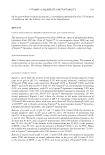
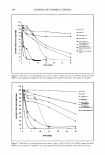
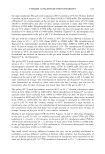
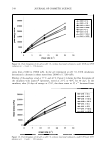
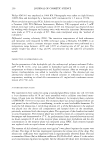
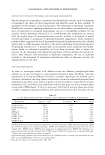
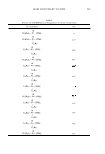
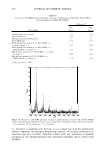
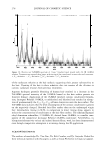
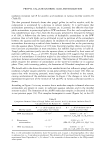
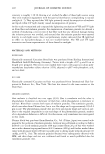
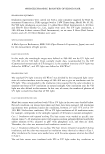
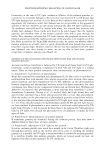
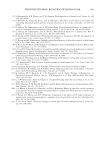
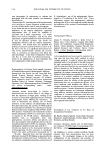
272 JOURNAL OF COSMETIC SCIENCE Table III Negative-ion ToF-SIMS Spectral Assignments of Sodium Laureth Sulphate (SLES) Ion assignment C12H25-0CH2CHz-OS03- C12H25-(0CH2CH2)z-OS03 C12H25---(0CH2CH2)3--DS03- C10H 2 1 -0CH 2 CHz-OS0 3 C10H21-(0CH 2 CH 2 )z-OS0 3 . C14H29-0CH2CHz-OS03 - C14H29-(0CH2CH2)2-0S03- C16H3rOCH2CH2-0S03- C16H3r(OCH2CH2)z-OS03- C18H37-(0CH2CH2)2-0S03- 3000 2500 201111 D � 1500 1000 500 0 + m/z 3or 353- 39T 2s1- 32s- 33T 381- 365- 4or 39r � � m � m � � � � � rn/z Figure 6. Negative..,ion ToF-SIMS spectrum ofSLES-cleaned hair. D, Alkyl sulphates.+, Alketh sulphates. that in general the more hydrophobic, longer alkyl chain species had greater affinity for the hair fiber surface. Similarly, the longer alkyl chain, lower ethoxylated species also exhibited greater substantivity for the fiber surface, as indicated by the increased spectral intensity of the C 16 /E01 derivative, at m/z = 365 + in particular. Similar to the SLS-washed hair and petroleum ether/acetone-extracted hair, the positive ion ToF-SIMS spectrum indicated that washing hair in SLES solution did not remove all the cationic conditioner residues or silicones from the surface of the hair. A common treatment for modifying the appearance of the hair and other keratin fibers is to oxidatively bleach with alkaline hydrogen peroxide solutions (1,2). However, it has been established that bleaching treatments can oxidize disulphide bonds to cysteic acid, resulting in strength loss (2,11). In addition, in this study, analysis of the negative-ion ToF-SIMS spectrum of bleached hair results in the loss of the 18-MEA species at m/z = 341 -, similar to the effect observed previously for commercial bleaching of cashmere fibers (12). Further, in this study, the purpose of the bleaching treatment of hair was to provide a hydrophilic "damaged" fiber interface to contrast with that of the intact, lipid-rich, hydrophobic interface of undamaged hair. However, again regardless of the
Purchased for the exclusive use of nofirst nolast (unknown)
From: SCC Media Library & Resource Center (library.scconline.org)