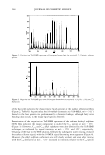
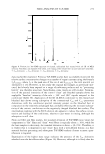
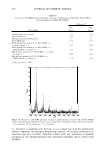
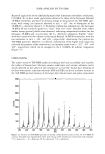
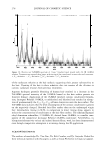
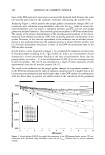
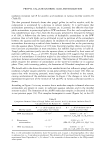
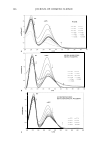
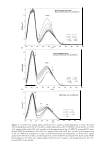
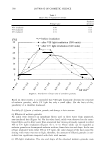
PHOTOLIGHTENING BEHAVIOR OF BLOND HAIR 293 IRRADIATION EQUIPMENT Irradiation experiments were carried out with a solar simulator supplied by Oriel In struments (Connecticut, USA) equipped with a 1 kW Xenon lamp, Model No. 81192. For VIS light irradiation, an air mass 1.5 global filter (Oriel Instruments), L-40 filter, and HA-50 filter (Kenko Co., Ltd., Japan) were used. For UV light irradiation, a 280-400-nm dichroic mirror (Oriel Instruments), an air mass O filter (Oriel Instru ments), and a U-330 filter (Kenko) were used. SPECTRA MEASUREMENTS A Multi-Spectra Radiometer, MSR-7000 (Opto Research Corporation, Japan) was used for the measurement of light spectra. LIGHT IRRADIATION In this work, the wavelength ranges were defined as 280-400 nm for UV light and 370-780 nm for VIS light. From sunlight model data, recommended by the CIE (Commission Internationale de L'Eclairage) (13), the standard intensity of UV light was defined as 66W/m2 , and VIS light was defined as 608 W/m2 . IRRADIATION UNIT The standard UV light intensity (66 W/m2) was divided by the integrated light inten sities of a solar simulator over the range of 280-400 nm to give an irradiation unit for UV light. This corresponded to the irradiation time required for the solar simulator to simulate one hour of UV irradiation in natural sunlight. One irradiation unit for VIS light was also defined in this manner. In this case, of course, the number of photons of UV light is much less than that of VIS light. LIGHT IRRADIATION ON HAIR Blond hair tresses were irradiated with VIS or UV light in the two cases detailed below. For each condition, six tresses were taken and their data were averaged. All irradiation experiments were performed under dry conditions, between 25° and 35°C and at 20- 30% RH. Under these conditions, VIS or UV light irradiation of 40 irradiation units, for example, corresponds to the sunlight exposure of 40 hours in natural atmosphere. Case 1. Irradiation with repeated washing. The hair tresses were washed at specific irra diation times (5-20 irradiation units) with aqueous sodium polyoxyethylene laurylether sulfate solution (15%), adjusted to pH7 with phosphoric acid, and then air dried. Thereafter, the color was measured and irradiation carried out. Case 2. Irradiation followed by one washing. The hair tresses remained unwashed during irradiation, and the color was measured at irradiation times identical to those in Case 1. After irradiation the tresses were washed once with the same aqueous solution described in Case 1. The red hair tresses were irradiated with VIS or UV light under dry conditions at

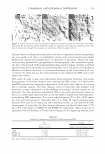
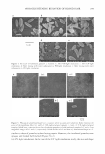
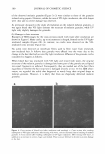
294 JOURNAL OF COSMETIC SCIENCE 25 ° -35 ° C and 20-30% RH. The color was measured at specific irradiation times, and the tresses remained unwashed during and after the irradiation period. For each condi tion, six tresses were taken and their data averaged. IRRADIATION ON ISOLATED MELANIN GRANULES Measurement of photolightening degree. In order to accurately measure the color, melanin granules were fixed in a silicone film by the following method: Isolated melanin granules (40 mg) were dispersed in hexane (3g) and dimethylpolysiloxane (Silicone SH-200C, 1,000,000 cs Toray Dow Corning Silicone, Tokyo, Japan) (0.6 g), after which 0.2 g of the dispersion was poured into a petri dish (116mm) and left overnight to remove all the hexane and to leave the melanin granules in the silicone film. Nine samples were prepared. Three of the samples were kept shielded from light, three additional samples were irradiated with-V-fS light, and the final three samples were irr�9:iated with UV light. The color of the irradiated samples was measured after each irradiation period, and it was found that there was no color change in the shielded samples after the experi mental period. Observations on the structural changes in the melanin granules. In order to observe any struc tural changes, the melanin granules were spread on a membrane filter without any fixing agent, using the following method. First, the melanin granules (5 mg) were dispersed in deionized water (5 ml). Thereafter the dispersion was filtered using a polycarbonate membrane filter (pore size 0.1 µm Toyo Roshi Kaisha, Ltd., Tokyo, Japan), leaving the melanin granules evenly dispersed on the membrane. Three samples were prepared following this technique. One of the samples was kept shielded from light, another was irradiated with VIS light, and the final sample was irradiated with UV light. Irradiation was performed until the degree of lightening (Lil) of the melanin granules reached a plateau. In the case of VIS light, irradiation continued up to 380 units, and in the case of UV light, irradiation continued up to 620 units. Subsequently, two small pieces of membrane filter containing the melanin granules were cut out of each sample. One piece was examined with SEM to observe the shape of the granules (magnification: x30,000), and images were taken to measure the length of the major axis of the granules (magnification: x 10,000). In order to maintain good data reliability, over 200 granules were measured for each experimental condition. The second piece was put into deionized water (10 ml) and stirred for 30 minutes, and filtered again with a polycarbonate membrane filter (pore size 0.1 µm). After drying, a small piece was cut out of this membrane filter, and structural changes in the irradiated and rinsed granules were observed using SEM (magnification: x 30,000). IRRADIATION OF BLOND HAIR CROSS SECTIONS Three blond hair fibers were placed on a plastic plate (Sump Plate B, Sump Laboratory, Tokyo, Japan), and a small amount of ethyl acetate was poured over the fibers to partly dissolve the plate. Thereafter another plastic plate was immediately placed on top of the hair fibers and a weight (1 kg) applied to the plate and left overnight to fix the hair fibers between the plates. Subsequently, the plates were cut with an ultramicrotome Ultracut N (Reichert-Nissei, Tokyo, Japan) to expose the hair cross sections. Twelve samples were prepared in this manner and divided into three groups. Four of the samples were shielded
Purchased for the exclusive use of nofirst nolast (unknown)
From: SCC Media Library & Resource Center (library.scconline.org)