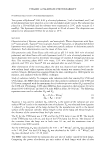
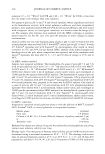
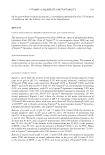
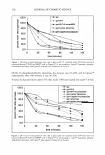
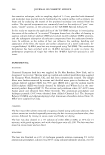
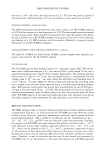
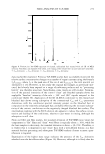
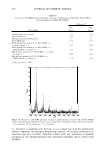
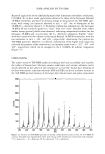
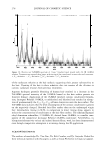
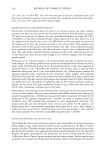
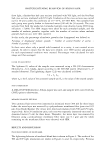
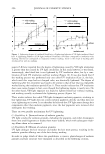
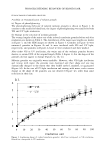
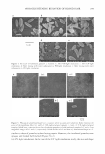
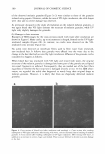
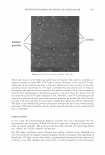
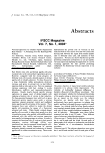
PHOTOLIGHTENING BEHAVIOR OF BLOND HAIR 299 a b C d e l ,um Figure 4. Structure of eumelanin granules. a: Control. b: After VIS-light irradiation. c: After UV-light irradiation. d: After rinsing with water subsequent to VIS-light irradiation. e: After rinsing with water subsequent to UV-light irradiation. l ,um Figure 5. Effusion of solids from blond hair. a: control, where no solids were observed. Holes represent the pores of the membrane filter. b-1 and b-2: VIS-light-irradiated samples. c-1 and c-2: UV-light-irradiated samples. Solids have a size similar to that of melanin granules in both irradiated samples. b-2 and c-2 are magnified images ofb-1 and c-1, respectively. Solids are flat in b-2 and have a 3-dimensional shape in c-2. similar to those of granules isolated using papain. However, the irradiated granules were opaque and looked half-melted (Figure 5 b-2). (ii) UV-light irradiation. In the case of the UV-light irradiation study, the size and shape

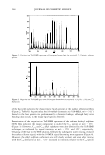
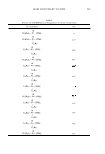
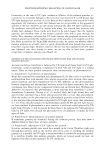
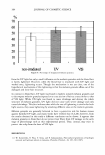
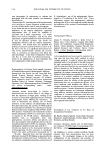
300 JOURNAL OF COSMETIC SCIENCE of the observed melanin granules (Figure 5c-2) were similar to those of the granules isolated using papain. However, unlike the case of VIS light irradiation, the solid shapes were clear and no severe damage was observed. As previously discussed in the study of irradiation on the isolated melanin granules, it was again found that VIS light destroys the structure of melanin granules, while UV light only slightly damages the granules. (b) Damage to hair structure Examples of SEM images for the cross sections rinsed with water after irradiation are shown in Figure 6. Many cracks, up to micrometers in length, formed on the UV-light irradiated samples (Figure 66). In contrast, no cracks were observed on the VIS irradiated cross sections (Figure 6a). No solids were detected on membrane filters used to filter water from immersed, non-irradiated hair. It follows that granules were effused into the water due to the change in the hair that had occurred by light irradiation. Effusion of the granules can be considered to happen as follows. When blond hair was irradiated with VIS light and rinsed with water, the original structure of the melanin granules is damaged and some part of the granules are collapsed into small fragments or softened. Consequently, they are washed out of the hair fibers regardless of whether the hair structure is damaged severely or not. In this SEM obser vation, we regarded the solids that happened to nearly keep their original shape as melanin granules. However, it is likely that there are shapelessly deformed melanin granules. a b Figure 6. Cross section of blond hair (after irradiation and washing). a: Cross section after washing subsequent to VIS-light irradiation. After rinsing with water, cavities increased, due to leaching of melanin granules. b: Cross section after washing subsequent to UV-light irradiation. After rinsing with water, in addition to an increase in cavities, huge scars formed. These scars are believed to be due to protein damage in the hair.
Purchased for the exclusive use of nofirst nolast (unknown)
From: SCC Media Library & Resource Center (library.scconline.org)