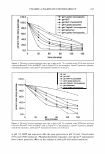
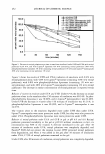
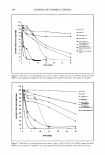
VITAMIN A PALMITATE PHOTOSTABILITY 235 EXPERIMENT AL MATERIALS All-trans retinyl palmitate (88%) was purchased from Sigma Fine Chemicals (St Louis, MO). Retinyl palmitate double-coated nanocapsules and plurilamellar multivescicular liposomes were obtained from Lipotec S.A. (Pharm. Cosm. Polli, Milan, Italy). Tagravit® A 1 microcapsules were obtained from EfalBio (Ami Italia, Garbagnate, Milan, Italy). Methanol, absolute ethanol, dichloromethane, di-sodium hydrogen phosphate di-hydrate, and BHT® (butylated hydroxy toluene) were obtained from Carlo Erba (Rodano, Milan, Italy). Dragoxat® EH (octyl octanoate) was obtained from Dragoco (Milan, Italy). Glycerol, Eusolex® 6300 (3,4-methylbenzilidencanphor), Eusolex® 9020 (butyl methoxy dibenzoyl methane, l-(4-terzbutylphenyl)-3-(4-methoxyphenyl)-l,3- propandione), and sodium di-hydrogen phosphate di-hydrate were obtained from Merck (Bracco Industria Chimica SpA, Milan, Italy). Montanov® 68 EC (cetearyl alcohol and cetearyl glucoside) was obtained from Seppic (Milan, Italy). Citric acid and Natrosol® 250 MR (hydroxy ethyl cellulose MW -2 x 10⁵ Dalton) were obtained from A.C.E.F. (Fiorenzuola D'Arda S.p.A. (PC), Italy). Epikuron® 200 (phosphatidylcholine) was ob tained from Lucas Meyer (Hamburg, Germany). Tween® 40 (polyoxyethylene sorbitan monopalmitate) was obtained from Fluka (Buchs, Switzerland). Kathon® CG (methyl isothiazolinone and methyl isothiazolinone chloride) was obtained from Sinerga S.r.l. (Pero, Milan, Italy). INSTRUMENTS The instruments used were a Silverson SL 2 homogenizer a TL 40/12 RST40Tl2 DVB lamp a TL K0540W UV A lamp a Bi.ichi RE 111 rotovapor a 2200 ETH AS (Instru ments S.r.l.) ultrasonic clearer a N4MD Coulter® sub-micron particle analyzer a Brook field RVTDVII rotational viscometer (with small adapter chamber and spindle SC 4-21/13R) a Shimadzu HPLC LC-lOAD (with detector SPD-lOAV and integrator CR6A) Franz cells and a 5417 centrifuge (Eppendorf). FORMULATIONS The following formulations were added to hydrogels at pH 5 .6 and 7 .0 and to O/W fluid Montanov emulsions: • 0.2% w/w (3.81 x 10- 3 M) retinyl palmitate alone or with 0.01 % w/w (1.2 x 10- 3 M) Eusolex® 9020 or Eusolex® 6300. • 4.0% w/w Lipotec® liposomes (containing 5 .0% w/w retinyl palmitate). Concentra tion of retinyl palmitate in the gel or emulsion: 0.2% w/w (3.81 x 10- 3 M). • 6.0% w/w phosphatidylcholine liposomes (containing 1.0% w/w retinyl palmitate). Concentration of retinyl palmitate in the gel or emulsion: 0.06% w/w (1.143 x 10- 3 M). • 1 % w/w Tagravit® A1 polyacrylate microcapsules (containing 6% w/w retinyl pal mitate). Concentration of retinyl palmitate in the gel or emulsion: 0.06% w/w (1.143 X 10- 3 M). • 20% w/w Lipotec® nanocapsules (containing 1 % w/w retinyl palmitate). Concentra tion of retinyl palmitate in the gel or emulsion: 0.2% w/w (3.81 x 10- 3 M).

236 JOURNAL OF COSMETIC SCIENCE Encapsulated systems (Lipotec® nanocapsules, Tagravit® A 1 microcapsules, Lipotec® liposomes and phosphatidylcholine liposomes) were used to increase the photostability and the stability of the vitamin ester over time. Retinyl palmitate alone, or with Eusolex® 9020 and Eusolex® 6300 and BHT, was added to the gels at pH 4.0 and 8.0. PREPARATION OF HYDROXY ETHYL CELLULOSE HYDROGEL Two grams of hydroxy ethyl cellulose were added to 97 g of buffer solution (heated to approx 80°C) at pH 4.0 (59% v/v 0.1 M citric acid and 41 % v/v 0.1 M sodium citrate) at pH 5 .6 (21 % v/v 0.1 M citric acid and 79% v/v 0.1 M sodium citrate) at pH 7 .0 (19.5% v/v 0.2 M sodium dihydrogen phosphate dihydrate, 30.5% v/v 0.2 M disodium hydrogen phosphate dihydrate, and 50% v/v water) and at pH 8.0 (94.5 v/v 0.1 M sodium dihydrogen phosphate and 6.0% v/v 0.1 M disodium hydrogen phosphate). The gel was brought to 25°C under stirring, and 1.0 ml of buffer with 0.05 g of Kathon® CG was added. Composition of gel (hydroxy ethyl cellulose gel): Hydroxy ethyl cellulose Buffer Kathon CG 2 g q.s. to 100 g 0.5 g The formulations were prepared at 25°C by dispersing retinyl palmitate, additives, and encapsulated retinyl palmitate in the hydroxy ethyl cellulose gel under mechanical stirring at 250 rpm, for two minutes. The percentage of the rheological modifier in aqueous dispersions was sufficiently low to enable magnetic stirring during irradiation, but similar to the actual levels used in cosmetic formulations. PREPARATION OF O/W FLUID EMULSION WITH MONTANOV® 68 EC (CETEAR YL ALCOHOL AND CETEARYL GLUCOSIDE) Three grams of Montanov® 68 EC were added to 20 g of octyl octanoate and heated to 60°-70°C, and the lipid phase was added to two-thirds of the total water heated to about 80°C while undergoing homogenization. The emulsion was brought to 25°C under stirring, and cold water containing 0.05 g Kathon® CG was added. Composition of 0/W emulsion (0/W fluid emulsion with Montanov® 68 EC): Octyl octanoate Montanov® 68 EC Kathon® CG Water 20.0 g 3.0 g 0.05 g q.s. to 100 g The formulations were prepared by adding retinyl palmitate, additives, and the encap sulated products to the finished emulsion under mechanical stirring at 25°C, at 250 rpm, for two minutes.
Purchased for the exclusive use of nofirst nolast (unknown)
From: SCC Media Library & Resource Center (library.scconline.org)