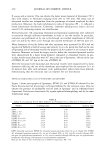
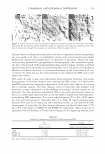
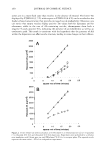
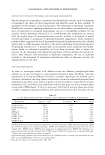
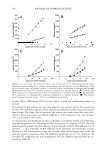
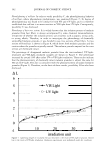
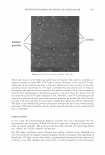
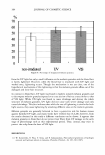
VITAMIN A PALMITATE PHOTOSTABILITY 251 important role because they form a product with the desired viscosity. This is important in the use of a gel (or of a cream), as the viscosity determines the skin feel of the product. This tactile impression often decides the acceptance of the product. Cellulose derivatives are widely used as rheological modifiers (14). Under irradiation, rheological modifiers can be expected to undergo photodegradation with depolymeriza tion via chain break initiated by UV light (15 ). It is the case in the irradiation of hydroxy ethyl cellulose, where depolymerization occurs via oxidative cleavage of the glycosidic bonds. Different techniques have been used to follow polymer transformation. Depoly merization resulted, for example, in a decrease in the viscosity of dispersions. The photodegradation of hydroxy ethyl cellulose was thus monitored by the evolution of flux rheograms of the gels over exposure to the UVA-UVB irradiation. A slight photolysis of hydroxy ethyl cellulose gels takes places upon direct irradiation. The viscosity values, at each shear rate, can be deduced from the ratio of shear stress/shear rate, and they slightly decreased with irradiation. Thus the cellulose modifier did not give a large protection to the retinyl palmitate because it did not degrade instead of the vitamin ester. The rheological behavior of the gel systems was slightly pseudoplastic, which is clearly shown by the trend of shear stress or viscosity over time at increasing shear rates. These systems had very small thixotropic hysteresis areas after 30 days the hydroxy ethyl cellulose gels at pH 7.0, stored at 25°C or 40°C, showed a high decrease in shear stress versus shear rate in the rheograms, i.e., they lost their consistency. The hydroxy ethyl cellulose gels at pH 5.6, stored at 25°C or 40°C, had a similar rheological flux with the exception of the gels with Tagravit® A 1 and BHT®, stored at 25°C, which, after 30 days, showed an increase in shear stress versus shear rate in the rheograms. Gels at pH 7 .0 containing retinyl palmitate alone, after 30 days of storage at 40°C, had an irregular trend stored at 25°C, they showed an increase in the thixotropic hysteresis areas. The rheological behavior of the emulsions systems was slightly pseudoplastic, but after 30 days of storage at 25°C or 40°C, the emulsions showed a Newtonian flux and the shear stress/shear rate ratio at each shear rate decreased. The increase in temperature probably affected the depolymerization of the gels. Under UVB and UV A radiation, pH 7 .0 and pH 5 .6 hydroxy ethyl cellulose gels showed a slight decrease in shear stress versus shear rate in the rheological flux, more evident under UV A than under UVB irradiation. The temperature had an influence on the structure of both gels and emulsions, whereas the UVB-UVA radiation affected the degradation of gels and components of emulsions less than it did the degradation of vitamin A palmitate. CONCLUSIONS Emulsions are better vehicles than hydroxy ethyl cellulose gels to protect the stability of vitamin A palmitate. In emulsions the vitamin is protected by the oil phase. A change in the pH of the gels from 5.6 to 7 .0 does not influence the vitamin's stability. In the gels at pH 4.0 and 8.0 retinyl palmitate is less stable than at pH 5 .6 and 7 .0. A high concentration of sunscreens improves the photostability of retinyl palmitate at pH 5 .6 and 6.0. Some encapsulating systems protect vitamin A palmitate under UVB and UVA

252 JOURNAL OF COSMETIC SCIENCE radiation and over time. The presence of an antioxidant, such as BHT®, increases the photostability and stability over time of retinyl palmitate, suggesting that degradation has oxygen as a photodegradation partner. From rheological studies it results that hydroxy ethyl cellulose and some components of the emulsions probably do not degrade to a great extent upon irradiation, and so they can be considered good components of cosmetic preparations. REFERENCES (1) I. Arsic, S. Vidovic, and G. Vuleta, Influence of liposomes on the stability of vitamin A incorporated in polyacrylates hydrogels, Int. J. Cosmet. Sci., 21, 219-225 (1999). (2) E. Andersson, I. Rosdahl, H. Torma, and A. Vahlquist, Ultraviolet irradiation depletes cellular retinal and alters the metabolism of retinoic acid in cultured human keratinocytes and melanocytes, Melanoma Res., 3, 339-346 (1999). (3) S. Mikelsen, B. Berne, and A. Valquist, Potentiation effect of dietary vitamin A on photocarcinogenesis in mice, Carcinogenesis, 19, 663-666 (1998). (4) 0. Sorg, C. Tran, P. Carraux, L. Didiereijean, and J. H. Saurat, Retinal and retinyl esters epidermal pools are not identically sensitive to UVB irradiation and anti-oxidant protective effect, Dermatology, 199, 302-307 (1999). (5) P. Maria, B. Concalves, H. Campos, and G. H. Eccleston, Vitamin A loaded solid lipid nanoparticles for topical use: Drug release properties, J. Controlled Release, 66, 115-126 (2000). (6) A. K. Singh and J. Das, Liposome encapsulated vitamin A compounds exhibit greater stability and diminished toxicity, Biophys. Chem., 73, 155-162 (1998). (7) V. Jenning and S. Gohla, Comparison of wax and glyceride solid lipid nanoparticles (SLN®), Int. J. Pharm., 196, 219-222 (2000). (8) M. E. Carlotti, V. Rossatto, and M. Gallarate, Vitamin A and Vitamin A palmitate stability over time and under UVB and UVA radiations, Int. J. Phann., 240, 85-94 (2002). (9) J. B. Wilkinson and J. Moor, Eds., Harry's Cosmetology, 7th ed., 1982, p. 226. (10) A. Sharma and U.S. Sharma, Liposomes in drug delivery: Progress and limitations, Int.]. Pharm., 154, 123-140 (1997). (11) J. Du Plessis, C. Ramachandrau, N. Weiner, and D. G. Muller, The influence of lipid composition and lamellarity of liposomes on the physical stability of liposomes upon storage, Int. J. Pharm., 127, 273-278 (1996). (12) T. Tsunoda and K. Takabayashi, Stability of all-trans retinal in creams, J. Soc. Cosmet. Chem., 46, 191-198 (1995). (13) C. Kawasaki and K. Takabyashi, Tests for vitamin A antioxidants, Vitamins, 15, 383-386 (1958). (14) D. E. Deem, "Rheology of Dispersed Systems," in Pharmaceutical Dosage Forms: Dispersed Systems, H. A. Lieberman, M. M. Rieger, and G. S. Baker, Eds. (Marcel Dekker, New York, Basel), Vol I, pp. 367-425 (1988). (15) V. Rossatto, T. Picatonotto, D. Vione, and M. E. Carlotti, Behavior of some rheological modifiers used in cosmetics under photocatalytic conditions, J. Dispers. Sci. Technol., 24, 259-271 (2003).
Purchased for the exclusive use of nofirst nolast (unknown)
From: SCC Media Library & Resource Center (library.scconline.org)