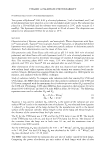
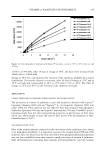
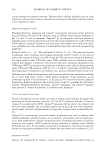
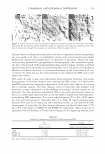
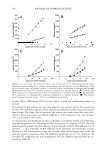
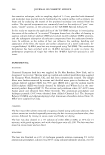
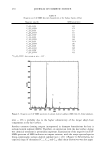
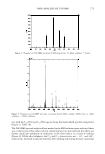
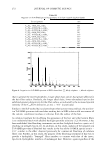
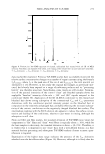
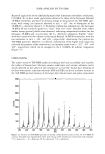
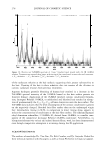
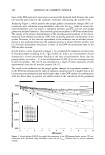
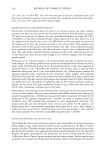
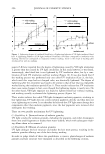
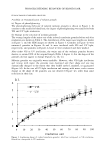
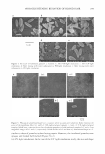
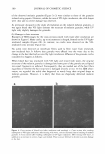
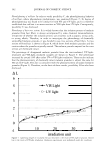
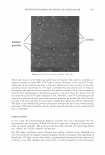
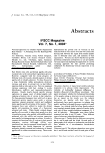
melanin granules PHOTOLIGHTENING BEHAVIOR OF BLOND HAIR Figure 8. Cross section of· non-irrad iaced blond hair. 303 cavities These facts lead us to the following lightening mechanism: The intrinsic sensitivity of melanin granules to either VIS or UV light is similar. However, in the case of UV light, lightening of the melanin granules is strongly influenced by the existence of the sur rounding tissues (possibility E). UV light is absorbed by hair protein and in doing so decomposes the proteins prior to reaching the melanin granules. Such action attenuates the UV light, and damage to the melanin granules is reduced. Thus, the degree of blond hair lightening from UV-light irradiation is low. However, since UV light damages and loosens the structure of hair, some of the melanin granules are washed out when the hair is rinsed with water, and this in turn results in blond hair lightening. On the other hand, VIS light is not absorbed by proteins and passes through the hair tissue without being attenuated. VIS light, therefore, directly attacks melanin granules, and as a result blond hair is lightened. CONCLUSIONS In this study the photolightening behavior of blond hair was investigated. For the investigation, the intensities of both VIS and UV light were adjusted to that encoun tered in natural sunlight. The results proved that both VIS and UV light make blond hair lighter, but involve different mechanisms. For VIS light, irradiation passes through hair protein without being absorbed and directly attacks and decomposes melanin granules, thereby resulting in the lightening of blond hair. UV light, on the other hand, is preferentially absorbed by hair protein and in doing so not only damages hair protein but is itself attenuated. In this attenuated

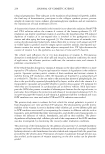
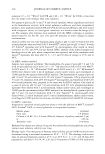
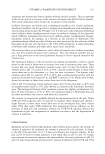
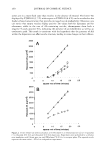
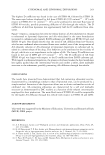
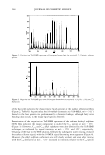
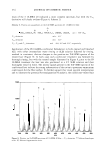
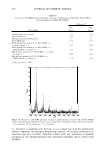
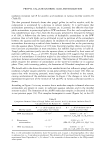
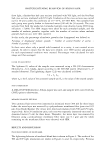
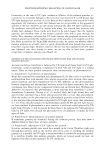
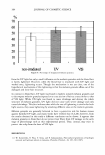
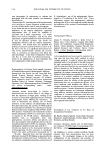
304 % 70 60 50 40 30 20 10 0 JOURNAL OF COSMETIC SCIENCE non-irradiated UV VIS Figure 9. Percentage of disappeared melanin granules. form the UV light has only a small influence on the melanin granules and the blond hair is barely lightened. However, when the blond hair is irradiated with UV light and washed once, lightening occurs. Though the mechanism is not yet clear, one of the hypothetical mechanisms of this lightening is chat the melanin granules effuse out of the damaged and loose hair structure. In contrast to blond hair, UV light was found to lighten isolated melanin granules and to decompose melanin granules exposed on a cross section of hair at a rate similar to that of VIS light. While VIS light was found to cause shrinkage and destroy the whole structure of melanin granules, UV light did not cause such severe damage and only caused shrinkage. This fact indicates that while the rate of lightening is similar for both light sources, they cause lightening by attacking different sites on the melanin granules. Melanin granules are generally believed co have a protective role for human tissues against harmful UV light, and many works have verified that (4,6,20) however, from the results obtained in this study a different conclusion can be drawn. It appears that melanin granules in blond hair do not protect hair fibers from UV damage in the early stage of photochange such as this experimental period. They, instead, may exist to protect the scalp from the heat of VIS light. REFERENCES (1) W. Korycowski, B. Pilas, T. Sarna, and B. Kalyanaraman, Phocoinduced generation of hydrogen peroxide and hydroxyl radicals in melanins, Photochem. Photobiol., 45, 185-190 (1987).
Purchased for the exclusive use of nofirst nolast (unknown)
From: SCC Media Library & Resource Center (library.scconline.org)