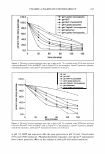
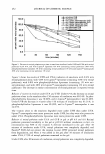
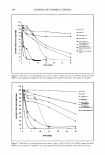
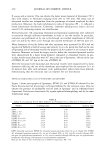
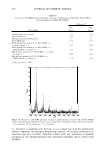
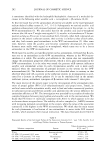
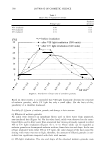
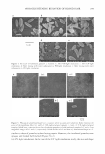
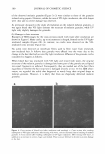
282 JOURNAL OF COSMETIC SCIENCE is sometimes identified with the hydrophilic/hydrophobic character of a molecule) de creases in the following order: ascorbic acid u-tocopherol �-carotene (9,10). At first we found that all the antioxidants of interest are soluble in the water/pentanol/ sodium dodecyl sulfate system (3, 5-7, 11-13). Subsequently we noticed ascorbic acid oxidation enhancement with increased pentanol concentration in the system, i.e., in the W /0 microemulsion (3 ). We also noted that for the ascorbic acid and u-tocopherol mixture (the AA to u-T weight ratio equals 0.13), ascorbic acid stimulates u-T decom position as long as AA occurs in non-oxidized form. Initially, when both compounds are present in the anionic surfactant system, their activity is similar to that of each other, and they both remain good antioxidants in the W /0 microemulsion (5 ). After some time, however, when the ascorbic acid becomes completely decomposed, the system becomes more stable with regard to u-tocopherol, which turns out to be a better antioxidant in the O/W microemulsion (5 ). With regard to ascorbic acid and �-carotene used as antioxidants, we found that �-caro tene acts as an antioxidant in the O/W microemulsion, whereas in the W/O micro emulsion it is stable. The ascorbic acid addition to the system does not considerably change the antioxidant properties of �-carotene, which is still a good antioxidant in the 0/W microemulsion. It is the other way round: the presence of �-carotene influences ascorbic acid antioxidant action. In such circumstances ascorbic acid is more easily oxidized when the concentration of pentanol decreases in the system (in the O/W microemulsion) (6). The behavior of ascorbic acid described above is contrary to that observed when only AA is present in the surfactant system: its decomposition is accel erated by a decrease in solvent polarity (3 ). It can be concluded that in the anionic surfactant system, antioxidant synergism of �-carotene with vitamin C takes place. The main interest of the present paper is (a) the investigation of the antioxidant prop erties of propyl gallate (PG) (3,4,5-trihydroxybenzolic acid propyl ester, Tenox), an artificial water-soluble antioxidant widely used in food and other commercial products, in surfactant systems and (b) how ascorbic acid addition into the system influences the antioxidant efficiency of PG. The investigation was preceded by our studies of molecular complex formation between propyl gallate and ascorbic acid in the microemulsion. We found that PG forms 1:1 molecular complexes with AA (13), which appears to be due to electron donor-acceptor forces. The stability of such a complex (i.e., AAPG) increases with increasing pentanol concentration in the system, while the value of the association constant K is the highest in the W/O microemulsion. We think that the main reason for such phenomena is localization of two antioxidants in water inside SDS inverted micelles, which promotes their mutual interaction. The data illustrated above (Table I) Table I Exemplary Results of the Calculated Values of the Association Constant K [L · mol- 1 } for Ascorbic Acid with Propyl Gallate Associates in Various Systems Solution composition Water 6% SDS, 5% pentanol, 89% water 6% SDS, 22% pentanol, 72% water 6% SDS, 39% pentanol, 55% water System Aqueous solution 0/W Bicontinuous W/0 Value of association constant K [L · mol- 1 } 11516±8% 40708 ± 10% 71709 ± 21% 178303 ± 27%

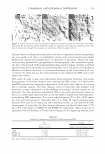
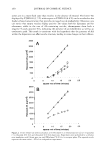
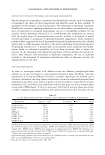
PROPYL GALLATE/ASCORBIC ACID ANTIOXIDATION 283 and the method of calculation of the association constants were published in an earlier paper by Szymula and Radzki (13). EXPERIMENT AL The sodium dodecyl sulfate assay [99.0% (GC)}, propyl gallate assay [98.0% (HLPC)}, 1-ascorbic acid assay [99.5% (RT)}, and 1-pentanol assay [99.0% (GC)} were supplied by Fluka Chemie and RdH Laborchemicalien GmbH & Co. Water was double redis tilled. In the kinetic experiment the change in propyl gallate spectra in various micellar systems was studied. The composition of the solvents used corresponds to one line of SDS concentration (6 wt%) in the microemulsion region of the phase diagram. This line passes through the aqueous micellar solution that forms the basis for the O/W micro emulsion (SDS 6%, water 72%, i.e., 94%, 93%, 89%, and 87% of water) a bicon tinuous part (SDS 6%, pentanol 22%, water 72%) and the inverse micellar solution, the basis for the W/O microemulsion (SDS 6%, water 72%, i.e., 55%, 44%, 29%, 19%, and 17% of water) (1-3). Absorption spectra were measured with a UV-VIS M42 Carl Zeiss-Jena spectrophotom eter, using 1-cm quartz cells to record spectra in the 200-400-nm region. The spectra were recorded on the disks under control of Carl Zeiss program M500, and using the ]CAMP option of this program they were transferred into an ASCII file. The UV spectrum of propyl gallate has two characteristic bands: "-maxl at 217 nm and "-max 2 at 274 nm (13) in water. Propyl gallate concentrations were calculated using absorbance values for "-max 2 at 280 nm (the shift of the "-max 2 band was noticed, depending on the microenvironment in which PG was dissolved). The UV spectrum of 1-ascorbic acid dissolved in water at pH 2.0 reveals a "-max of 243 nm (c = 10000 mol- 1 dcm3 cm- 1 ), which undergoes a red shift to 265 nm (t:=16 500 mol- 1 dcm3 cm- 1 ) when the pH goes up to 7.0 as a result of ionization of the C 3 -OH proton (14). The microemulsion was prepared by titration of pentanol and sodium dodecyl sulfate mixtures of various weight ratios by propyl gallate or propyl gallate and ascorbic acid/ water solution. This was vigorously mixed to obtain a clear and highly stable micro emulsion (3). The samples were measured and kept at 22 ° C. They were stored in glass vessels, without stirring, in daylight. As a reference, microemulsion samples of water, pentanol, and SDS with the same composition as the measured ones were prepared. RESULTS AND DISCUSSION In our previous paper we stated that ascorbic acid can be dissolved/solubilized up to 60% in the microemulsion region of the SDS/pentanol/water system (2,3). Inasmuch as the water solubility of propyl gallate and that of ascorbic acid are similar, one can expect that, like ascorbic acid, propyl gallate is easily dissolved in the SDS micellar solution and in the microemulsion (i.e., the O/W microemulsion, the bicontinuous system, and the W/O microemulsion). This suggestion was confirmed by the investigations of Schwarz et al. (9,10). They noticed that propyl gallate could be easily solubilized in the palisade
Purchased for the exclusive use of nofirst nolast (unknown)
From: SCC Media Library & Resource Center (library.scconline.org)