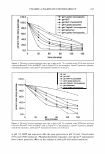
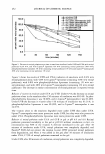
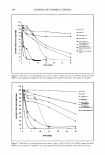
]. Cosmet. Sci.) 55, 291-305 (May/June 2004) A study of the photolightening mechanism of blond hair with visible and ultraviolet light T. TAKAHASHI and K. NAKAMURA, Kao Corporation, Hair-Care Research Laboratories, 1-3, Bunka 2, Sumida-ku, Tokyo, 131-8501 Japan. Accepted for publication January 26, 2004. Synopsis In this study the photolightening behavior of blond hair was investigated. The results demonstrated that visible (VIS) and ultraviolet (UV) light lighten blond hair through different mechanisms. VIS light was found to contribute much more to the lightening of blond hair than UV light, and acted directly, while UV light only lightened blond hair that had been washed following irradiation. VIS and UV light both, however, lightened to a similar degree isolated melanin granules and decomposed melanin granules that were exposed on a cross section of blond hair. These results indicate that melanin granules are equally sensitive to both forms of light while blond hair is most sensitive to VIS light. The results also indicate that hair tissues, excluding melanin granules, are damaged by UV light but not by VIS light. Based on these facts, the hypothetical lightening mechanism of UV light is assumed to be that UV light preferentially attacks and damages hair tissues rather than melanin granules. This occurs only after the hair is washed, as the washing process removes the melanin granules that effuse from loose hair fibers. In contrast, VIS light preferentially attacks and decomposes the melanin granules rather than other tissues, and also results in the lightening of blond hair but without the need for subsequent washing. We also found that while VIS light destroys the structure of isolated melanin granules, UV light does not act in a similar manner. Consequently, it is proven that VIS and UV light attack different sites of the melanin granule, even though the lightening rates from both light sources are similar. INTRODUCTION It is well known that hair is influenced by sunlight and that it affects its properties, most noticeably causing hair lightening and dryness. Hair lightening is due to melanin decomposition, while hair dryness is due to degradation of hair tissues. It is said that light generates super-oxide inside hair and causes damage such as amino acid decom position, a decrease in hair strength, the lift-up of cuticles, and degradation of melanin (1-6). Ultraviolet (UV) light has been generally considered to be the cause of this damage, but recent studies have revealed that visible (VIS) light also contributes to hair damage (4-8). Although the energy of a photon of UV light is higher than that of VIS or infrared (IR) light, the number of photons of UV in sunlight is much lower than for VIS or IR light. The ratio of UV (280-400nm):VIS (370-780nm):IR (750-2800nm) 291

292 JOURNAL OF COSMETIC SCIENCE intensity is roughly 1:10:10. Hating et al. studied the effect of these light sources using their own irradiation equipment with the spectral distribution corresponding to natural sunlight ( 4-7). They reported that VIS light primarily caused decomposition of melanin and lipids while UV light mainly caused decomposition of proteins. In this study we examined and compared the lightening mechanism of VIS and UV light on blond hair and melanin granules. For examination of melanin granules we devised a method of irradiating a cross section of hair fiber such that any chemical damage during the isolation process was avoided, and ensured that the melanin granules were exposed directly to each light source. Since our preliminary studies indicated that IR light had no effect on hair photochange, it was not studied further. The VIS and UV light intensities used were representative of those found in sunlight. MATERIALS AND METHODS BLOND HAIR Chemically untreated Caucasian blond hair was purchased from Keding International Haarfabrik GmbH (Backnang, Germany). Tresses with a weight of 0.5 g and 8 cm in length were prepared. The tresses were washed three times with aqueous sodium poly oxyethylene laurylether sulfate solution (15%), adjusted to pH7 with phosphoric acid, and air dried. RED HAIR Chemically untreated Caucasian red hair was purchased from International Hair Im porters & Products Inc., New Yark. This hair was treated in the same manner as the blond hair. MELANIN GRANULES Hair melanin is classified into two types (9,10). One is eumelanin and the other is pheomelanin. Eumelanin is dominant in black hair, while pheomelanin is dominant in red hair. Blond hair contains both types of melanin granules. The eumelanin granule, which was taken from Chinese hair, has a rice-like shape and is approximately 0.9x0.4 µm in size. The pheomelanin granule does not show any regular shape and varies in size. Due to the original irregularity in size and shape of the pheomelanin granule, analysis of its degradation behavior is difficult. For this reason, only eumelanin was investigated in this study. Chinese black hair purchased from Beaulux, Co., Ltd. (Tokyo, Japan) was treated with papain for the isolation of melanin granules. Isolation was performed according to Zahn's method (11). Crude melanin granules (600 mg) isolated from 20 g of hair were washed twice with a hexane/isopropanol/water (6/6/1) mixture (200 g) and further washed three times with deionized water (200 ml) to purify prior to drying under reduced pressure (10 cmHg, at 60°C, 1 hr). The melanin granules obtained were subsequently observed with SEM, and their shape and size was confirmed and found to match published data for eumelanin granules (12).
Purchased for the exclusive use of nofirst nolast (unknown)
From: SCC Media Library & Resource Center (library.scconline.org)