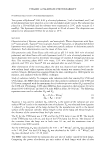
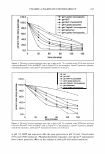
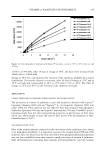
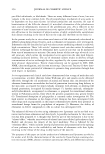
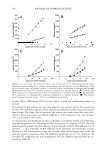
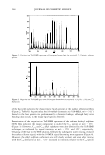
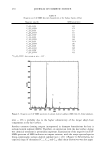
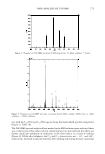
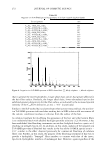
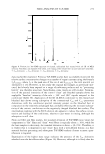
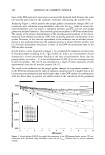
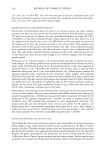
HAIR ANALYSIS BY ToF-SIMS 273 further aqueous processing, the tenacity of the cationic conditioners and the anionic residual detergents on the fiber surface was clearly observed. The use of the Incroquat Behenyl 18-MEA (IB 18-MEA) on hair is reported to improve the dry and wet combing of virgin and bleached hair, and to impart increased hydro phobicity to the bleached hair, similar to that of the undamaged hair (13). IB 18-MEA is a mixture of several conditioning agents, including behenyl (C 22 ) trimethyl quaternary ammonium conditioner, lesser amounts of the C2 0 and C 18 derivatives, and the alkyl amidopropyl ethyl dimonium ethosulfate derived from 18-MEA. Examination of the positive-ion ToF-SIMS spectrum of IB 18-MEA indicates the presence of predominantly C22 and C20 species, with a much smaller contribution from the C21 (18-MEA) alkyl amido species (Figures 7 ,8, Schemes· 1,2). Scheme 1. Positive-ion assignments in the ToF-SIMS spectrum of Incroquat Behenyl 18-MEA film: + CH3 -(CH2) i 6 -CHrN -(CH3\ m/z = 31r (Crn) + CH3 -(CH2)18-CH2-N-(CH 3 )3 m/z = 340 + (C20) + CH 3 -(CH2)20-CH2-N-(CH 3)3 m/z = 368+ (C22) Incorporated into the Incroquat Behenyl 18-MEA formulation is an alkylamidopropyl ethyl dimonium ethosulfate component, I 18-MEA 40, which is derived from an "18- MEA rich" fatty acid precursor material. The nature of this precursor material has been fully characterized by GC/MS analysis. Examination of the positive-ion ToF-SIMS spec- 1200 * 1000 BOO a □ s IOO 400 + 300 350 400 450 mJz Figure 7. Positive-ion ToF-SIMS of Incroquat Behenyl 18-MEA conditioner formulation film. *, C22 derivative. +, c21 derivative. □, C20 derivative. •, cl8 derivative.

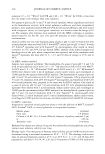
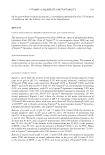
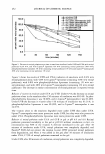
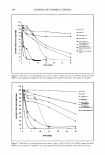
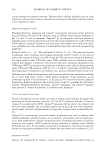
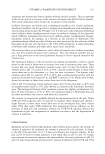
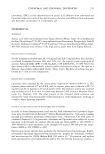
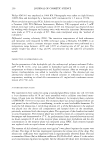
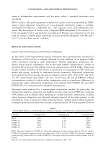
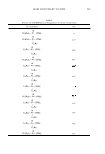
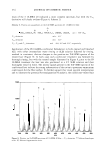
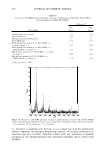
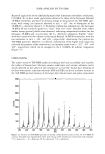
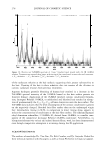
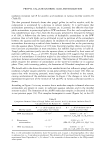
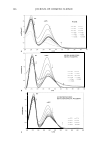
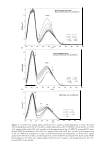
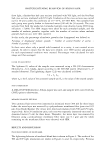
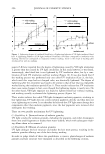
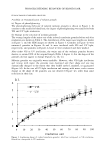
274 JOURNAL OF COSMETIC SCIENCE trum of the I 18-MEA 40 indicated a more complex spectrum, but with the C21 derivative still clearly evident (Figure 8, Scheme 2). Scheme 2. Positive-ion assignments in the ToF-SIMS spectrum of I 18-MEA 40 film: c l 9 derivative C20 derivative EB c l 7, c l8 and C22 derivatives 0 II m/z = 411 + m/z = 425 + m/z = 383, 397 and 453 + , respectively Application of the IB 18-MEA conditioner formulation to both cleaned and bleached hair, with either intermediate water rinsing or SLES solution followed by rinsing, resulted in consistent, obvious changes to the positive-ion ToF-SIMS spectra of the treated hair (Figure 9). In both cases each conditioner treatment was followed by thorough rinsing, but with the treated sample illustrated in Figure 9, prior to the IB 18-MEA treatment the hair was also precleaned in a 2% SLES solution and then thoroughly rinsed in water. The intense signals present in the ToF-SIMS spectra of the conditioned hair indicate the strong substantivity of the cationic quaternary ammonium conditioners for the fiber surface. To further support this visual spectral interpretation and to illustrate the potential for semiquantitative analysis, the conditioner-treated hair 1500 0 0 1000 0 500 320 340 360 0 0 i 380 y' 400 m/z 420 + y' y' y' 460 480 500 Figure 8. Positive-ion ToF-SIMS spectrum ofI 18-MEA 40 film. +, C21 derivative. V, Softener homologue series. 0, Softener fragmentation series.
Purchased for the exclusive use of nofirst nolast (unknown)
From: SCC Media Library & Resource Center (library.scconline.org)