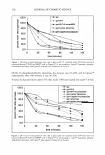
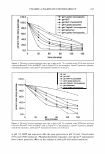
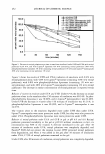
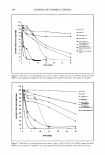
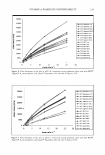
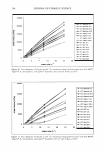
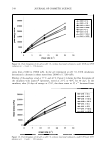
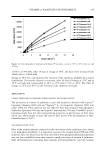
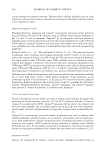
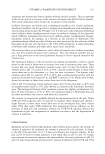
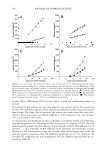
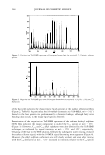
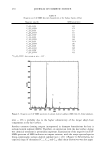
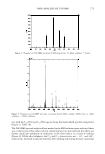
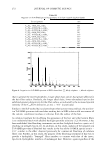
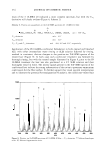
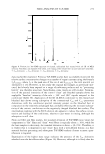
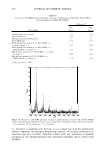
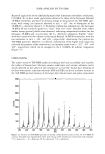
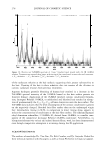
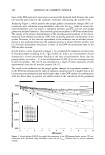
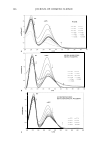
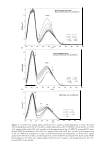
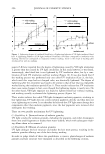
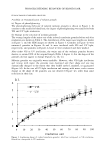
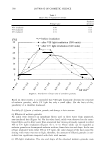
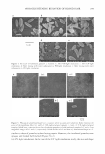
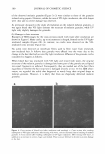
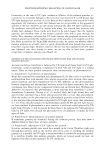
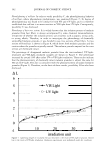
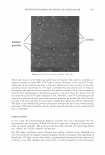
VITAMIN A PALMITATE PHOTOSTABILITY 239 for the gels without vitamin A palmitate, to investigate photostability after 150 minutes of irradiation and the stability over time of the formulations. RESULTS CHARACTERIZATION OF LIPOSOMES, MICROCAPSULES, AND NANOCAPSULES The diameters of Lipotec® liposomes were about 8000 nm, those of phosphatidylcholine liposomes about 600 nm, those of Tagravit® A 1 microcapsules about 9000 nm, and those of Lipotec® nanocapsules about 700 nm. Lipotec® nanocapsules and Lipotec® liposomes observed by optical microscope have a spherical shape. Electron micrography of Lipotec® liposomes reported in the supplier's literature denoted a spherical shape. SKIN PENETRATION STUDY After 24 hours there was no vitamin A palmitate in the receiving phase. The amount of retinyl palmitate in the pig skin was about 0.015%, most retinyl palmitate remaining on the skin surface. No relevant differences were observed with liposome dispersions. RADIATION ST ABILITY STUDY Figures 1 and 2 show the decrease in the molar concentration of retinyl palmitate versus time in (a) gels at pH 5 .6, containing 0.2% w/w retinyl palmitate, irradiated under UV A and UVB, alone, with sunscreens (Eusolex® 9020 or Eusolex® 6300), and with BHT®, and in (b) gels at pH 5.6 with 1 % w/w Tagravit® A 1 microcapsules (containing 6.0% w/w retinyl palmitate), with 4% w/w Lipotec® liposomes (containing 5.0% w/w retinyl palmitate), with 6.0% w/w phosphatidylcholine liposomes (containing 1 % w/w retinyl palmitate), and with 20.0% w/w Lipotec® nanocapsules (containing 1 % w/w retinyl palmitate). Figures 3 and 4 show the decrease in the molar concentration of retinyl palmitate versus time in (a) gels at pH 7 .0, containing retinyl palmitate, under UVA and UVB radiation, alone, with sunscreens (Eusolex® 9020 or Eusolex® 6300), and with BHT®, and in (b) gels containing Tagravit® A 1 microcapsules, Lipotec® liposomes, phosphatidylcholine liposomes, and Lipotec® nanocapsules. Behavior of vitamin in gels at pH 5.6 and 7.0 under UVA. Under UVA the decrease in retinyl palmitate alone in the gel at pH 5 .6, after 150 minutes of irradiation, was 98.87% in the presence of BHT, it was 92.84% and in the presence of Eusolex® 9020, it was 83.43%. When the vitamin was introduced in phosphatidylcholine liposomes, the decrease was 83.81 %, and in Lipotec® nanocapsules, after 180 minutes of irradiation, it was 76.51 %. At pH 7 .0 the decrease in the vitamin alone was 93.02% in the presence of BHT, it was 89.31 % and in the presence of Eusolex® 9020, it was 82.88%. When the vitamin was introduced in phosphatidylcholine liposomes, the decrease was 72.66%, and in Lipotec® nanocapsules after 180 minutes it was 76.06%. Behavior of vitamin in gels at pH 5.6 and 7.0 under UVB. After 150 minutes of irradiation under UVB, the decrease in retinyl palmitate alone in the gel at pH 5.6 was 92.44% in the presence of BHT, it was 71.77% and in the presence of Eusolex® 6300, it was

240 120,0 100,0 .E 80,0 , 60,0 .... .... 15 40,0 E 20,0 .... a. 0,0 0 JOURNAL OF COSMETIC SCIENCE 30 60 -+-gel -a-gel+BHT _.,_ gel+BHT +Eusolex9020 -.-gel+Lipotec liposomes 90 120 time (minutes) 150 Figure 1. Decrease in retinyl palmicate over time in gels at pH 5.6 irradiated under UVA alone and with sunscreen (Eusolex® 9020) and BHT®, and in Tagravit® A 1 microcapsules, Lipotec® liposomes, phospha tidylcholine liposomes, and Lipotec® nanocapsules introduced in the gels. 68.6%. In phosphatidylcholine liposomes, the decrease was 62.43%, and in Lipotec® nanocapsules, after 180 minutes it was 36.76%. Vitamin A degraded more under UVA than under UVB and slightly less at pH 5.6 than 120,0 J!! 100,0 .E "iii 80,0 C. , C 60,0 15 40,0 C 20,0 a. 0,0 0 30 60 90 time (minutes) -+-gel -gel+BHT ---6- gel+BHT +Eusolex9020 gel+Lipotec liposomes ___,._ gel+ TagraA 1 microcapsules -gel+liposomes --- el+li otec nanocapsules 120 150 Figure 2. Decrease in retinyl palmitate over time in gels at pH 5.6 irradiated under UVB alone and with sunscreen (Eusolex® 6300) and BHT®, and in Tagravit® A 1 microcapsules, Lipotec® liposomes, phospha tidylcholine liposomes, and Lipotec® nanocapsules introduced in the gels.
Purchased for the exclusive use of nofirst nolast (unknown)
From: SCC Media Library & Resource Center (library.scconline.org)