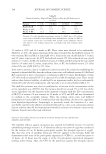
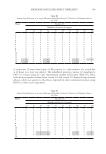
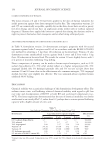
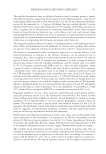
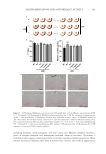
129 PHYSALIS ANGULATE CREAM FOR SOLAR MELANOSIS The participants were divided into two groups (for each group, n = 30). In group 1 (G1), we compared the differences in the improvement of IPL-driven inflammation in the hand where the cream with 0.5% P. angulata L. extract was applied with the contralateral hand where 1% hydrocortisone was applied. In group 2 (G2), we compared one hand treated with P. angulata extract with the other hand that was treated only with the vehicle (placebo). All participants signed the Informed Consent Form (ICF) before treatment. CREAM MANIPULATION The supercritical extract of P. angulata (already patented under the name Physavie®) was supplied by the company Chemyunion. The manipulation of the cream containing the vegetal extract followed the criteria provided by Chemyunion, and the 0.5% concentration was indicated by the manufacturer. The other creams used followed the conventional rules for manipulation. The vehicle was the same in all preparations (lanette cream – Mapric®). One hundred and twenty bottles of cream were manipulated, each weighing 40 g. G1 received 30 bottles with 40 g of 0.5% P. angulata L. extract and lanette cream identified with a red label and 30 bottles with 40 g of 1% hydrocortisone and lanette cream identified with a yellow label. G2 received 30 bottles with 40 g of 0.5% P. angulata L. extract and lanette cream identified with a green label and 30 bottles with a blue label containing 40 g of the lanette cream only (the placebo). The identification of each bottle, with the respective color of each label and the decision of which bottle would go to which group, was random and made by the responsible pharmacy. APPLICATION OF INTENSE PULSED LIGHT The participants were photographed with a 12-megapixel digital camera under the black background and then treated with IPL using a 540-nm wavelength filter that is absorbed by melanin. This is the most suitable treatment for melanosis. The Etherea® machine from the company Vydence, serial code 06154-14, Anvisa Registration 800585800-15, was used. Light was emitted by a sapphire tip (4.2 cm long and 1.5 cm wide) at a speed of one flash per second using a 540-nm wavelength filter. This wavelength is absorbed by melanin, making it the most suitable treatment. The energy parameters used were based on the phototype indicated by the manufacturer and the existing guidelines in the literature (1–22). Phototype II, III, and IV participants were treated with energy of 18–20 J/cm2 and a pulse duration of 10 ms, 17–20 J/cm2 and a pulse duration of 10 ms, and 15–17 J/cm2 and a pulse duration of 15 ms, respectively. In G1 and G2, most participants were phototype III (86.6%). IPL was applied by placing the sapphire tip directly in contact with the skin and pressing the trigger button on the handpiece where the 540-nm IPL filter was attached. Immediately after pressing the button, the beam was emitted at the speed of a flash per second, and this entire area of the skin was treated. Then, the tip was placed immediately next to where the previous shot was taken to treat the new area. This was performed successively from the thenar to the hypothenar region, and from the wrist toward the fingers, until the entire area received the emission of the light beams equally, thus treating the entire hand. The number of shots depended on the size of each hand and did not influence the results. It

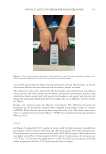
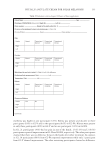
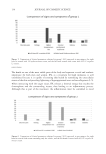
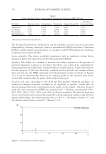
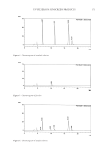
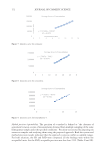
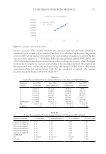
130 JOURNAL OF COSMETIC SCIENCE was performed only once without overlapping a new light beam in areas that were already treated. All applications were performed under cooling analgesia with the Siberian-Fit® device, serial number 06375-14, Anvisa Registration 80058589003, which offers comfort to the patient during the procedure. As a result, the treatment was without pain. After the application, there was a recovery period consequent to the inflammatory process that IPL causes in all treated patients. We evaluated the anti-inflammatory effects of the cream containing 0.5% P. angulata L. extract in comparison to 1% hydrocortisone and vehicle alone. IMPLEMENTATION The participants (n = 60) were divided into two groups, G1 (n = 30) and G2 (n = 30). After the IPL application, each group received different treatments on the left and right hands as follows: • G1-PA: IPL was applied to the left hand and treated with a cream identified with a red label, which contained 0.5% P. angulata L. extract (n = 30 left hands). • G1-H: IPL was applied to the right hand and treated with a cream identified with a yellow label, which contained 1% hydrocortisone (n = 30 right hands). • G2-PA: IPL was applied to the left hand and treated with a cream identified with a green label, which contained 0.5% P. angulata L. extract (n = 30 left hands). • G2-V: IPL was applied to the right hand and treated with a cream identified with a blue label, which contained vehicle only (n = 30 right hands). The creams were provided to the participants. The participants were instructed to use the cream labeled with the color corresponding to the wristband that they received (Figure 3). The participants were instructed about the amount of cream to be applied (Figure 3) and to wash their hands only twice a day with a nonastringent lotion available in the market (Cetaphil®). Participants used the cream twice a day, right after washing their hands, for 48 h after the IPL application. This time duration was determined because the inflammation caused by IPL application improves spontaneously after 48 h. All participants were instructed to rest, avoid any kind of trauma and proximity to the sun or any other heat-emitting source, and not to handle chemical products of any nature. After 48 h, the participants returned to the doctor’s office, and the bottles were weighed again. The hands were photographed again, following the same norms of the initial procedure, and the patients were examined by the physician using an evaluation questionnaire based on subjective and objective criteria (Chart 1). The analysis of objective criteria was performed by the physician during which the extent of perilesional erythema (in mm) around the melanosis of each hand (which had been previously marked and photographed) was measured (Figures 1 and 2). The measurements were made with a portable dermatoscope (Dermlite 3Gen®) with diode illumination that allowed 10 times magnification (Figure 4). Temperature was measured with a Microlife digital infrared thermometer (serial number 521500398). To avoid measuring different points on each hand, the area of melanosis that was marked and had a similar location on both hands was chosen. The presence of edema
Purchased for the exclusive use of nofirst nolast (unknown)
From: SCC Media Library & Resource Center (library.scconline.org)