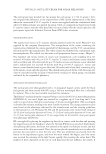
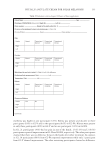
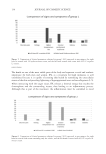
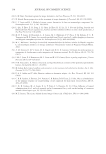
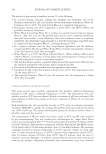
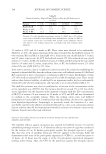
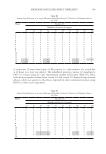
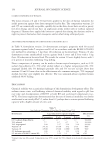
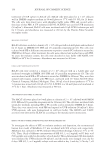
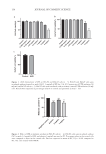
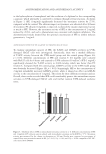
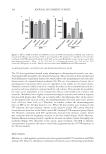
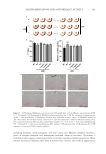
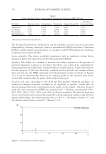
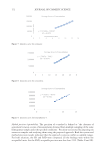
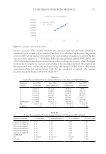
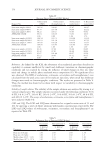
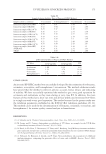
133 PHYSALIS ANGULATE CREAM FOR SOLAR MELANOSIS erythema was higher in one participant (3.3%). Edema was present and discrete in three participants (10%) in G2-V and in two participants (6.6%) in G2-PA. Blisters were present in only three participants (10%) in G2-V and in one participant (3.3%) in G2-PA. In G1, 21 participants (70%) had no pain in any of the hands 13 (43.4%) and 2 (6.6%) participants reported improvement in G1-H and G1-PA, respectively. The other participants claimed that there was no difference between the hands after either treatment. In contrast, in G2, 18 participants (60%) from G2-PA reported improvement while only 1 participant from G2-V showed improvement. The other remaining participants claimed no difference. Table I Evaluation criteria elapsed 48 hours of Laser application. Patient Name Age: _____________ Phototype (FITZPATRICK) Group color: Right (R): Left (L): Photo number Weight of the bottle after 48 h: R: Presence of premalignant lesions in dermatoscopy: ( ) Yes ( ) No IPL cut- Pain: Hands Absent Present and discreet Present and moderate Present and intense Right Left Pruritus: Hands Absent Present and discreet Present and moderate Present and intense Right Left Which hand do you feel is better? ( ) Right ( ) Left ( ) No difference Perilesional halo measurement: Right: ____________ Left: _____________ Temperature: Right: ____________ Left: _____________ Edema: Hands Absent Present and discreet Present and moderate Present and intense Right Left Presence of blisters: Hands Yes No Right Left Comments:

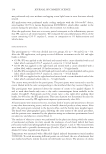
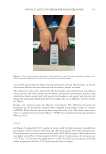
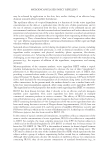
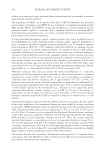
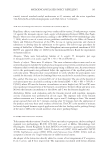
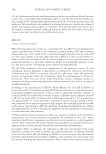
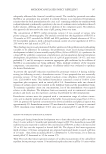
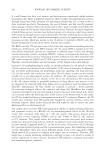
134 JOURNAL OF COSMETIC SCIENCE DISCUSSION The hands are one of the most visible parts of the body and represent a social and aesthetic importance for both men and women. IPL, as a treatment for hand melanosis, is well consolidated because it is capable of restoring skin health by remodeling the extracellular matrix of the skin and providing lightening of hyperpigmented areas and neocollagenesis (1–5). When interacting with the target tissue, IPL releases a thermal energy that reaches the chromophore and the surrounding tissues, thus leading to an inflammatory process. Although this is part of the treatment, the inflammation must be controlled to avoid Figure 6. Comparison of clinical parameters obtained in group 2 (G2) expressed in percentages: the right hand is treated with cream containing only the vehicle, and the left hand is treated with 0.5% P. angulata L. extract cream. Figure 5. Comparison of clinical parameters obtained in group 1 (G1) expressed in percentages: the right hand is treated with 1% hydrocortisone cream, and the left hand treated with cream with 0.5% P. angulata L. extract.
Purchased for the exclusive use of nofirst nolast (unknown)
From: SCC Media Library & Resource Center (library.scconline.org)