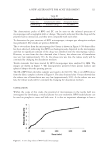
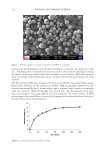
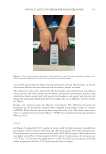
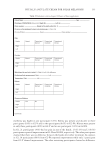
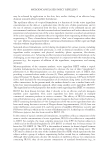
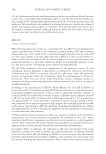
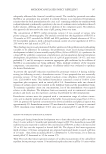
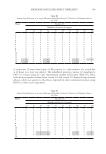
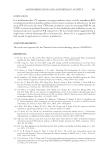
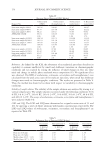
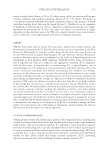
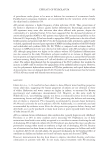
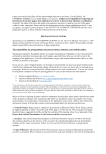
149 MICROENCAPSULATED INSECT REPELLENT A aegypti was 13 hours (based upon a CFB criterion i.e., with evidence of a second bite at 14 hours in at least one subject). The unbuffered prototype version 1.0 manifested a CPT of 12 hours using the same experimental method and facility (Table IV). Thus, both microencapsulated formulation version 2.0 and version 1.0 displayed long-duration efficacy, which was superior to the efficacy reported for other commercial products using IR3535 or other active ingredients. Table III Arm-in-Cage Exposure to A aegypti Mosquitos Repellent Version 2.0 Tested on 10 Human Subjects (S1–S10) Hours Version 2.0 Number of bites by A aegypti S1 S2 S3 S4 S5 S6 S7 S8 S9 S10 1 0 0 0 0 0 0 0 0 0 0 2 0 0 0 0 0 0 0 0 0 0 3 0 0 0 0 0 0 0 0 0 0 4 0 0 0 0 0 0 0 0 0 0 5 0 0 0 0 0 0 0 0 0 0 6 0 0 0 0 0 0 0 0 0 0 7 0 0 0 0 0 0 0 0 0 0 8 0 0 0 0 0 0 0 0 0 0 9 0 0 0 0 0 0 0 0 0 0 10 0 0 0 0 0 0 0 0 0 0 11 0 0 0 0 0 0 0 0 0 0 12 0 0 0 0 0 0 0 0 0 0 13 3 0 0 5 0 0 0 2 0 3 14 6 0 0 11 0 0 0 1 0 0 Table IV Arm-in-Cage Exposure to A aegypti Mosquitos Repellent Version 1.0 Tested on 10 Human Subjects (S1–S10) Hours Version 1.0 Number of bites by A aegypti S1 S2 S3 S4 S5 S6 S7 S8 S9 S10 1 0 0 0 0 0 0 0 0 0 0 2 0 0 0 0 0 0 0 0 0 0 3 0 0 0 0 0 0 0 0 0 0 4 0 0 0 0 0 0 0 0 0 0 5 0 0 0 0 0 0 0 0 0 0 6 0 0 0 0 0 0 0 0 0 0 7 0 0 0 0 0 0 0 0 0 0 8 0 0 0 0 0 0 0 0 0 0 9 0 0 0 0 0 0 0 0 0 0 10 0 0 0 0 0 0 0 0 0 0 11 0 0 0 0 0 0 0 0 0 0 12 0 0 1 1 0 0 0 3 0 2 13 0 0 1 8 0 0 0 7 0 5 14

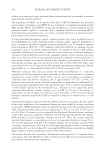
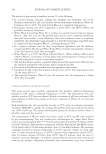
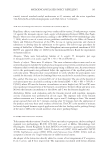
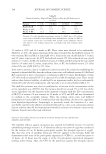
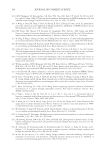
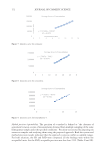
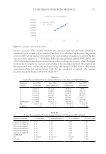
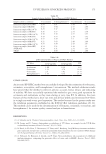
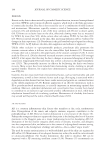
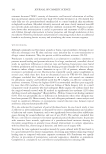
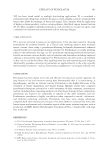
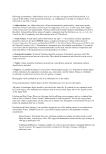
150 JOURNAL OF COSMETIC SCIENCE COSMETIC EXPERIENCE OF HUMANS The lotion versions 2.0 and 2.55 have been applied to the skin of human volunteers for in-life protection against bites from mosquitos and/or flies. The composition versions 2.0 and 2.55 are cosmetically acceptable, quickly dry on the skin, do not have an oily or greasy feel after drying, and do not have an unpleasant aroma (either with or without optional fragrance). Humans have applied the lotions to exposed skin during the daytime and/or at night to protect themselves from mosquitos and/or other biting arthropod pests. ANTI-INFECTIVE PROPERTIES OF COMPOSITIONS CONTAINING IR3535 In Table V, formulation version 2.0 demonstrates antiseptic properties with 60 second exposures against both P aeruginosa and E coli in accordance with the BS EN 1276:2019 test method by achieving a 5 log (base 10) reduction in bacterial load. Version 2.0 also demonstrates some antimicrobial activity against both S aureus and E hirae with a 3 log (base 10) reduction in bacterial load. The results for version 1.0 were slightly better, with 3 of 4 species of microbes exhibiting 5 log killing. Direct comparisons of potency can be made to known topical antiseptics, such as 0.2% sodium hypochlorite (17), 70% ethyl alcohol (albeit at a higher temperature) (18), 70% isopropyl alcohol (19), 3% hydrogen peroxide (19), and 5% tea tree oil (20). Note that versions 2.0 and 1.0 were close to the effectiveness of a common antiseptic, 70% isopropyl alcohol, but they were slightly less effective. The two sustained-release repellent lotions exhibited 99.9% killing. DISCUSSION Chemical stability was a particular challenge of this formulation development effort. The sodium citrate–citric acid buffering achieved chemical stability with regard to pH loss over time and decomposition of IR3535 at both RT and accelerated temperatures (e.g., 40°C). The linear regressions demonstrated that the rate of chemical instability was better ameliorated at an initial pH of 5.5, rather than 6.2, perhaps due to a more optimal buffering capacity with a higher amount of citric acid. Table V Anti-Infective Properties of Repellent Versions 1.0 and 2.0a Disinfectant Log reduction by species (Log10) Effectiveness (%) P aeruginosa E coli S aureus E hirae 0.2% sodium hypochlorite 7 7 7 7 99.9999 70% ethanol 7.7 6.7 6.7 7.4 99.9999 70% isopropanol 5.08 5.37 5.36 5.46 99.999 Version 1.0 5.32 5.39 3.72 5.3 99.9 Version 2.0 5.06 5.26 3.80 3.90 99.9 3% hydrogen peroxide 3.66 2.8 1.32 0.18 90 5% tea tree oil (0.001% tween 80) 1.75 5.25 1 NR 90 a Contact time was 60 seconds. Temperature was 20°C, except for 70% ethanol at an elevated temperature of 34°C.
Purchased for the exclusive use of nofirst nolast (unknown)
From: SCC Media Library & Resource Center (library.scconline.org)