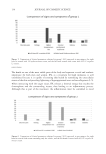
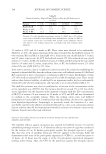
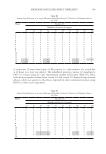
151 MICROENCAPSULATED INSECT REPELLENT The repellent formulations have an additional benefit as topical consumer products, namely anti-infective properties against four bacterial species in vitro. High potency (i.e., 5 log base 10 order killing) antibacterial effects were observed for 2 or 3 of 4 bacterial strains and moderate potency for the remainder (i.e., 3 log base 10 killing). One may conclude that the 2 versions exhibited 99.9% effectiveness, approaching that of 70% isopropyl alcohol. This anti-infective effect is perhaps due to the preservatives, surfactants (emulsifiers), and/or other excipients known to have anti-infective properties (e.g., acyclic alkane, citric acid, and chitosan), along with perhaps IR3535 (21). Inherent anti-infective properties of a topical repellent formulation may provide coincidental benefits to mammalian skin, such as in the prophylaxis or treatment of infections in compromised skin (abrasions, lacerations, insect bites, etc.). The mosquito repellency efficacy of version 2.0 in human subjects in the laboratory was 13 hours. Thus, this formulation has the hallmarks of a best-in-class repellent. The authors are unaware of any approved commercial repellent product with 12+ hours of protection. An alternative experimental and/or confirmatory approach is to test the efficacy of the topical formulations on humans in life. Human volunteers can be exposed in life to mosquitos, flies, and/or sandflies in outdoor environments known to contain the relevant species of biting insects (22). A common test paradigm is to treat a group of subjects’ exposed skin surfaces with the repellent formulation, and the elapsed time is recorded in 30- or 60-minute intervals until CFB occurs (i.e., when the first individual within a group of subjects experiences a CFB at the time of the second bite). This represents a minimum limit some individuals may or are likely to experience protection beyond the CFB threshold. A preliminary study resembling this type of field trial design was performed with the unbuffered prototype version 1.0 in Florida (United States) and yielded an average protection time of 14 hours (data not shown). Note that an average protection time for a group of subjects can or will be a higher number in hours than a CFB threshold, which is a minimum limits test. It is anticipated that the versions 2.0 and 2.55 will display similar in-life efficacy to that of prototype 1.0, as the unbuffered 1.0 and buffered 2.0 and 2.55 versions all have encapsulated IR3535 at a nominal concentration of 20% (w/w). Regarding repellency of ticks, a pilot study was performed with several human subjects using the prototype version 1.0 at the Arthropod Control Product Test Centre, London School of Hygiene & Tropical Medicine (London, United Kingdom). It yielded an average repellency time of approximately 15–16 hours against Rhipicephalus sanguineus (data not shown). The authors anticipate a similar result with buffered versions 2.0 and 2.55. In aggregate, the preliminary results of the field trial with mosquitos and the pilot study with ticks are suggestive of long-duration repellency, consistent with that reported previously using an arm-in-cage experimental method with mosquitos. Both humans and nonhuman mammals (e.g., horses, cows, dogs, and cats) may benefit from topical application of this formulation. It is expected to be effective immediately, and the duration of effective mosquito repellency may last for 12–13 hours, depending on the species of mosquito, fly, sandfly, black fly, louse, chigger, bed bug, or vector of trypanosomiasis, as well as the noninsect arthropod pest species of tick, chigger (Trombiculidae), spider, or scorpion. The repellent lotion formulation provides a practical method of treating skin, hair, or clothing of a mammal to repel insects or noninsect arthropod pests. Dilutions of the lotion can also be prepared prior to application to the skin, hair, or clothing. For instance, a lotion could be diluted 1:5, 1:10, 1:50, or 1:100 in water or another solution or solvent (e.g., ethanol or ethanol:water). The diluted repellent solution could be applied immediately to

152 JOURNAL OF COSMETIC SCIENCE a human or nonhuman mammal (e.g., horses, cows, dogs, or cats), or clothing. Diluted versions on skin, per se, are expected to have lower repellency than the undiluted lotion. A long-term goal of our formulation development efforts reaches beyond merely protection from the nuisance of biting insects or other pests. The authors desire to demonstrate that once or twice daily applications of the sustained-release IR3535 lotion can prevent the symptoms of vector-borne diseases. The symptoms will be those common to specific and endemic vector-borne diseases (cutaneous erythema, inflammation, skin irritation, fever, headaches, etc.). Diagnostic tests might include immunologic or microscopic tests for pathogens within the blood, or RNA or DNA of the pathogen within the blood. The reduction in symptoms is anticipated within weeks or months of commencing daily topical applications of the repellent. This benefit is expected to last for the duration of the course of protection from biting insects or noninsect arthropod pests. At present, clinical prophylactic studies are in the planning stages. Consideration is being given to studies of vector-borne diseases, such as malaria, dengue fever, Lyme disease (borreliosis), leishmaniasis, Chagas disease (trypanosomiasis), Zika fever, equine encephalitis, and yellow fever. Current unanswered questions include whether the daily application of the sustained-release formulation (versions 2.0 or 2.55) can reduce the number of patients experiencing clinical symptoms of an endemic insect-borne disease. Meanwhile, can the daily application of the formulations impact quality of life, such as sleep or productivity at work? Can the preventative formulations be demonstrated as superior to standard-of-care topical repellent products containing a commercial DEET or IR3535 formulation? ACKNOWLEDGMENTS The authors acknowledge the encouragement, comments, and efforts of Hogan Bassey and John Manwell. LivFul Inc. was responsible for funding, and no research grants were utilized. E.C.T., E.B., and T.P.D. are employees of LivFul Inc. T.P.D. and T.S. are shareholders in LivFul Inc. The encapsulation technology and repellent formulations described herein are subject to issued and pending patents (e.g., US patent 8,039,015) and trademarks. T.S. conceived of and formulated the initial unbuffered prototype repellent lotion. T.P.D., E.C.T., and E.B. conceived of and formulated the subsequent versions of the lotions, primarily to improve chemical stability. E.C.T. and E.B. conducted the formulation development and stability experiments. T.P.D. was the principal author responsible for preparing the manuscript. All coauthors approved the final version. REFERENCES (1) G.B. Kasting, V.D. Bhatt, and T.J. Speaker, Microencapsulation decreases the skin absorption of N,N- diethyl-m-toluamide (DEET), Toxicol. In Vitro, 22(2), 548–552 (2008). (2) J.I. Karr, T.J. Speaker, and G.B. Kasting, A novel encapsulation of N,N-diethyl-3-methylbenzamide (DEET) favorably modifies skin absorption while maintaining effective evaporation rates, J. Control Release, 160(3), 502–508 (2012). (3) M.R. Gomes Fernandes, L.C. Lopes, R.S. Iwami, M. Del Grossi Paglia, B. Mateus de Castilho, A. Maicon de Oliveira, I. Fulone, R.S. Leite, and C. de Cássia Bergamaschi, Efficacy and safety of repellents marketed in Brazil against bites from Aedes aegypti and Aedes albopictus: a systematic review, Travel Med. Infect. Dis., 44, 102179 (2021).
Purchased for the exclusive use of nofirst nolast (unknown)
From: SCC Media Library & Resource Center (library.scconline.org)