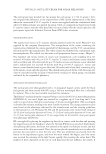
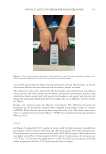
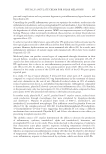
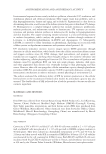
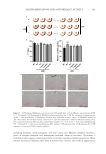
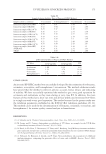
161 ANTIPIGMENTATION AND ANTIOXIDANT ACTIVITY including melasma, senile lentigines, and skin cancer (21). Melanin synthesis involves a series of enzyme-catalyzed and nonenzyme-catalyzed chemical reactions. Tyrosinase, a multifunctional copper-containing enzyme, positively regulates melanin generation. Many natural tyrosinase inhibitors have been discovered for cosmetic and medical applications. Figure 5. UVB-exposed MelaKutis was treated with 500 µg/mL kojic acid or different concentrations of SFE (2, 1, 0.5 mg/mL). (A) Photograph of MelaKutis was presented on day 7. (B) The intensities of pigmentation on day 7 were measured by a colorimeter, and data were expressed as the L* values. (C) Melanin content on day 7 was tested. (D) 3D skin models cultured for 7 days were subjected to Fontana–Masson staining. Data were represented mean ± SD from three independent samples ## p 0.01 and # p 0.05 versus the BC group **p 0.01 and *p 0.05 versus the NC group. (BC: without UVB exposure, NC: UVB exposure, PC: UVB exposure + kojic acid.) White arrows: melanin.

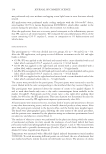
162 JOURNAL OF COSMETIC SCIENCE It is well-known that kojic acid, arbutin, and hydroquinone significantly inhibit melanin biosynthesis (22). Many polyphenol derivatives show excellent antimelanogenesis potency through interactions with tyrosinase via noncovalent interactions (23), as well as due to their structural specificity. Notoginseng, the root of Sanchi, was first used by minority ethnic groups to promote blood circulation and to relieve pain in southwestern China (24). However, there are few reports about Sanchi flower extracts. Saponin, the main component of Sanchi flower extract, contains many hydroxyl groups in its structure, which may interact with tyrosinase through various noncovalent bonds, therefore inhibiting the production of melanin. In this study, SFE showed antimelanogenic potency by suppressing intracellular tyrosinase activity, which was similar to that of arbutin (1 mg/mL) in B16-F0 cells. The further mechanism of action of the extract deserves more studies. The ROS caused by UV exposure is one of the factors that can promote melanin generation, melanocyte proliferation, and DNA damage (25). To ensure ROS at normal levels (26), intracellular antioxidant capacity was regulated in different types of skin cells through natural antioxidant systems, including GSH-Px, catalase, and superoxide dismutase. UV exposure reduced the activity of antioxidant enzymes in HaCaT cells, while treatment with SFE could increase the GSH-Px and T-AOC capacity, which is consistent with vitamin C. Therefore, natural antioxidant and antityrosinase activity helped reduce skin damage. Current in vitro pathophysiological studies are mainly performed in cell models, in which cells are cultivated as monolayers on a solid surface. Cell culture systems play an important role in further understanding cell morphology, molecular signaling, and drug discovery (27), but the results and conclusions from these 2D cell culture systems are not entirely suitable for in vivo physiological systems. In addition, 2D monolayers particularly lack environmental factors that are relevant to the 3D in vivo environment. The limitations of 2D cell culture models as unreliable predictors of drug efficacy and toxicity in vivo are supported by relatively high drug failure rates in preclinical trials for diseases (28). Therefore, physiological 3D skin models are required to provide a better platform for evaluating biological efficacy for cosmetics and drugs (29). MelaKutis has a highly consistent histological structure and melanin response function with human skin, which can accurately reflect the whitening effect of the extract on the human body. In this study, the 3D skin model had obvious hyperpigmentation after UV irradiation. However, the 3D models after treatment with SFE significantly brightened, and the melanin content was obviously reduced. These results indicated that SFE might be able to achieve the same whitening effect on the human body. The authors discovered that SFE could significantly inhibited cellular melanin production and tyrosinase activity in a B16-F0 cell. Its antimelanogenesis effects in the 3D skin model were consistent with those in a 2D cell system. The extract showed good antioxidant activity targeting GSH-Px activity and T-AOC in HaCaT cells exposed to UV radiation. This might reduce the oxidation reactions associated with melanin production, thus preventing melanin synthesis. In addition, many studies found that kojic acid was mainly complexed with Cu2+ on the active center of tyrosinase (30,31) through the 5-position hydroxyl group and the 4-position ketone group, thus inhibiting enzyme activity. Meanwhile, there were many hydroxyl groups in the active ingredient of SFE, which showed the potential to complex with copper ions in tyrosinase. Therefore, SFE might have a similar whitening mechanism compared to kojic acid, which is worthy of further exploration in future research. In general, SFE might be a potential antioxidant and antimelanogenesis candidate.
Purchased for the exclusive use of nofirst nolast (unknown)
From: SCC Media Library & Resource Center (library.scconline.org)