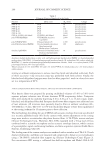
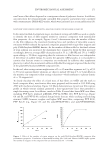
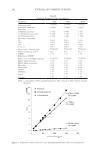
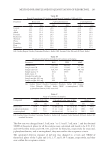
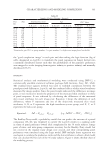
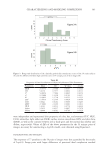
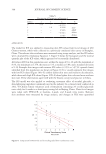
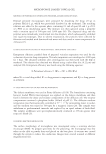
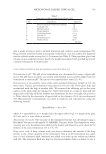
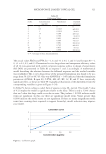
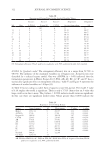
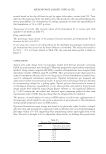
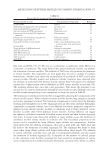
325 Microsponge Loaded Topical Gel seconds based on the slip off from the gel by upper slide under a certain load (30). Time taken for the separation of the two slides is less, which indicates the topical formulation has better spreadability (31). Formulation F1, having optimum viscosity and spreadability of this formulation, is 5.9 ± 0.025 g.cm/sec. Measurement of viscosity. The viscosity values of the formulation F1 at various rpm with spindle 63 are shown in Table VI. Drug content study The percentage drug content of the prepared benzoyl peroxide gel formulations F1 was found to be 98.0 ± 0.417%. In vitro drug release study. In vitro drug release for the developed microsponges loaded topical gel formulation was carried out by Franz diffusion cell method. The release was found to be 50.12 ± 0.75 in 8 hours (shown in Table VII) the sustained release profile is shown in Figure 6. CONCLUSION Topical semi-solid dosage form microsponges loaded with benzoyl peroxide containing PLGA, for acne treatment, were developed. They were prepared by a qausi solvent evaporation method. Using central composite RS DOE, a number of formulations were designed with dependent variables of PLGA, span 80, and PVA. They were prepared and characterized in terms of entrapment efficiency and in vitro drug release. Derived mathematical models were used for subsequent formulation optimization. Optimal formulation was prepared and subjected to further characterization studies. A topical semi-solid dosage form was obtained by incorporating carbopol as a gelling agent. Topical gel was characterized in means of its rheological properties, spreadability, in vitro release profile, and stability. Experimental design results were validated using Design Expert software 11. No significant difference (p 0.05) between the two values was observed upon comparing predicted value with experimental value (%EE), thus specifying that the design had been validated. The presence of small spherical vesicles in SEM analysis revealed some agglomeration of microsponges, which might be due to the evaporation of water present in the formulation during sample preparation prior to SEM analysis. Optimized formulation upon storage was found to be physically stable. Further, carbopol gels were clear and transparent in appearance with a pH value close to normal physiological pH range of skin (3.0–9.0), suggesting their nonirritating nature upon application to the skin. Viscosity is thought to be an important characteristic in defining skin penetration. Table VI Viscosity Values of the Formulations RPM Viscosity (cp) at room temperature (formula 1) 10 5,670 20 3,324 30 2,472 40 1,870 50 1,253

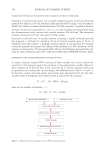
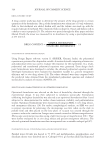
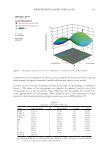
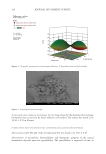
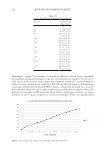
326 JOURNAL OF COSMETIC SCIENCE Furthermore, carbopol 934 develops a network by forming junction zones, responsible for providing mechanical strength to the gel. Gel viscosity was found to be less up to some extent, in the presence of the drug, which might be considered a reason behind the reduced viscosity showed by the control gel. The safe and effective improvised formulation containing benzoyl peroxide–loaded PLGA topical carbopol gel provided new ways for well-controlled and novel topical application in the treatment of acne vulgaris. Hence the developed micosponge loaded topical gel drug delivery technology may lead to a better treatment in acne vulgaris compared to conventional therapies. Thus, microsponge-based Table VII In Vitro Drug Release of Microsponge Loaded Gel Time (h) F1 (Percentage drug release) 0 0 15 5.25 ± 0.061 30 8.22 ± 0.14 45 10.11 ± 0.18 1 13.23 ± 0.39 1.30 16.49 ± 0.48 2 18.41 ± 0.24 2.30 21.24 ± 0.58 3 24.52 ± 0.16 3.30 27.19 ± 0.10 4 30.25 ± 0.75 4.30 33.19 ± 0.43 5 36.52 ± 0.84 5.30 39.72 ± 0.12 6 41.66 ± 0.66 6.30 44.40 ± 0.42 7 46.12 ± 0.48 7.30 48.66 ± 0.92 8 50.12 ± 0.75 IN VITRO DRUG RELEASE FOR MICROSPONGE LOADED GEL 60 55 50 45 40 35 30 25 F1 0 15 30 45 1 1.3 2 2.3 3 3.3 4 4.3 5 5.3 6 6.3 7 7.3 8 TIME IN HOURS Figure 6. Percentage drug release of microsponge loaded gel formulation.
Purchased for the exclusive use of nofirst nolast (unknown)
From: SCC Media Library & Resource Center (library.scconline.org)