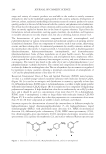
332 JOURNAL OF COSMETIC SCIENCE advantage of using surface active IL is that they can be designed to form micellar systems with the desired properties. In an effort to find more sustainable and environmentally friendly surfactants, researchers have studied the micellization of several biosurfactants. These biosurfactants are obtained from various natural sources such as microorganisms and plants. Some biosurfactants that can form reverse micelles are sophorolipids and rhamnolipids. HYDROPHILIC AND LIPOPHILIC BALANCE (HLB) HLB is an important parameter that determines the tendency of a surfactant to form normal micelle or reverse micelle (12). HLB of a surfactant depends on the hydrophobicity and hydrophilicity of the surfactant (13). It is described by a numerical scale ranging from 0 to 20, and relates to the ratio between the molecular weight of hydrophilic part of surfactant molecule to its total molecular weight. For non-ionic surfactants, HLB value of 0 means nonpolar and 20 means polar soluble. The HLB can be applied to ionic surfactants with a scale up to 50. The HLB of surfactants aimed to form reverse micelles or water-in- oil microemulsion has a value between 3 and 6. On the other hand, HLB of surfactants for the formation of micelles or oil-in-water microemulsion has a value between 8 and 18 (14). CRITICAL MICELLE CONCENTRATION (CMC) At low concentration, surfactant molecules exist as monomers in a solution. When the surfactant concentration in a solution is increased to a certain value, micelles or reverse micelles start to form spontaneously. This concentration is known as CMC. Reverse micelles formed above CMC are thermodynamically stable (15). Surface tension and conductivity measurement are common techniques used to determine the CMC of a surfactant solution. The procedures involve measuring the surface tension or the conductivity of a solution containing an increasing amount of surfactant and making a plot of the measured value. CMC of the system can be identified at the points where abrupt change in the measured values is observed. Another method utilizing solubilization of 7, 7, 8, 8-tetracyanoquinodimethane is also used to determine the CMC of a surfactant solution where rapid change in the color of dye occurs when CMC is reached (16, 17). CMC value depends on several factors such as the type of surfactant, temperature, pH, and ionic strength (7, 16). Typical CMC of commonly used surfactants are between 10−4 mol/L and 10−2 mol/L (11). SELF-ASSEMBLY When surfactant concentration in a solvent reaches their CMC value, the isolated surfactant molecules will spontaneously arrange themselves into ordered structures. The interactions involved during the self-assembly process are Coulomb interaction, hydrophobic interaction, hydrogen bonds, and coordination bonds (18). The self-assembly process is simple and requires only low energy input, such as stirring. Thus, micellar systems have gained interest as carriers for active compounds because of its ease of production and economical advantage (8). Surfactant concentration above their CMC should be used to ensure the formation of functional micelles or reverse micelles.

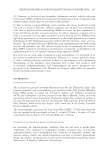
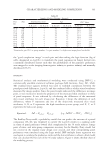
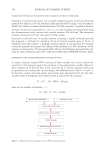
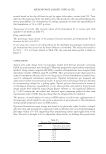
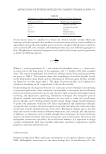
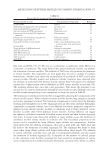
333 Application of Reverse Micelles in Cosmetic Formulations Several factors must be considered to obtain the desired micellar systems. Molecular structures of surfactant molecules, mobility of surfactant in the solvent, and reversibility or adjustability during the self-assembly process must be considered. Micellization conditions such as solution pH, ionic strength, and temperature may also cause different aggregates to form. Morphology of surfactant aggregates can be predicted by using a packing parameter as shown in following equation: p V a l hc c =0 Where p =packing parameter, V hc =the volume of hydrophobic chain, a 0 =mean cross- sectional area of the head group in the aggregate, and l c =length of the fully extended chain. The various morphologies that formed at different values of the packing parameter are given in Table I. The equation shows that morphology of micelles depends mainly on the hydrocarbon chain length and the dimension of the head group. Reverse micelles are formed at a p value larger than 1. The shape of reverse micelles can be spherical or cylindrical depending on the compositions of the micellar systems. Understanding the micellization behavior of a surfactant system is helpful in determining its potential applications. Some commonly used methods to investigate the micellization process are transmission electron microscopy, dynamic light scattering, small angle neutron scattering, and fluorescence quenching. Simulation techniques like dissipative particle dynamics methods and molecular dynamics are also used to study the micellization process. Models can be developed based on free energy change during micelle formation to predict the properties of micelles (19). These experimental and simulation techniques can provide data to deduce the interactions between surfactant molecules, surfactant-solute interactions, and the solubilization site of the solute. Rheological changes such as micellar shape and viscosity of the system at different temperatures, ionic strength, pH, and presence of additives or impurities can be studied through those techniques. In mixed surfactant systems, the balance between molecular interactions, such as electrostatic interactions and hydrophobic interactions, also affects the micellization behavior. It is important to design cosmetic formulations with most suitable surfactants, optimized compositions, desired properties, and lower production costs. NORMAL MICELLE Normal micelles form when surfactant concentration in an aqueous solution reaches its CMC. Hydrophobic interactions are the main driving force of micellization (20). The TABLE I Morphology of Surfactant Aggregates at Different Packing Parameters Packing parameter, p Morphology of aggregates 1/3 Spherical micelle 1/3–1/2 Cylindrical micelle 1/2–1 Vesicle Around 1 Planar bilayer 1 Reverse micelle
Purchased for the exclusive use of nofirst nolast (unknown)
From: SCC Media Library & Resource Center (library.scconline.org)