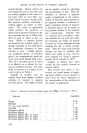
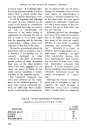
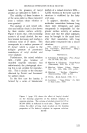
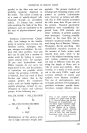
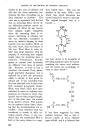
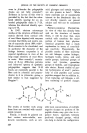
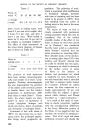
JOURNAL OF THE SOCIETY OF COSMETIC CHEMISTS several decades. Henna extracts are still co.mmonly used as hair dyes and are usually applied in the form of a hot paste with an inert filler, e.g. fuller's earth or from a •veakly acidi- fied aqueous solution containing a wetting agent, as toners in hair- rinses. The mode of application which involves the presence of dilute acid to promote fixation of the dye precludes the use of dilute solu- tions of soap or alkali as dye sol- vents. Water or aqueous alcohol are therefore the common media, al- though solubility of the chief henna dye constituent (lawsone) in these solvents is poor. Certain glycols, e.g. propylene glycol, or hexylene glycol, are comparatively good sol- vents even when diluted with water. Thus 25% hexylene glycol in water is as effective as a solvent for law- sone as undiluted alcohol. The solu- bility of lawsone in a number of sol- vents is given in Table 4. Samples of scoured wool are rapidly dyed from slightly acidified solutions of lawsone in aqueous hexylene glycol. The depth of shade can be readily varied by adjusting the concentration of dye. Since the solubility of lawsone is approxi- mately proportional to the concen- tration of hexylene glycol present in an aqueous mixture a saturated or nearly saturated solution of lawso•:e in hexylene glycol can be made up and portions diluted to the required dye concentration. Dilution with 1'/o aqueous citric acid gives a solu- tion suitable for use and such acidi- fied solutions are stable for periods in excess of 3 hours although on long standing the dye is slowly precipi- tated. After the usual soap rinse the dyeings are fast to washing with dilute acid, alkali or soap, and thc time required for dying is approx- imately 10-15 minutes at 30øC. Samples of human hair when treated by this method showed no adverse effects. This solvent thus offers a con- venient and rapid means of apply- ing henna either in heavy shades or tone rinses by direct regulation of the concentration of the solution and the period of application. TABLE 4. SOLUBILITY OF LAWSONE IN gm. PER 1009m. SOLVENT AT 20 ø C. Solvent Solubility Water ............ Ethanol ...... 5% aq. soap solution ...... Glycerol ......... Propylene gfol ......... Hexylene glycol ...... Hexylene glycol 56•o in water Hexylene glycol 25% in water ... Hexylene glycol 10% in water ... 0.05 1'38 •2 1.00 9.25 7' 00 3'5O 1-40 1-00 !14

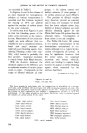
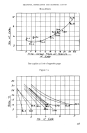
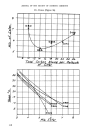
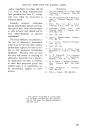
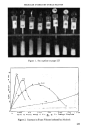
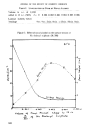
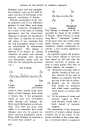
SOLVENTS, HUMECTANTS AND BLENDING AGENTS TABLE 5. BLENDING POWERS OF ESTERS (Mls. ooe ester required to produce at 10oc • hmnogeneous solution with a mixture of 10 mls. White Oil and 10 mls. Castor Oil.) Ester mls. Ethyi acetate - - 5.2 Butyl acetate 3.9 Amyl acetate 4.4 Octyl acetate 4.5 Ethyl laurate 5.9 Ethyl myristatc 6.4- Butyl lauratc 6- O Octyl octanoate 7.1 Isopropyl myristatc 7.4 _ - Ester mls. lsopropyl palmitate 7.8 Butyl stearate 10.2 Amyl stearate 11.0 Dibutyl oxalate 7.1 Diethyl sebacatc 5.3 Dibutyl sebacate 5.8 Dioctyl adipate 5.9 Dioctyl sebacate 6.6 Pentaerythritol •nono-oleate 7.0 _ _ _ BLENDING AGENTS The wide range of materials which is found in many cosmetic formula- tions and the requirement that all the components should remain for long periods in the physical state in which they are compounded implies that the prepared product must be in a stable condition. Where one or more of the components is of limited miscibility with the others it is necessary to ensure that break- down does not occur over the normal variation in temperature anticipated in the storage and use of the product. Although it is difficult to genera- lise (the following comments do not relate to emulsion systems directly) it might be expected that a blending agent for two immisciblc liquids must possess a structure intermediate between them. This is frequently found to be the case and in dealing with mixtures of hydrocarbons with glyceride oils and fats, blending agents with a suitable balance (determined by experiment) of ester groups and hydrocarbon chains would be expected to bring about homogeneous mixing of the two ma jot components. Thus butyl stearate has been employed for many years in this con- nexion but therc is little data from which to assess its efficiency in com- parison with other esters. The current interest in alternative esters, c.g. isopropyl myristate or diethyl scbacatc, raises the question of their rc'lativc efficiency as blending agents. A rapid appraisal of a range of esters has been made with reference to the system White Oil-Castor Oil and although the treatment is, by no means, comprehensive the results are of sufficient interest to merit com- ment. The data quoted in Table 5 and shown graphically in Figure 3, were obtained by adding small amounts of blending agent to a mix- ture of equal volumes oi White Oil and Castor Oil until the temperature of miscibility fell to 10øC. The amounts of various esters required to produce a homogeneous mixture 115
Purchased for the exclusive use of nofirst nolast (unknown)
From: SCC Media Library & Resource Center (library.scconline.org)