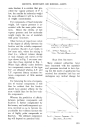
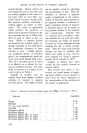
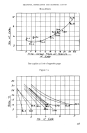
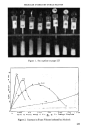
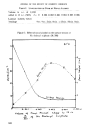
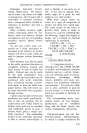
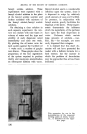
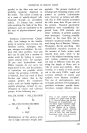
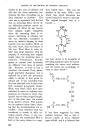
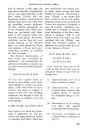
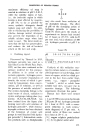
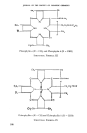
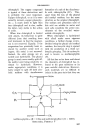
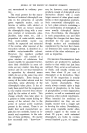
JOURNAL OF THE SOCIETY OF COSMETIC CHEMISTS PERFUMERY SOLVENTS AND FIXATIVES In the field of perfumery and lotion vehicles, ethanol so well fulfils its purpose as a safe, cheap, and mild odoured volatile liquid, suitable as a carrier and means of application of the requisite small amount of fixa- tive and perfume, that it is doubtful if any other organic solvent can seriously challenge its position. Per- haps the inflammable nature of this solvent, together with the rigid fiscal regulations attending its use, are its only disadvantages. Isopropanol, which in other fields is sometimes employed to. avoid the regulations restricting the use of spirit, has some advantages to. merit consideration in certain cases, especially where high tolerance for water is required, but its persistent odour is definitely against it. Developments in this sphere have been directed mainly to replacing all or part of the ethanol used by water and this entails the careful selection of a blending agent either of conven- tional type or from the class of sur- face-active agents where the mech- anism involved is 'that of micro-dis- persion or solubilisation. The fixation of perfumes has been practised since the early history of perfumery and the original fixatives (ambergris, musk and civet extracts, etc.) are still widely accepted as highly efficient. Since natural fixa- tives are usually odorous materials they do impose some limitation on the character of the finished product prepared from them and the use of synthetic fixatives typified by diethyl phthalate has developed. The odour- less synthetic fixatives besides being economically attractive permit greater freedom and variety in compounding. There are many characteristics desirable in a fixative among which may be noted the following. A fixa- tive should be relatively non-volatile and free from unpleasant odour. It should act as a suitable medium for blending the various odorous com- ponents, effectively reduce their evaporation and restrain the com- ponents so that each persists until all have dispersed. It is probably impossible to achieve this state of affairs except by painstaking empiri- cal methods of trial and error. The mechanism involved in fixation does not appear to have received much attention although Moncrieff •ø has recently drawn attention to some of the factors involved. The variation of the vapour pres- sure of a binary mixture with its composition is postulated by Raoult's Law as proportional to the molar fractions of the components. Thus referring to Fig 1, volatile liquids A, B, C, D on coml•ounding with a liquid F of low vapour pres- sure (hence high molecular weight) give binary mixtures in which the vapour pressure of A, B, C or D is reduced according to the amount of F present. Furthermore, the vapour pressures of such mixtures are more nearly comparable than are those of the pure components A, B, C and D. Since this relation is postulated to hold for concentration measured in 112

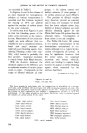
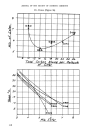
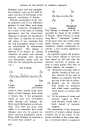
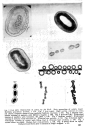
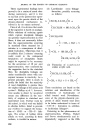
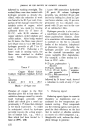
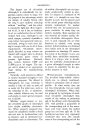
SOLVENTS, HUMECTANTS AND BLENDING AGENTS mole fraction it is evident that pro- vided the vapour pressure of F is low, the smaller its molecular weight the more efficient it will be in terms of weight concentration. For compounds of fixed molecular weight, low vapour pressure is as- sociated with the more polar struc- tures. Hence the criteria of low vapour pressure and low molecular weight imply the use of materials with polar structures. Other factors of importance relate to the degree of affinity between the fixative and the volatile component. In practice, Raoult's Law holds in few cases only, where the mixing is ideal (i.e., without volume change or heat change) and curves of the type shown in Fig. 2 are more com- mon than those depicted in Fig. 1. Where high affinity exists between two components curves of the type B.F. are obtained whereas A.F. and C.F. represent binary mixtures be- tween components of little mutual affinity. For balancing the rate of evapora- tion of various components it will thus be evident that the fixative should have greater affinity for the more volatile than for the less vola- tile components. Whereas the prediction of affinity between perfume components and fixatives is further complicated by the ternary and multicomponent sys- tems involved so as to become im- practicable the evidence favours the use of highly polar compounds as fixatives. The ultimate compound- ing will depend on practical trial. HAIR DYE SOLVENTS Many eminent authorities have been concerned with the materials and processes involved in hair dye- ing but the mode of application has received less attention and has not undergone any radical change for ELC4 •. ¾ApOu • • E S5 Ut•,6- 0F NON-IDEAL 113
Purchased for the exclusive use of nofirst nolast (unknown)
From: SCC Media Library & Resource Center (library.scconline.org)