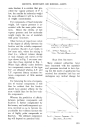
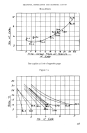
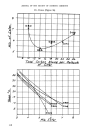
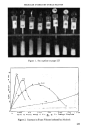
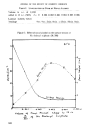
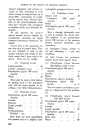
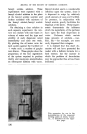
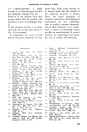
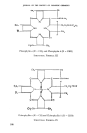
JOURNAL OF THE SOCIETY OF COSMETIC CHEMISTS 7 Di - Esters (Figure 3B) ,30 25 /5' IO 118

SOLVENTS, HUMECTANTS AND BI,ENDING AGENTS Of the other systems present in many cosmetics individual con- sideration can only be the final criterion for the most suitable blend- ing agent and there is scope for much fundamental work here. In general the fatty acid esters are a useful class from which to select blending agents and it is interesting to note that the higher glycols (e.g. hexylene glycol) can frequently increase the blending activity of the fatty esters. Conventional surface-active agents of the water-soluble or water-disper- sible types are useful blending agent for certain systems, e.g. in the blend- ing of oils with aqueous or aqueous- alcoholic solutions but the mechan- isms involved usually differs from the simpler cases considered above. Surface-active agents probably function more frequently as efficient dispersing agents or, where the oil concentration is low, by virtue of their s p e c i f i c "sclubilisation" powers. The same is not necessarily true o[ the oil-soluble surface-active agents where, for blending oils of differcnt type, true homogeneous solution is the predominating mechanism. This was found to be the case, for example, with pentaerythritol mono- oleate and the White Oil-Castor Oil system discussed above. In the case of dispersions of waxes in oils and fatty esters, e.g. disper- sions of carnauba wax in isopropyl myristate, small amounts of lanolin and cetyl or stearyl alcohol are use- ful for improving stability of the product. The precise mechanism involved in the stabilising action of these higher alcohols is somewhat obscure. They are compatible with each of the components of this immiscible system (carnauba wax is substantially insoluble in isopropyl myristate at normal temperatures) in which stability depends purely on the arnount of liquid phase required to wet the finely-divided solid. Flocculation or aggregation of the dispersed solid reduces the surface area exposed to the liquid and promotes exudation or segregation of the phases, HUMECTANTS The purpose of a humectant has been stated by Harry TM to be to maintain the moisture content of a cosmetic cream at a normal level in spite of variations in :atmospheric temperature and humidity. Griffin & Rose ': have pointed out that far greater amounts of humectant than thosc normally employed would be required to maintain the water present in, for example, a vanishing cream in a condition of stable equili- brium with the atmosphere. Another factor to be considered is that the loss of water from a cream is also determined by diffusion pro- cesses which exert a greater effect on the rate of loss of moisture than in the simple system comprising water and humectant only. When "skin" or "crust" formation is established on the surface of a cream it is prob- able that diffusion through this barrier is the main controlling factor 119
Purchased for the exclusive use of nofirst nolast (unknown)
From: SCC Media Library & Resource Center (library.scconline.org)