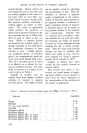
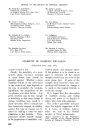
JOURNAL OF THE SOCIETY OF COSMETIC CHEMISTS majority must be rejected on the various grounds of incompatibility, high volatility, toxicity, taste, odour, stability and irritant effects. In the form of the fatty esters the solvent power falls very considerably. Other products which have re- ceived specific attention in this field are 'tetrahydrofurfuryl alcohol •, which is too volatile for the prepara- tion of lipsticks of reasonable stability and storage life and is not entirely free from suspicion on the grounds of toxicity • and tetrahydro- furfuryl acetate 7 s which possesses penetrating odour and taste com- bined with definite irritant proper- ties. In contrast to these two pro- ducts, each of which is an excellent eosin so]vent (20ø/ø), tetrahydro- furfuryl stearate 8 dissolves 0.5% eosin at 20øC. The alkyl esters of the higher fatty acids are in general poor solvents for eosin although good dispersing agents for dyes, pigments and micro- crystalline waxes. Their use as eosin solvents seems to rely on their skin penetrating properties. The effect of molecular size is apparent in this series when one recalls that isopropyl myristate is somewhat more effective than butyl stearate in the rapidity with which a permanent stain is produced. Esters of dicar- boxylic acids e.g. diethyl sebacate are rather better solvents and are also suitable blending agents (vide Blending Agents) for vegetable and hydrocarbon oils. Lipsticks incor- porating 15% of isopropyl myristate or diethyl sebacate have proved quite stable after six months storage. Partial esters of glycerol, typified by the monostearate and monolaur- ate possess relatively poor solvent power for eosin but, in contrast, the glycols and their mono-ethers are more effective'. The lower glycols and their ethers, however, suffer from poor compatibility with the usual lip- stick components and the ethers are, in addition, too volatile for safe use. Some of the higher glycols have been examined as eosin solvents 9 and, of these, hexylene glycol appears to have many of the neces- sary characteristics. It is a good eosin mlvent with a suitable range of compatibility. Tests on the chronic toxicity of this product (carried out since publication of the original paper) have confirmed that the chronic oral toxicity is so low as to involve no danger in its applica- tion in cosmetics. Lipsticks con- taining hexylene glycol as eosin sol- vent have been used exclusively by one subject of moderately sensitive skin for a period of eighteen months without any symptoms of irritation, sensitisation or toxic effects. This product is now in use on a com- mercial scale in lipsticks. The mono- acetate of this glycol suffers from defects similar to those noted with tetrahydrofurfuryl acetate and the mono-stearate ester further demon- strates the poor solvent power of the higher fatty acid esters. The manifold functions required of a solvent for the eosin used in lipsticks, and the fact that so many of the investigations so far carried out have been confined to a few rather than all aspects involved in 11o

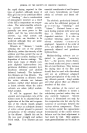
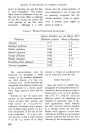
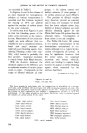
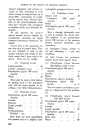
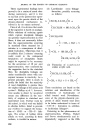
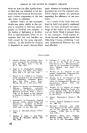
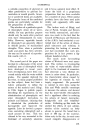
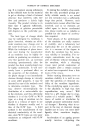
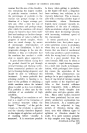
SOLVENTS, HUMECTANTS AND BLENDING AGENTS its use, make it evident that there is still cause for further work in this field. Fortunately the more recent papers on the subject provide evi- dence of a wider and more logical approach to the problem and inter* esting developments may still be anticipated. Table 3, which lists the solubility of tetrabromofluorescein in a wide range of liquids, has been compiled from the work of Lower -• and ex• tended by results available to the authors from tests on a highly puri- fied grade of dyestuff. TABLE 3. SOLUBII,ITY OF TETRABROMOFLUORESCEIN AS W/W % AT 20øC. Alcohols Benzyl alcohol 6 fi PhenylethanoI 8 Terpineol 1.9 Furfuryl alcohol 3.0 Tetrahydrofurfuryl alcohol 2 Lauryl alcohol O. 7 Myristyl alcohol O. 6 Stearyl alcohol 0.5 Oleyl alcohol 1.0 Ketones Acetone 3.5 Diacetone alcohol 6.5 Benzophenone 3.5 Cyclohexanone 1.6 Glycols and Derivatives Ethylene glycol 1.0 Ethylene glycol oleate acetate 0.4 Ethylene glycol oleate 0.1 Ethylene glycol diricinoleate 1.9 Diethylene glycol 2.5 Diethylene glycol monostearate 1.0 Diethylene glycol ethyl ether 10.5 Triethylene glycol 4 Tetraethylene glycol 5.7 Hexaethylene glycol 9 Polyethylene glycoI' 400 ' 10 Polyethylene glycol '1500' 10 Polyethylene glycol '4000 ' •12 Propylene glycol 1.7 (propane 1.2 diol) Butylene glycol 20 (butane 1.3 diol) Hexylene glycol 6.0 (2 methyl pentane 2.4 diol) Hexylene glycol mono acetate 5.0 Hexylene glycol monostearate 1.0 Octylene glycol 5.0 (2 ethylhexane 1.3 diol) Acids Lauric acid 0.3 Myristic acid 0.3 Aldehydes Citral 4 Hydroxycitronellal 4 Esters Tetrahydrofurfuryl acetate. 2 Cetyl acetate 0.3 Butyl laurate insol. Ethyl myristate 0.5 Isopropyl myristate 0.5 Ethyl stearate 0.2 Butyl stearate 0.5 T.H.F. stearate 0.5 Methyl rincinoleate 1.0 Ethyl oleate 0.3 Methyl acetyl ricinoleate 1.0 Ethyl acetyl ricinoleate 1'4 Butyl acetyl ricinoleate 0.5 Methyl lactate 1.0 Diethyl sebacate 1.3 Tributyl citrate 0.2 Glycerol Series Glycerol a methyl ether 2.0 Glycerol monolaurate 1.0 Glyceryl monostearate 1.0 Castor oil 0.2 Cocoa butter 0.3 111
Purchased for the exclusive use of nofirst nolast (unknown)
From: SCC Media Library & Resource Center (library.scconline.org)