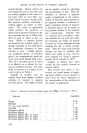
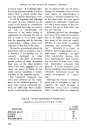
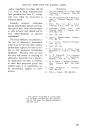
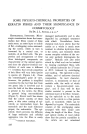
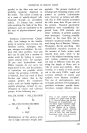
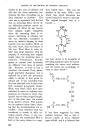
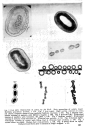
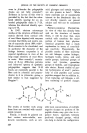
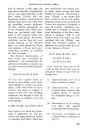
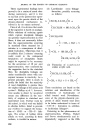
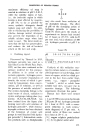
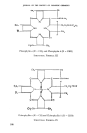
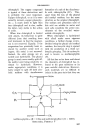
JOURNAL OF THE SOCIETY OF COSMETIC CHEMISTS even in /•-kera.tin the polypeptide chains are not fully extended •4. Evidence in favour of this view is provided by the fact that the calcu- lated identity spacing for an ex- tended polypeptide chain is 7.2A, whereas the observed identity spac- ing is 6.7A. In 1947, electron microscope studies of the structure of fibrils and matrix derived from cortical cells of wool fibres digested with enzymes revealed that fibrils and matrix con- sist of corpuscles about 100A wide •. Much remains to be elucidated, and in particular the character of the linkage between corpuscles is of especial significance in view of the long range elasticity of wool fibres in water. More recently •6, examin- ation of X-ray diffraction patterns and infra-red spectra of synthetic polypeptides suggests that N-H bonds are essentially parallel to the fibre axis in a-keratin and perpen- dicular to it in /•-keratin, giving a fold similar to that suggested by Huggins•7: acid, glycogen and certain enzymes are also present in hair •. While these materials are of considerable interest to the biochemist they do not directly concern our present subject and will not be considered further. PHYSICO-CHEMICAL PROPERTIES. In view of what has already been said on the structure of keratin fibres, it will be clear that, since cortical cells constitute the major portion of human hair, physico- chemical properties find a ready explanation in terms of cross-link- age reactivity. Theoretically, the possible centres of fibre reactivity are salt linkages, cystine linkages, hydrogen bonds, imino- and acid amide groups, hydroxyl groups of serine and tyrosine, guanidine groups of histidin, and tryptophane side chains. Recent studies of par- tial hydrolysates of wool% particu- larly of acid peptides and cystine peptides,.suggest that in addition to, if not replacing, salt linkages, a dif- fuse scattering of positive charges The results of further work along these lines are awaited with consid- erable interest. Finally, it should be pointed out that various water-soluble, non- keratin con,ituents, such as uric with local concentrations of multiple negative charges on portions of the peptide chains may give rise to re- pulsive forcesl, especially between positively charged groups, which also help to decide the configuration 164

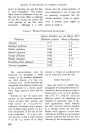
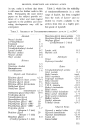
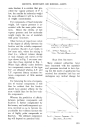
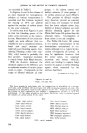
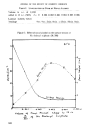
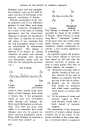
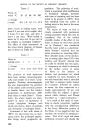
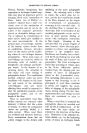
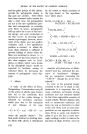
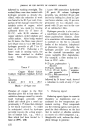
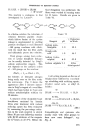
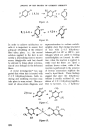
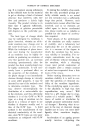
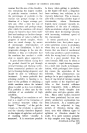
PROPERTIES OF KER•ITIN FIBRES of the polypeptide chains. The re- activity of these various groups will vary with conditions of temperature and pH, as well as with the nature and concentration of the reagent acting on the fibre. 1. Dry Heat The use of heat in the setting and drying of hair makes it desirable to understand the influence of dry heat on keratin fibres. Wet fibres are much les•,l resistant to heal than are dry fibres, a factor which should always be considered in the permanent waving and drying of hair. Experiments have shown that wet wool heated in dry air at 105øC. loses water and the fibre becomes harsh and loses strength. If the heat- ing is not prolonged, the effect is more or less reversible and in moist air the wool takes up water and re- covers its softness and strength. Heating at temperatures above 105 ø C. for any appreciable time causes decomposition of the wool which turns yellow and gives off ammonia and hydrogen sulphide. At temper- atures above 150øC. dry wool grad- ually decomposes until at 210øC. the fibre isl black and brittle. Argin- ine, proline, threonine and cystine appear to be the amino acids most affected by heat, therma] decom- position ,of the fibres resulting •in diminished basic properties and water absorption, but increased alkali solubility 2. From a practical standpoint it is useful to note that the steady tem- perature of air from the normal electric hair dyer is of the order shown in Table I: Distance from orifice (cms.) 2.5 Temperature øC. 147 2. Water 5.0 126 T^BnE 1. 7.5 113 Extraction of hair with cold water (20øC.) or repeated washing at 35øC. removes non-keratinous constituents such as uric acid, xan- thine, urea, ammonia, creatine, gly- cogen, citric and lactic acids, to- gether with mineral constituents-- calcium, sodium, potassium, phos- phorus and chloride--and enzymes, such as pho.sphatase, xanthine oxi- dase and dopase. Many of these constituents are derived from nucleic acid present in the epidermal nuclei 10.0 12.5 15.0 17.5 22.5 25.0 -i•2- 90 78 73 63 57 which disappear during the keratin- isa•tion process. When hair is treated with water at 50øC. protein hydrolysis sets in, as shown by the evolution of hydrogen sulphide TM. The amorphous regions of the fibre appear to be involved first, and it is only after treatment for 1 hour at temperatures greater than 60øC. that significant changes occur in the stress/strain diagrams of hair. Table II shows the percentage change in work required to stretch a fibre 30 per cent before and after treat- ment: 165
Purchased for the exclusive use of nofirst nolast (unknown)
From: SCC Media Library & Resource Center (library.scconline.org)