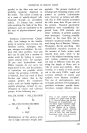
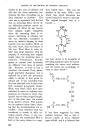
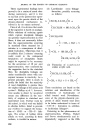
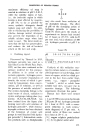
JOURNAL OF THE SOCIETY OF COSMETIC CHEMISTS and the polar groups of side chains, permits the polypeptide chains to slip past one another. After fibres have been steamed under tension for only a short time, the polypeptide• are not in the new equilibrium posi- tion and consequently on releasing such fibres in steam, polypeptides fold up under the action of the inter- nal energy, and axial contraction of the fibre occurs. If steaming under tension is prolonged, however, move- ment of the chains past one another continues until a new equilibrium position is reached, in which the main chain adhesion is sufficient to prevent folding of chains when the fibres are slackened in steam, i.e., a permanent set has been achieved. On this view reagents such as bisul- phites or alkalis which cause fission of the disulphide bonds, would be expected to facilitate setting of stretched fibres by increasing the amount of polypeptide chain slip- page. 3. Alkaliz A study of the effect of Time, Temperature, Concentration and pH on the action of alkalis upon human hair led to the conclusion that hydrolysis of the cystine linkage is followed by secondary reactions which give rise to the formation of new linkages of the type --C--S--C-- and --CH--N-- be- I tween the peptide chains •. The final result obtained on treating kera- tin fibres with alkalis is determined by the extent to which reactions of the type shown in the equations have taken place: R.CH2.S.S.CH•.R + H_•O-- R,CH2SH + R,CH2S.OH CH. CH2. SOH -- x, C----CH.o + HSOH--- H20 + S / 'x C = CH2 -I- HS.CH2.CH-• / 'x CH.CH2S,CH2.CH R.SOH -- R.CHO + H•S R.CHO + R.CH2.NH2 --- R.CH = N.CH2R + H20 Analysis of hydrolysates of alkali- treated wool has confirmed the pre- sence of lanthionine linkages, but no compound containing the --CH=N-- linkage has so far been isolated% In view of the potential danger attached to the use of alkali in hair treatments it is important that all s oaps, emulsions, permanent waving asssitants and dye solutions should be free from appreciable amounts of caustic alkalis. Weaker alkaline salts such as ammonium carbonate and borax are not so destructive in their action and when used at room tem- peratures are not regarded as delete- rious. Even so, great care should be taken to give the hair a most thor- ough washing in order to remove the last trace of alkali. Further, since the t70

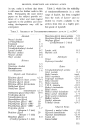
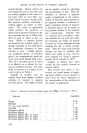
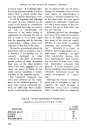
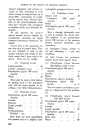
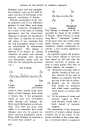
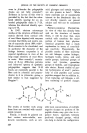
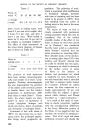
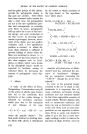
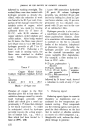
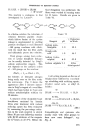
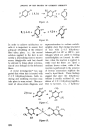
PROPERTIES OF KERATIN FIBRES maximum efficiency of soap is exerted in solutions of pH 9.5-10.5, while the stability region of hair, i.e., the isoelectric region in which keratin is least affected by reagents, is pH 5-8, so far as possible the newer synthetic detergents s!aould replace soap and alkali. In addi- lion to eliminating the possibility of alkaline damage neutral de.tergents also prevent the deposition of in- soluble calcium soaps when hard water i• used. The latter result en- sures that the hair has greater gloss, and reduces the risk of bacterial attack on the hair and scalp. O R.•.S.R II o may also result from oxidation of the disulphide linkage. The effect of pH on the damaging action of hydrogen peroxide is shown in Table IV which gives the results of experiments on human hair treated for 17 hours at 22.2øC. with 6.25 per cent (vol./vol.) solutions of 100 vol. hydrogen peroxide at pH 3 to 12: T).BI•E lV 4. Oxidising Agents Discovered by Thenard in 1818, hydrogen peroxide was used as a hair bleach at the World Fair, Paris, 1878, and has since continued as the primary material for this purpose. In addition to its action on the melanin pigments, hydrogen perox- ide causes oxidative degradation of keratin, the extent of which is. gov- erned by temperature, time, concen- tration, pH of solutions, as well as the presence of metallic catalysts .•. The cystinc disulphide linkage is the main centre of attack, oxidation to cysteic acid groups taking place (e.g. taurine, HaN.CH:.CH•S0:•tt, has been isolated from the liquor after treating wool with acid solutions of hydrogen peroxide •, while chroma- tographic evidence has been obtained of the formation of cysteic acid groups in wool bleached with hydro- gen peroxideS*.) Intermediate oxida- tion products such as disulphoxides pH 3'0 4'9 7'0 8'•1 0'412'0 % reduction in work 7'3 8'0 12'0 15'6 18'7 35'3 Catalysis of this oxidation reac- tion by certain metals is of consider- able importance in hairdressing, since traces of copper. nickel or cobalt pre- sent in the hair from earlier treat- ments, e.g., copper - pyrogallol "rasticks ", nickel or cobalt from metallic hair dyes, can give rise to excessive damage. The following experiments illustrate tlfi.• point: Human hair fibres were treated with 1 part 0. 880 ammonium hydroxperoxide 20 parts 20 vol. hydrogen for 1 hour at 28øC. with a conse- quent reduction in work (stre.qs/ strain diagram) of 17 per cent. A second series of fibres was soaked for 1 hour at 28 ø C. in 5% copper sulphate pentahyacid 1% (v/v) glacial acetia 171
Purchased for the exclusive use of nofirst nolast (unknown)
From: SCC Media Library & Resource Center (library.scconline.org)