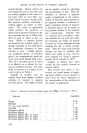
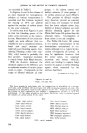
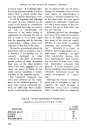
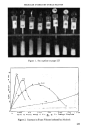
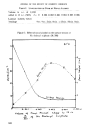
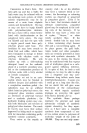
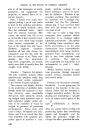
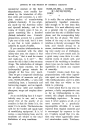
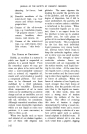
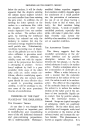
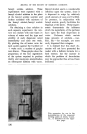
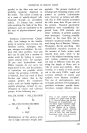
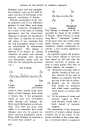
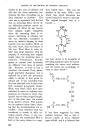
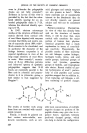
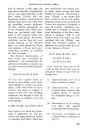
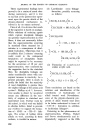
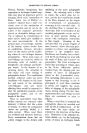
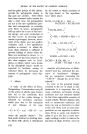
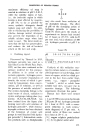
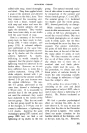
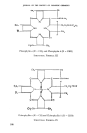
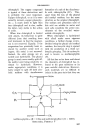
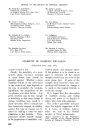
JOURNAL OF THE SOCIETY OF COSMETIC CHEMISTS o • Figure A. In order to achieve satisfactory rc- suits it is important to ensure that adequate rebuilding of the reduced fibre takes place, i.e., the second solution applied to the hair is not merely a neutralising rinse to remove excess thioglycollic acid but should be aUowed to bring about re-forma- tion of cross. linkages in the deformed fibres. A recent investigation 4ø has sug- gested that when hair is treated with 2:4:5 trihydroxytoluene, both re- ducing and oxidising reactions may take place to some extent. Measure- ment of stress/strain diagrams and supercontraction in sodium metaN- sulphite show that during treatment of hair with 2:4:5 trihydroxy- toluene pH 4 at 40 ø or 100øC., new linkages which are stable to boiling metabisulphite are formed. In addi- tion, when the reaction is applied to white wool the fibres are dyed a medium brown colour, while if the reaction is performed in the presence of ferrous ammonium sulphate the wool is dyed black. These findings suggest that since the trihydroxy- toluene is readily oxidbed (cf. oxi- dation of 1:2:4 trihydroxynaphtha- lene to lawsone, i.e., 2 hydroxy- •, R $ i.i o oH Figure D. 174

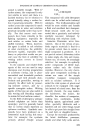
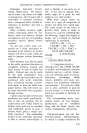
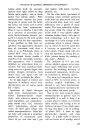
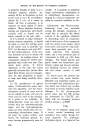
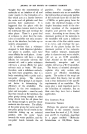
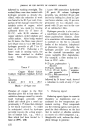
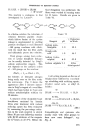
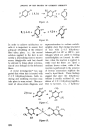
PROPERTIES OF KERATIN FIBRES 1:4 naphthaquinone), it might function asl a reducing agent towards the disulphide linkage (Fig. B). Reaction of the quinone with thiol groups should then be possible with formation of new cross-linkages (Fig,. C). In the presence of iron a co-ordin- ated iron salt ooe the type shown in Fig. D is. envisaged. In conclusion, our survey of the physico-chcmical properties of hair shows that, while nmch remains to bc learned about the finer detain of the molecular structure of keratin fibres, the broad principles of chemical constitution and histological organisation are now sufficiently clear to enable a rational interpreta- tion of fibre chemistry to be made. Such a corpus of knowledge makes possible an understanding of present practices in cosmetology and points the way to further developments. •E•E•ENCES 1. Stoves. Proc. l{oy. Soc. tSdm. 1944, 62, 99. 2. Stoves, Natur.e, !943, 151, 304 Proc. 1Roy. Soc. Edin. !945, 62, 132. 5. Stoves. J. Soc. Leath, T•ades Chern. 1948, 32• 254. 4. Gral•n. J. So(. Ds cts & Col., 1950, 66, 405. 5. Stoves. Fibrous Proteins Sym- posimn, So•. Dve:s & Cod. 1946, 58. 0. S.tove:,. Nature, 1940, 157, 230. 7. Chibnall. J. Int. Soc. Leather Trades Chem. 1940, 30, 1. 8. Speakman. J. Soc. Dyers & Col. Jubilee Issue. 1934, 34. 9. Marriott. J. Int. Soc. Leath. Trades Chem. 1933, 17, 178 Speakman. Nature 1933, 132, 931). 1U. Phillips. Fibrou:• Proteins Sym- posium. Soc. Dyers & Col. 1946, 39. 11. Astbury, J. Soc. Dyers & Col. Jubilee Issue 1934, 24. 12. Brill. Ann. Phys, 1923, 434, 204 Meyer, Mark. Ber. 1928, 61, 1932. 13. Astbury and Belin. Nature. 1941, 147, 696. 14. Bull and Gutn!an. J. ,Smer. Chem. Soc. 1944, 66, 1253. 15. Farrant, Rees and Mercer. Nattire. 1947, 159, 535. 1O. Ambrose et al. Nature. 1949, 163, 483 1951, 167, 264 Pmc. Roy. Soc. A. 1951, 205, 47. 17. Huggins. Ann. Rev. Biochem. 1942, 11, 27. _ 18. Bolliger. Med. Jour. Australia. t949, 536. 19. Consden, Gordon and Martin. Bio- chem. j. 1949, 44, 548 Lindley. Research. 1950, 3, 509. 2i•. Zahn. Melliand Textdberlchte. !950, 31, 481. 21. Speakman ct al. J. Text. Inst. 1933. 24, T.273 193o. 27, T.183. 22. Sch6berl. Collegit, m !930. 412. 33. Harrison. Proc. Roy. Soc. A. 1918, 94, 40O. 2,t. Shorter. Tram,. Farad. •oc. 1924, 20, 228. 23. Astbuly and Woods. t'rot. Roy. Soc. A. 1933, 232, 33.3. 20. Speakman. J. Soc. Dyers and Col. 1936, 52, 335. ,!7. Phillips. Natme, 1930, 138, 121. 28. Stoves. Trans. Farad. Soc. 1942, 38, 254. 29. Phillips et •,1. Biodmm. J. 1945, 39, 17 J. Soc. Dyer• & Col. 1940, 62, 203. 39. Stoves. J. S•c. Dyer:, & Col. 1947, 63, 70. , 31. Blackburn and Lindley. J. Soc. Dyers & Col. 1948, 64, 305. 32. Bunn and Garner. Proc. Roy. Soc. A. 1947, 189, 39. 33. Stoves. Trans. Farad. Soc. 1942, 38, 254. 34. Phillips and Cuthbe•:tson. Biochem. J. 1945, 39, 7. 35. Stoves. Trans. t,'a•ad. Soc. 1942, 38, 501. 30. Brauckmeyer and Rouelte. Melli- and Textilber., 1937, 18, 222, 293. 37. Consden, Gordon and Martin. Biochem. ]. 194•, 40, 580. 38. Lecher. Bet. 1920/ 53Ii, 591. 39. Stoves. J. Soc. Dyers and Col. '1947, 6•, 65. 40. Burton and Stoves. Nature, i950, 165, 569 J. Soc. Dyers and Col. 1950, 66, 474. 175
Purchased for the exclusive use of nofirst nolast (unknown)
From: SCC Media Library & Resource Center (library.scconline.org)